


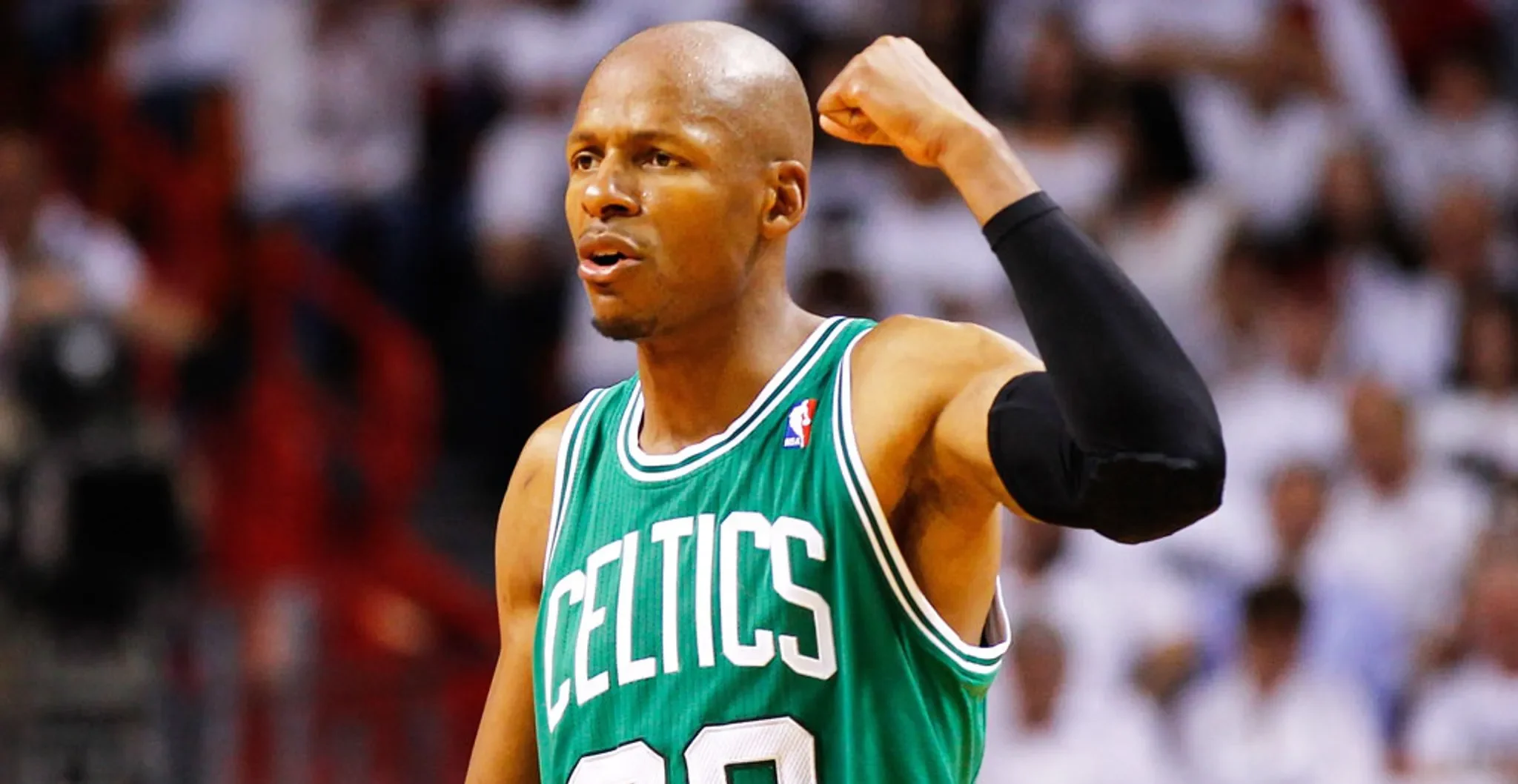
Two decades after his rookie season in Milwaukee, Ray Allen’s fortune stands at an estimated $100 million. That wealth traces directly to $184.3 million in career playing salary, a Jordan Brand partnership that has outlasted every one of his playing contracts, and real estate deals that closed at a profit on both coasts of his career. Most shooters from his generation did not build a financial profile with that many independent legs.
He retired with 2,973 regular-season three-pointers across 1,300 career games, a mark that still ranks second on the NBA all-time 3-point leaders list behind point guard Stephen Curry. That kind of longevity is why his name keeps surfacing whenever the conversation turns to the top 75 NBA players of all time. Ray Allen sits among the shooting guards ranked on SportDA’s top 75 NBA players of all time list, a distinction few pure shooters from the 1990s and 2000s can claim.
Career Earnings and Contract Breakdown
Milwaukee drafted his rights on draft night in 1996 and signed him to a three-year, $6.2 million rookie contract. That deal paid him $1.8 million in his first professional season, a modest number by today’s rookie-scale standards. Elite scoring production pushed Milwaukee to lock him into a six-year, $70.9 million extension in 1999.
Seattle acquired him in 2003 and later signed him to a five-year, $80 million extension in 2005. That maximum extension carried an average annual value of $14.6 million, a figure that placed him near the top of the league’s pay scale alongside shooting guard Kobe Bryant and power forward Kevin Garnett. Boston absorbed the remainder of that deal in 2007 before extending him for two years and $20 million in 2010.
Miami signed shooting guard Ray Allen in 2012 using the non-taxpayer mid-level exception, a salary cap tool that lets teams already over the luxury tax threshold sign veteran contributors at a set annual figure. He earned $6.36 million across his two seasons in Miami. That closed out an 18-year career worth $184.3 million in total playing salary.
Career NBA Salary Table
His earnings by team and era show how fast shooting guard pay grew between 1996 and 2012. The rookie-scale years look tiny next to the Seattle and Boston extensions that followed a decade later.
| Season / Era | Team | Total Earnings |
|---|---|---|
| 1996 – 1999 | Milwaukee Bucks (Rookie Contract) | $6,200,000 |
| 1999 – 2003 | Milwaukee Bucks (Extension) | $32,500,000 |
| 2003 – 2007 | Seattle SuperSonics | $58,400,000 |
| 2007 – 2012 | Boston Celtics | $80,900,000 |
| 2012 – 2014 | Miami Heat | $6,356,410 |
| 18-Year Total | All Franchises | $184,356,410 |
Endorsement Deals and Commercial Partnerships
Michael Jordan handpicked him in 1997 as an original ambassador for Jordan Brand, a relationship that outlasted most of his playing contracts. He kept that footwear deal active through every stop of his career, from Milwaukee to Miami.
- Jordan Brand: Signed an original ambassador footwear contract in 1997, earning continuing royalties on retro Jordan Brand releases.
- Gatorade: Appeared in national multimedia campaigns and print advertisements during his Boston Celtics tenure.
- Dunkin’ Donuts: Ran regional New England marketing campaigns between 2007 and 2012.
- Webster Bank: Serves as a corporate spokesperson for financial literacy programs across Connecticut.
- Perfumania: Promoted men’s fragrance lines through regional appearance deals.
Real Estate Portfolio and Property Holdings
He purchased an 11,544-square-foot waterfront estate in Coral Gables, Florida, for $11 million in 2014. The home included ten bedrooms, a private dock, and a basketball court. He sold it for $14 million in 2021, a $3 million gain on the original purchase price.
He also owned a 10,000-square-foot home in Wellesley, Massachusetts, bought for $4.6 million in 2007. The five-bedroom property sold for $5.2 million in 2012, right after he joined Miami. Combined, the two sales generated over $3.6 million in capital gains.
Ray of Hope Foundation and Philanthropy
He founded the Ray of Hope Foundation in 1997 to support youth in underserved communities, and the foundation has raised $3.5 million to install computer labs in public schools across Connecticut, Massachusetts, and South Florida. Those labs remain one of the more concrete, measurable legacies of his off-court work.
He donated $250,000 to the United States Holocaust Memorial Museum in 2016 after his appointment to the United States Holocaust Memorial Council. His foundation continues to fund annual events that support juvenile diabetes research.
Personal Life
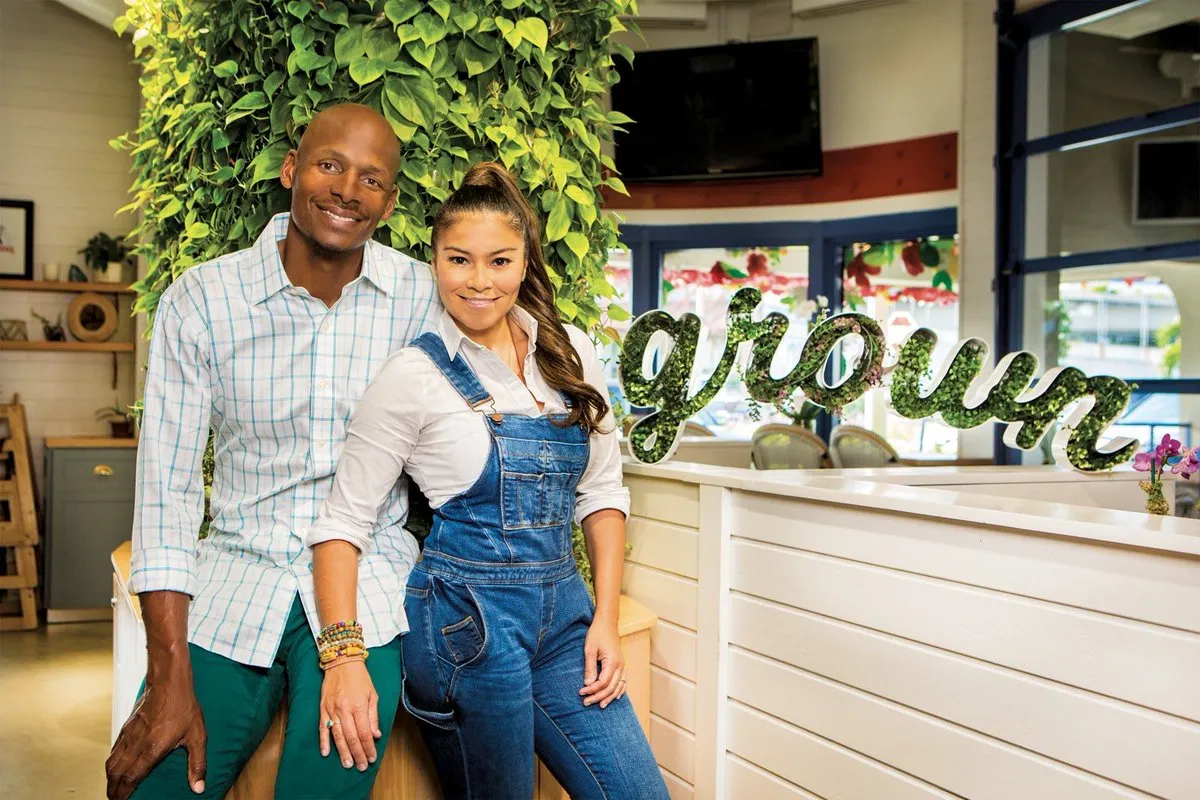
He married Shannon Walker Williams in 2008, and she later co-founded the organic food restaurant chain Passion Glow in Miami. The couple manages private venture investments across South Florida together.
Early Life, UConn Huskies, and the 1996 NBA Draft
Walter Ray Allen Jr. was born at Castle Air Force Base in Merced, California, on July 20, 1975. Military relocations shaped his childhood before his family settled in Dalzell, South Carolina, where he led Hillcrest High School to a state title in 1993.
UConn head coach Jim Calhoun recruited him in 1993, and he averaged 23.4 points per game as a junior in 1995-96 en route to Big East Player of the Year honors. Minnesota selected him fifth overall in the 1996 NBA Draft before trading his rights to Milwaukee for point guard Stephon Marbury. That single draft-night swap ended up shaping two franchises for the next decade.
How Shooting Guard Pay Has Changed Since Allen’s Rookie Deal
His $1.8 million rookie salary in 1996 looks almost quaint against what shooting guards earn today. A rookie taken fifth overall now signs a four-year scale deal worth roughly four times that figure before anyone even discusses a single veteran extension.
The supermax extension, a designated player deal that can pay up to 35% of the salary cap for players who meet All-NBA or Defensive Player of the Year criteria, didn’t exist for most of his career. Recent shooting guard supermax deals have cleared $50 million a year, numbers that would have sounded impossible during his Seattle years even at his $14.6 million peak annual value.
| Era | Representative Shooting Guard | Approx. Annual Value |
|---|---|---|
| Late 1990s | Michael Jordan | $33,140,000 |
| Mid-2000s | Ray Allen | $14,600,000 |
| 2010s | Klay Thompson | $18,988,000 |
| Current era | Devin Booker | $53,600,000 |
Legacy Among the NBA’s Best Shooters
Analysts building any list of the best NBA players of all time still have to account for what floor-spacing shooting guards did to defensive schemes once teams could no longer sag off a shooter without paying for it. His gravity outside the arc changed how Boston and Miami built pick-and-roll actions around him, something a stat line alone doesn’t fully capture.
His career earnings sit well behind the highest-paid NBA player of the current generation, and that gap reflects league-wide salary cap growth more than any drop in his value. Reggie Miller, Stephen Curry, Klay Thompson, and Kyle Korver round out the group of shooting guards and one point guard most often mentioned alongside him when the topic turns to greatest NBA players of all time from beyond the arc.
| Legendary Shooter | Position | Career NBA Salary | Primary Era | Estimated Net Worth |
|---|---|---|---|---|
| Ray Allen | Shooting Guard | $184.4 million | 1996 – 2014 | $100 million |
| Reggie Miller | Shooting Guard | $105.0 million | 1987 – 2005 | $90 million |
| Stephen Curry | Point Guard | $354.7 million | 2009 – Active | $200 million |
| Klay Thompson | Shooting Guard | $266.0 million | 2011 – Active | $70 million |
| Kyle Korver | Shooting Guard | $83.9 million | 2003 – 2020 | $30 million |
Frequently Asked Questions
What is Ray Allen’s net worth today?
Ray Allen holds an estimated net worth of $100 million. His wealth comes from $184.4 million in NBA playing salary, long-term Jordan Brand royalties, and real estate gains in Florida and Massachusetts.
How much money did Ray Allen make in his NBA career?
Ray Allen earned $184.3 million in total playing salary across 18 NBA seasons. His highest single-season earnings came during the 2008-09 season with Boston, when he collected roughly $18.3 million.
How many 3-pointers did Ray Allen make in his career?
Ray Allen made 2,973 regular-season three-pointers across 1,300 career games. He sits second on the NBA all-time 3-point leaders list behind point guard Stephen Curry.
Ray Allen’s $100 million fortune traces back to two decades of contract extensions, a Jordan Brand partnership that outlasted his playing career, and real estate deals that closed at a profit. That combination is why his name still comes up whenever the conversation turns to the best shooters the league has ever produced.