


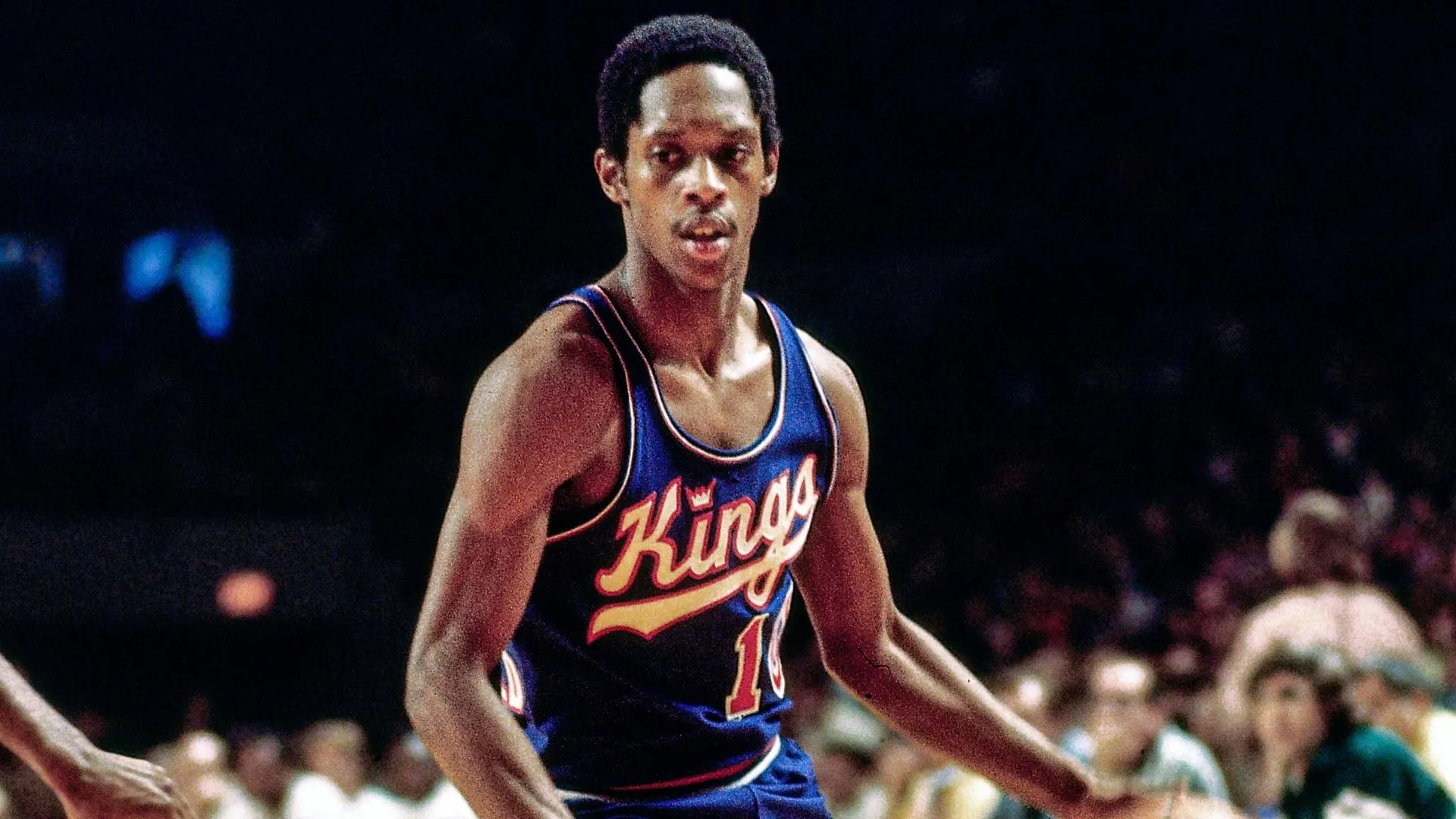
A 6-foot-1 guard from the South Bronx built a Hall of Fame career on a scoring line most seven-footers never touch. Nate Archibald’s net worth stands at an estimated $5 million today, built on roughly $1.8 million in NBA playing salary, decades of academic and coaching work, and long-term pension benefits, a financial portfolio that looks nothing like a modern superstar’s. He played 14 professional seasons and won the 1981 championship with the Boston Celtics.
His historic 1972-73 campaign secured his spot among the sport’s all-time basketball legends and remains unmatched in league history. He became the only player to lead the league in both scoring and assists in the same year, a feat that still places him near the top of the all-time assist leaders NBA conversation. Operating long before national television deals reshaped league salaries, he earned wages that peaked well under half a million dollars annually.
Nate Archibald Contracts and Career Earnings Breakdown
Cincinnati selected him 19th overall in the second round of the 1970 NBA Draft and signed him to a multi-year rookie contract that paid a fraction of today’s minimum salaries. His production earned him a significant extension when the franchise relocated to Kansas City. His 34.0 points and 11.4 assists per game during the 1972-73 season made him the face of that franchise.
New York acquired him in a 1976 trade, but a broken foot ended his season after just 34 games. Buffalo traded for him ahead of the 1977-78 season, and a torn Achilles tendon in a preseason game that October kept him out for the entire year. He never played a single regular-season game in a Buffalo uniform.
Buffalo then traded him to Boston before the 1978-79 season. The Celtics signed him to veteran deals that anchored their early 1980s championship window alongside Larry Bird, and he earned approximately $400,000 annually during that stretch, top-tier pay for a point guard in that era. He closed out his career with Milwaukee in 1984, finishing a 14-year run worth roughly $1.8 million in total earnings.
Career NBA Salary Table
His earnings by team and era track the trajectory of a player who went from rookie-scale wages to a genuine star salary, with a lost year in the middle that his own table still counts, since NBA teams paid injured players under contract even when they never took the floor.
| Season / Era | Team | Total Earnings |
|---|---|---|
| 1970 – 1976 | Cincinnati Royals & Kansas City Kings | $650,000 |
| 1976 – 1977 | New York Nets | $200,000 |
| 1977 – 1978 | Buffalo Braves (injured, did not play) | $200,000 |
| 1978 – 1983 | Boston Celtics | $600,000 |
| 1983 – 1984 | Milwaukee Bucks | $150,000 |
| 14-Year Total | All Franchises | $1,800,000 |
Endorsement Deals and Commercial Partnerships
Commercial opportunities in the 1970s heavily favored big men over smaller guards, which limited his national endorsement footprint. He built regional partnerships and basketball camp sponsorships instead of the global sneaker deals modern guards command. His most consistent off-court income came through grassroots basketball initiatives rather than television campaigns.
- Converse: Wore standard Converse models during his early career before transitioning to other athletic footwear.
- Spalding: Partnered for regional sporting goods promotions and basketball camp equipment deals.
- Local Dealerships: Appeared in regional New York and Kansas City marketing campaigns.
- Summer Camps: Generated steady income directing and hosting youth basketball camps across the East Coast.
- Apparel Licensing: Received modest royalty checks from retro jersey sales authorized by the players association.
Real Estate and Community Leadership
His financial story after basketball has little to do with property. Unlike modern stars who build real estate portfolios worth tens of millions, Archibald’s post-career capital went into the South Bronx neighborhood he grew up in rather than into houses of his own. Verified purchase prices or square footage for his personal residences aren’t part of the public record the way they are for today’s highest-paid players, so rather than guess, it’s worth being upfront: his wealth story is about community investment, not real estate.
He spent decades organizing and running youth basketball programs and a shelter for at-risk teenagers in Manhattan, work he did largely without seeking media attention. He also pushed city officials to refurbish basketball courts and community centers in the Bronx neighborhoods where he grew up. That grassroots, largely undocumented community work defines his post-playing legacy far more than any property he owned.
Post-Playing Career and Academic Achievements
Archibald built a post-playing career centered entirely on education and coaching rather than broadcasting or business ventures. He took an assistant coaching job at the University of Georgia in 1984, then returned to his alma mater, UTEP, where he coached for two seasons and mentored a young Tim Hardaway, who went on to become an NBA All-Star point guard in his own right.
Nate Archibald used injury downtime during his playing career to finish his bachelor’s degree at UTEP in 1974, a promise he’d made to himself years earlier. He later earned a master’s degree from Fordham University in 1990 and spent years teaching in the New York City public school system, dedicating his post-basketball life to mentoring at-risk youth rather than chasing commercial opportunities.
Personal Life
Nathaniel Archibald married Shirley Dixon in 1967, and the couple had five children together before the marriage ended in divorce during his Kansas City years in the mid-1970s, a stretch that coincided with some of the hardest injuries and losses of his career. He has since remarried, to his wife Tina, but has kept most details of that relationship private. Nate Archibald underwent a heart transplant in 2018 after being diagnosed with a rare condition called amyloidosis and has spoken candidly about leaning on his family throughout that recovery.
Early Life, UTEP Miners, and the 1970 NBA Draft
Nathaniel Archibald was born in New York City on September 2, 1948, growing up in the Patterson Houses public housing project in the South Bronx. He struggled to make his high school team at DeWitt Clinton, getting cut as a sophomore before rejoining as a junior and eventually earning All-City honors. The relentless drives to the basket he perfected on those city courts became the foundation of his NBA game.
He attended Arizona Western College before transferring to the University of Texas at El Paso, where he averaged 20.0 points per game across three seasons under Hall of Fame coach Don Haskins and earned First-Team All-WAC honors. Cincinnati selected him 19th overall in the second round of the 1970 NBA Draft, a class that also produced Bob Lanier, Pete Maravich, and Dave Cowens.
Evolution of Point Guard Salaries
Point guard compensation across the decades shows just how far the league’s financial structure has come. Today’s highest-paid NBA player at the position commands a supermax contract worth more than $250 million to run a modern offense, a figure that would have been unimaginable to a player earning $400,000 a year at his peak. Archibald’s entire 14-year career salary wouldn’t cover a single modern point guard’s annual pay.
He still ranks prominently among the best nba players of all time because his explosive scoring-and-playmaking combination laid the foundation for the modern point guard role that stars like Stephen Curry and Luka Doncic now get paid tens of millions a year to run. The table below puts his peak salary directly next to three of today’s highest-paid floor generals.
| Player | Primary Era | Peak Annual Salary |
|---|---|---|
| Nate Archibald | 1970s – 1980s | $400,000 |
| Stephen Curry | 2010s – 2020s | $51,900,000 |
| Damian Lillard | 2010s – 2020s | $45,600,000 |
| Luka Doncic | 2020s | $40,000,000 |
Legendary Guards Career & Earnings Comparison
| Legendary Guard | Position | Career NBA Salary | Primary Era | Estimated Net Worth |
|---|---|---|---|---|
| Nate Archibald | Point Guard | $1.8 million | 1970 – 1984 | $5 million |
| Bob Cousy | Point Guard | $350,000 | 1950 – 1963 | $3 million |
| Isiah Thomas | Point Guard | $16.7 million | 1981 – 1994 | $100 million |
| Magic Johnson | Point Guard | $39.3 million | 1979 – 1996 | $1.2 billion |
| Oscar Robertson | Point Guard | $1.5 million | 1960 – 1974 | $4 million |
Frequently Asked Questions
What is Nate Archibald’s net worth today?
Nate Archibald holds an estimated net worth of $5 million. His wealth stems from roughly $1.8 million in NBA playing salary, a lengthy academic and coaching career, and long-term pension benefits.
How much money did Nate Archibald make in his NBA career?
Nate Archibald made about $1.8 million in total playing salary over the course of 14 seasons in the NBA. His highest single-season earnings arrived during his tenure with the Boston Celtics in the early 1980s, when he made roughly $400,000 a year.
Who led the NBA in scoring and assists in the same season?
Nate Archibald became the only player in NBA history to lead the league in both scoring and assists in the same season. He averaged 34.0 points and 11.4 assists per game for the Kansas City-Omaha Kings during the 1972-73 season.
Nate Archibald’s $5 million net worth traces back to modest 1970s playing contracts, a career interrupted by injury but capped with a championship, and decades of academic and community work that mattered more to him than chasing endorsement money. That combination is why his name still surfaces whenever the conversation turns to the point guards who built the modern game.