


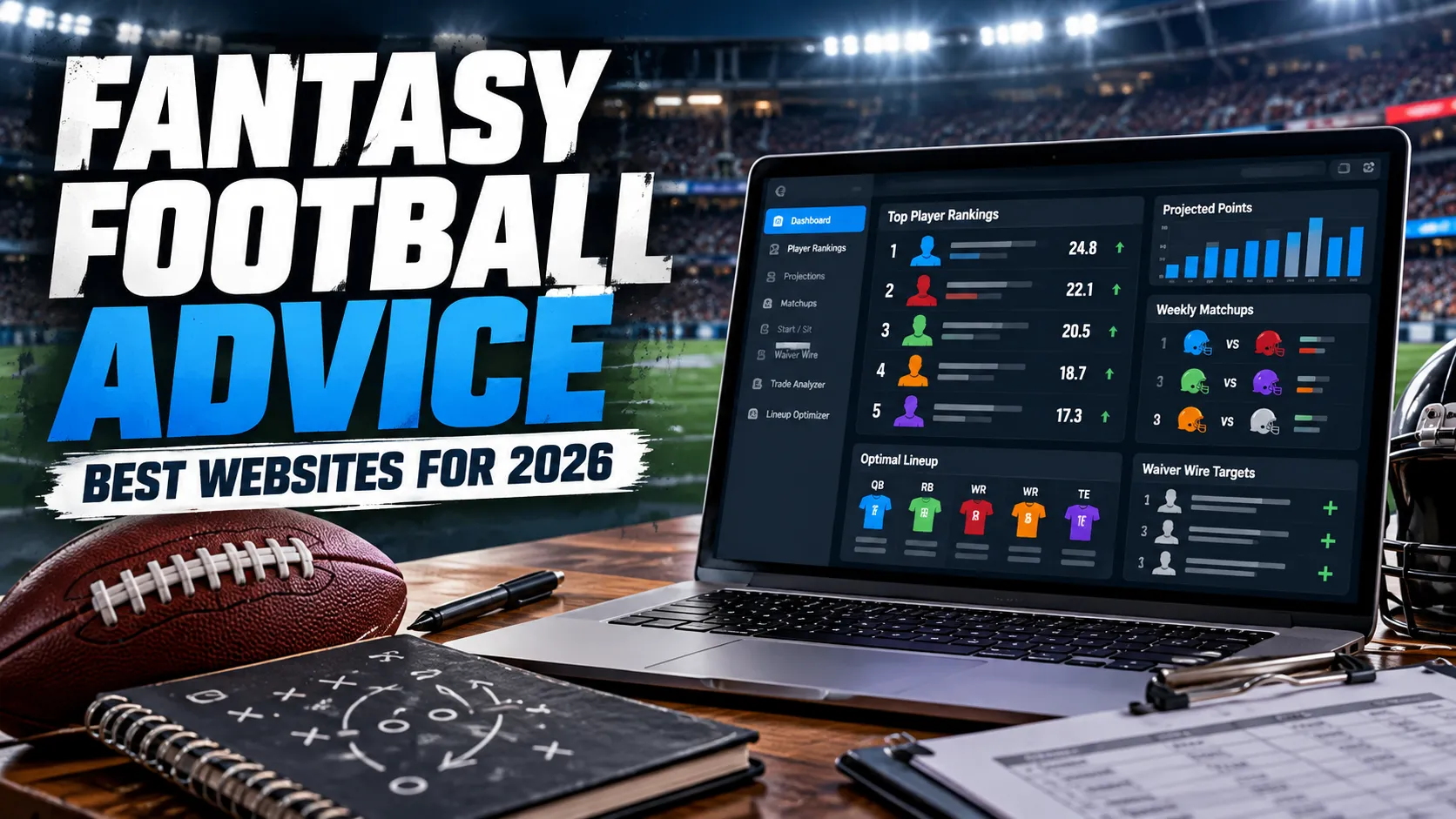
Choosing the right fantasy football advice website can make managing your roster easier throughout the NFL season. Whether you are preparing for a draft, deciding between two running backs, searching for waiver-wire pickups or evaluating a trade, reliable fantasy football resources can help you make more informed decisions.
However, not every fantasy football website serves the same purpose. Some focus on expert rankings and projections, while others provide player news, statistical analysis, draft tools, or weekly lineup recommendations.
The best approach is to choose platforms that match your league settings, budget, and experience level. This guide compares seven popular fantasy football advice websites, explains what each does best, and shows you how to use their recommendations to improve your weekly decisions.
If you are still preparing your roster for the season, start with our comprehensive fantasy football draft strategy guide for additional advice on player selection, draft planning, and roster construction.
Best Fantasy Football Advice Websites at a Glance
| Website | Best For | Main Strength |
|---|---|---|
| FantasyPros | Rankings and expert consensus | Comparing rankings from multiple analysts |
| ESPN Fantasy | Beginners and casual managers | League management and player information |
| RotoWire | Weekly lineup decisions | Player news, projections and matchup analysis |
| The Fantasy Footballers | Expert commentary | Fantasy-focused analysis and podcasts |
| PFF | Advanced player evaluation | Football analytics and player grades |
| CBS Sports Fantasy | Rankings and fantasy coverage | Player analysis and fantasy resources |
| Yahoo Fantasy Sports | League management | Fantasy leagues, transactions and roster tools |
These recommendations reflect each platform’s general strengths rather than a verified ranking of prediction accuracy. Features, prices, and subscription requirements can change, so check the current offerings before purchasing a service.
1. FantasyPros: Best for Fantasy Football Rankings
FantasyPros is a strong starting point for managers who want to compare player rankings and expert opinions before making roster decisions.
Its Expert Consensus Rankings combine rankings from multiple fantasy analysts into a single, consolidated view. This helps managers understand how the broader expert community evaluates a player instead of relying on a single analyst’s prediction.
The platform also offers draft preparation resources, projections, player news, and tools designed to support in-season roster management.
What makes FantasyPros useful?
- Expert consensus rankings for different positions.
- Player comparisons and weekly projections.
- Draft preparation and mock draft tools.
- Waiver wire and start/sit resources.
- Tools for evaluating trades and managing rosters.
Some advanced tools require a paid subscription, so check which features are available for free.
Best for: Managers who want to compare expert opinions before drafting players, setting lineups, or making waiver claims.
Practical tip: If two players have similar projected production, compare their rankings, expected workload, matchup, and injury status before choosing one.
Website: FantasyPros
2. ESPN Fantasy: Best for Casual and Beginner Managers
ESPN Fantasy is a practical option for people who want to manage their leagues and research players in one familiar environment.
The platform combines league management with player information, projections, and fantasy recommendations. Its features can help managers identify potential roster moves and follow developments that affect their teams.
What makes ESPN Fantasy useful?
- Fantasy league and roster management.
- Player information and matchup details.
- Suggested player additions and roster moves.
- Projections and in-game updates.
- An accessible starting point for less experienced managers.
ESPN is particularly convenient if your league already uses its platform. You can research players and manage your roster without constantly switching between different services.
However, compare outside rankings and analysis when making difficult start/sit or trade decisions. Your league’s scoring rules and available players should always influence the final decision.
Best for: Beginners and casual managers who want convenient league management and straightforward fantasy information.
Website: ESPN Fantasy Football
3. RotoWire: Best for Weekly Lineup Decisions
RotoWire is worth considering when your main challenge is deciding which players to start, which players to bench, and how to react to changing NFL news.
Its fantasy football resources include player news, projections, starting lineup information, strength-of-schedule analysis, and lineup comparison tools. Some advanced or personalized features may require a subscription.
What makes RotoWire useful?
- Weekly player projections.
- Start/sit comparison tools.
- Player news and expected starting lineup information.
- Matchup and strength-of-schedule resources.
- Tools for comparing roster options.
Suppose you are choosing between a wide receiver with a difficult matchup and another receiver who is expected to receive more targets. RotoWire’s projections and player news can help you compare their situations.
You should not rely on matchup rankings alone. Target volume, playing time, quarterback performance, red-zone usage, and injury reports also matter.
Best for: Managers who want detailed weekly information before setting their starting lineup.
Website: RotoWire Fantasy Football
4. The Fantasy Footballers: Best for Fantasy-Focused Analysis
The Fantasy Footballers is another option for managers who prefer detailed discussions, player evaluations, and weekly fantasy recommendations.
Its content includes fantasy football podcasts, rankings, and player discussions and advice covering different stages of the season. This format can be useful when you want to understand the reasoning behind a recommendation rather than simply looking at a projected point total.
What makes the Fantasy Footballers useful?
- Fantasy-focused podcasts and analysis.
- Player outlooks and weekly discussions.
- Draft preparation and roster-building advice.
- Discussions about potential breakout players.
- Advice covering start/sit and waiver decisions.
The main advantage of this type of resource is context. Analysts can explain why a player’s role may be improving, why an offensive situation matters, or why a popular waiver pickup might not be worth prioritizing.
For another perspective on players who could deliver value beyond their current reputation, explore SportDA’s guide to underrated NFL players. Use the analysis as a starting point, then evaluate each player’s current workload, opportunity, and fantasy scoring potential.
Remember that an analyst’s recommendation is an opinion, not a guarantee of future performance.
Best for: Managers who enjoy listening to fantasy analysts and want additional context behind player decisions.
Website: The Fantasy Footballers
5. PFF: Best for Advanced Player Evaluation
Pro Football Focus, commonly known as PFF, is a useful resource for managers interested in deeper football analysis and player evaluation.
Its football and fantasy resources include player grades, rankings, projections, and draft tools. These can help managers investigate performance beyond basic fantasy points, although some advanced features require a subscription.
What makes PFF useful?
- Player grades and performance analysis.
- Fantasy rankings and projected points.
- Draft preparation tools.
- Average draft position and auction-value information.
- Tools for comparing players and identifying potential value.
For example, two running backs might have similar fantasy production, but their underlying performance, workload, and offensive situations could be different. Deeper statistical analysis can help explain those differences.
You can complement this analysis with SportDA’s guide to the top 10 running backs in the NFL. When evaluating these players for fantasy purposes, remember that real-life performance rankings do not automatically translate into fantasy rankings. Workload, receiving involvement, and scoring opportunities also matter.
A talented player may produce limited fantasy value if his team gives him few opportunities.
Best for: Experienced managers who want additional statistical context when evaluating players and preparing for drafts.
Website: PFF Fantasy
6. CBS Sports Fantasy: Best for Rankings and Fantasy Coverage
CBS Sports Fantasy is another established destination for fantasy football information, player rankings, and analysis.
Managers can use its fantasy coverage to research players, review expert opinions, and follow developments that may affect their teams.
What makes CBS Sports Fantasy useful?
- Fantasy football rankings and player analysis.
- NFL news relevant to fantasy managers.
- Draft preparation resources.
- Weekly fantasy coverage and recommendations.
- Information for evaluating players throughout the season.
CBS Sports can serve as an additional source when you want to compare rankings or read another analyst’s perspective. As with any platform, verify the current availability of specific tools and distinguish free content from subscription-based features.
Best for: Managers who want another established source of fantasy analysis and player information.
Website: CBS Sports Fantasy
7. Yahoo Fantasy Sports: Best for League Management
Yahoo Fantasy Sports is a practical choice for managers who want to run their leagues while researching players and managing weekly rosters.
Its fantasy football environment combines league features with player information, roster management, and tools that help managers make decisions during the season.
What makes Yahoo Fantasy useful?
- Fantasy league and roster management.
- Player availability and transaction tools.
- Roster changes and waiver management.
- Player information and fantasy coverage.
- Yahoo provides a convenient environment for managers whose leagues use it.
Yahoo can be particularly useful when checking which players are available in your league before making a waiver claim. A player who is widely discussed in fantasy articles may already be rostered in your league, making your available alternatives more important.
Best for: Managers who want to combine league management with player research and roster transactions.
Website: Yahoo Fantasy Sports
Which Fantasy Football Advice Website Is Best for Your Needs?
The right choice depends on the decision you need to make. You do not necessarily need a paid subscription or several different tools to manage a competitive fantasy team.
| Your Main Goal | Recommended Starting Point |
|---|---|
| Compare expert rankings | FantasyPros |
| Manage a fantasy league | ESPN Fantasy or Yahoo Fantasy |
| Make weekly start/sit decisions | RotoWire |
| Understand player discussions | The Fantasy Footballers |
| Research advanced player performance | PFF |
| Read additional fantasy analysis | CBS Sports Fantasy |
These are practical starting points, not claims that one platform consistently produces better results than every competitor.
Best Free Fantasy Football Advice Websites
If you want to avoid subscription costs, begin with the free articles, rankings, and player information available from FantasyPros, ESPN, CBS Sports and Yahoo Fantasy.
Check the access restrictions on individual tools. A website may publish free rankings and articles while reserving personalized lineup recommendations, league synchronization, or advanced analytics for paying members.
You can also combine free resources instead of purchasing several subscriptions. For example, use a rankings source to compare players, your league platform to check roster availability, and official team reports to verify injury developments.
Best Fantasy Football Websites for Beginners
Beginners should prioritize understandable rankings, reliable injury information, and easy-to-use roster tools.
ESPN Fantasy and Yahoo Fantasy are convenient starting points for league management. FantasyPros can provide another perspective when you need to compare players or understand where they rank among fantasy experts.
It is also important to understand how many players you need at each position before building your roster. SportDA’s guide on how many of each position for fantasy football can help you understand roster construction and the requirements of different league formats.
Rather than trying to follow every analyst, learn how scoring settings, player workloads, and weekly matchups affect fantasy production.
How to Choose a Reliable Fantasy Football Advice Website
Before trusting a recommendation, evaluate how the website produces its rankings and whether its advice matches your league.
1. Check Your Scoring Format
A player’s value can change considerably between standard scoring, half-PPR, and full-PPR leagues.
In full-PPR formats, receptions earn one point each. This can increase the value of running backs and wide receivers who consistently catch passes. In standard scoring, receiving volume carries less direct value.
Always use rankings that match your league’s scoring settings when possible.
2. Compare Projections With Player Workload
Projected points are useful, but they do not tell the entire story.
Check the player’s expected touches, targets, snaps, and role in the offense. A running back who receives a larger share of the team’s carries may have a different outlook from a player who depends on a handful of big plays.
Also consider whether recent production reflects a sustainable role or an unusually favorable game.
For additional position-specific context, read SportDA’s guide to fantasy football running backs. Understanding workload, receiving opportunities, and goal-line usage can help you assess whether a running back is likely to maintain his fantasy value.
3. Verify Injury and Lineup News
Fantasy recommendations can become outdated quickly when a player gets injured, loses a starting role, or is ruled inactive.
Before kickoff, verify the latest available injury report and expected lineup. For important decisions, prioritize official team announcements and the NFL’s injury information over older articles or social media speculation.
4. Understand Rankings Versus Projections
Rankings and projections answer different questions.
Rankings indicate how players compare with one another. Projections estimate the statistical output a player might produce over a specified period.
A player ranked higher may not always be the better choice for your exact situation. Consider your scoring system, roster needs, and whether you need a safer expected floor or a higher-upside option.
5. Evaluate Paid Tools Before Subscribing
Paid tools may provide customized projections, roster synchronization, draft assistants, and more detailed analysis. However, paying for multiple services does not guarantee better results.
Start with free resources and identify a specific limitation before purchasing a subscription. If you regularly struggle with waiver decisions, for example, a personalized waiver tool may be more useful than an expensive draft simulator after the draft has finished.
How to Use Fantasy Football Advice Websites to Build a Stronger Team
The most useful approach is to combine rankings, statistical context, and current news rather than following one recommendation blindly.
Step 1: Start With a Draft Plan
Before drafting, understand your league’s roster requirements, scoring rules, number of teams, and waiver system. Use mock drafts to practice different scenarios, and compare average draft position with your own player evaluations.
Our ultimate fantasy football cheat sheet can serve as a related resource when preparing for player selection and organizing your draft priorities.
Step 2: Evaluate Player Roles and Opportunities
After the draft, pay attention to playing time, targets, carries, red-zone usage, and changes in team depth charts.
Do not focus exclusively on a player’s name or previous season’s statistics. A lesser-known player receiving more opportunities can sometimes offer greater fantasy value than an established player whose role has declined.
Step 3: Compare Rankings Before Setting Your Lineup
Compare two or three trusted sources when you face a difficult start/sit decision. Look for differences in projected production and investigate the reasons behind them.
If one analyst ranks a receiver significantly higher than other analysts, check whether the recommendation reflects a favorable matchup, increased playing time, or a recent change in the offense.
Step 4: Review Waiver Opportunities and Trades
Monitor unrostered players who may receive additional opportunities because of injuries, depth-chart changes, or improved offensive roles.
You should also evaluate trades according to your roster’s strengths and weaknesses. A trade that improves your starting lineup may be more valuable than one that simply gives you the player with the highest projected points.
As the season progresses, review important deadlines and league rules. SportDA’s guide to the fantasy football trade deadline can help you understand why timing matters when planning roster changes.
Step 5: Adjust Your Strategy as the Season Develops
Your approach should change depending on your team’s record, remaining schedule, injuries, and playoff prospects.
A manager with a strong record may prioritize dependable weekly production, while a team fighting for a playoff spot may need to consider higher-upside players.
For a broader approach to managing your roster throughout the season, read our guide on how to build a championship fantasy football team.
The objective is not to predict every breakout performance. It is to consistently make decisions that improve your team’s chances of winning.
Frequently Asked Questions
What Is the Best Fantasy Football Advice Website?
FantasyPros is a strong starting point for comparing expert consensus rankings. RotoWire is useful for weekly lineup research, PFF provides deeper player analysis, and ESPN and Yahoo offer convenient league-management tools. The best choice depends on your specific needs.
What Is the Best Free Fantasy Football Advice Website?
Start with free rankings, articles, and player information from FantasyPros, ESPN, CBS Sports, and Yahoo Fantasy. Check individual features because some advanced tools require paid access.
Where Can I Find Reliable Fantasy Football Rankings?
FantasyPros offers expert consensus rankings, while PFF and other fantasy platforms publish their own rankings and projections. Compare rankings that match your league’s scoring settings and check when they were last updated.
Which Website Is Best for Fantasy Football Waiver-Wire Advice?
FantasyPros offers waiver-wire resources, and RotoWire provides player information and in-season tools. Your league’s own transaction system is also essential because the best available pickup depends on which players remain unrostered.
Are Paid Fantasy Football Tools Worth It?
They may be useful if you regularly need personalized lineup advice, advanced draft assistance, or detailed projections. Casual managers may be able to meet their needs with free rankings, news, and basic league tools.
Should I Use Multiple Fantasy Football Advice Websites?
Yes, comparing two or three complementary sources can help you identify differences in rankings and understand the reasoning behind recommendations. However, using more sources is not automatically better. Focus on reliable information that directly supports your decision.
Final Verdict
The best fantasy football advice website is the one that helps you make better decisions for your specific league. FantasyPros is a sensible starting point for comparing expert rankings, RotoWire is useful for weekly lineup research, and PFF offers deeper player evaluation. ESPN and Yahoo are convenient options for managers who want to combine league management with fantasy information.
You do not need to follow every analyst or purchase every available tool. Build a simple process around rankings, player workload, injury updates, and league settings, then adjust your decisions as the season develops.
Ultimately, fantasy football success depends on how well you evaluate information, manage your roster, and adapt to changing circumstances, not on blindly following a single website’s predictions.