


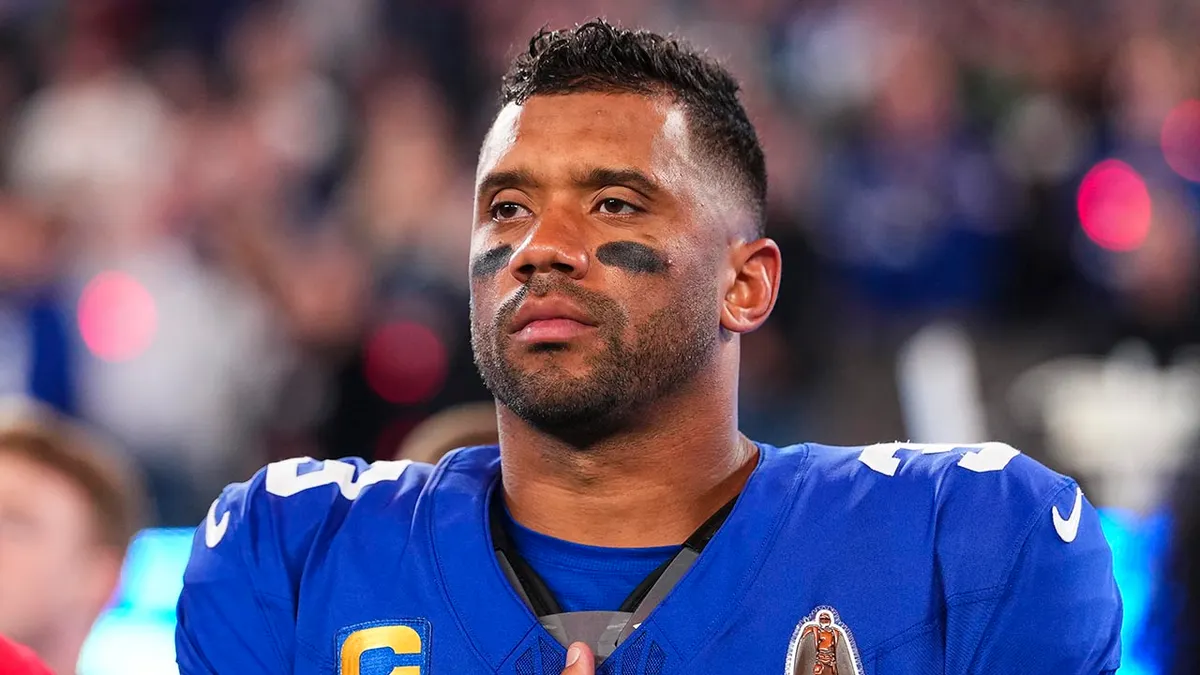
Quarterback Russell Wilson closed his playing career with an estimated net worth of $185 million. He also banked $315.8 million in cash earnings across 14 NFL seasons. Only quarterbacks Matthew Stafford, Aaron Rodgers, Kirk Cousins, and Tom Brady have collected more from the position. The roughly $130 million gap between gross earnings and retained wealth is where his financial story actually lives. That gap has less to do with spending than with tax geography, a stalled Denver chapter, and a brand he owns outright.
Any credible Russell Wilson net worth calculation starts with the contracts, not the endorsements. He signed three extensions in Seattle. Then he watched a $245 million Denver deal expire without a single snap. Thereafter, he played a full season in Pittsburgh for the veteran minimum while the Broncos wired him $37.79 million to stay home. The Top 50 NFL Richest Players and How They Built Their Net Worth ranks him among the top earners of his era. Even so, his retained wealth trails several peers who banked less, a direct consequence of where he played and when he got paid.
That contrast frames the sections below. Wilson’s gross earnings rank near the top of the all-time quarterback ledger. His net worth ranks lower than the raw number suggests. Washington’s zero percent income tax covered his prime, while California and Colorado did not. Meanwhile, a children’s apparel line he co-founded with his wife Ciara now generates more annual revenue than his final two NFL contracts combined.
Russell Wilson Net Worth Breakdown: $315 Million Earned, $185 Million Kept
The $315.8 million figure is a cash-flow total, not a bank balance. League contract valuation records track salaries, signing bonuses, roster bonuses, and option bonuses as they are actually paid. Wilson’s payment schedule was back-loaded, which concentrated his biggest checks in years when his tax residency had already shifted.
His rookie deal paid $2.996 million over four years. The 2015 extension paid $87.6 million over four, including a $31 million signing bonus. The 2019 extension reset the market at $140 million with a $65 million signing bonus and $107 million guaranteed. Denver’s $245 million extension, signed in September 2022, was structured to begin in 2024. As a result, the two seasons he actually played for the Broncos ran on the remaining years of his Seattle contract.
The Full Contract Chronology Behind $315.8 Million
League salary tracking and cap management databases lay out the chronology behind that $315.8 million total.
| Years | Team | Total Value | Guaranteed | Average Annual | Structure Note |
|---|---|---|---|---|---|
| 2012-2015 | Seattle Seahawks | $2,996,000 | $1,096,000 | $749,000 | Third-round rookie scale, 75th overall pick |
| 2016-2019 | Seattle Seahawks | $87,600,000 | $60,000,000 | $21,900,000 | $31 million signing bonus |
| 2020-2023 | Seattle Seahawks | $140,000,000 | $107,000,000 | $35,000,000 | $65 million signing bonus, richest deal in football at signing |
| 2022-2028 | Denver Broncos | $245,000,000 | $165,000,000 | $49,000,000 | Never took effect, released March 2024 |
| 2024 | Pittsburgh Steelers | $1,210,000 | $0 | $1,210,000 | Veteran minimum, Broncos absorbed $37.79 million offset |
| 2025 | New York Giants | $10,500,000 | $10,500,000 | $10,500,000 | Fully guaranteed one-year bridge deal |
Taxes and Agent Fees Cut Deep Into the Gross Total
Two deductions pull that total down hard. NFL player representation fees are capped at three percent. That cap means his agents will receive roughly $9.5 million of the $315.8 million over the course of his full career. Federal income tax takes its cut on top of that.
The Seattle years were the financial break. Washington levies no state income tax. As a result, the bulk of his $230.6 million in Seahawks contracts escaped state-level tax. California, Colorado, Pennsylvania, and New Jersey all applied their rates later.
The $1.21 Million Steelers Season That Cost Denver $37.79 Million
Denver released Wilson in March 2024. The team designated him a post-June 1 cut, which spread an $85 million dead cap charge across two seasons. At the time, that was the largest such charge in league history. Denver still owed him $39 million for 2024. Wilson then signed with Pittsburgh for the veteran minimum of $1.21 million.
Offset language inside the Denver contract required the Broncos to cover the difference. Pittsburgh carried a starting quarterback on its books for $1.21 million in cap space. Denver, by comparison, paid $37.79 million for a player wearing another uniform. The structure gave the Steelers room to build a playoff roster. In turn, it handed Wilson a one-year audition to reset his market.
Pittsburgh ran a version of the same playbook the following season with quarterback Aaron Rodgers, whose Steelers contract and net worth followed a comparable short-term structure. The difference is that Rodgers arrived as a free agent with no offset clause attached. For that reason, his former team carried no residual obligation. Wilson’s 2024 season remains the rare case where a franchise paid near-minimum for a starter while a rival funded the gap.
Why the $245 Million Broncos Extension Never Paid a Single Snap
Denver traded for Wilson in March 2022. The team then signed him to a five-year, $245 million extension that September. The deal included $165 million guaranteed and an average annual value of $49 million. Those numbers made it the second-richest quarterback contract in football at the time of signing. It also included a clause that delayed the extension’s start until 2024, after the two Seattle years the Broncos inherited had run out.
That clause turned out to be the entire story. Wilson played 2022 and 2023 on the old Seattle deal. He went 11-19 as Denver’s starter and was released before the extension ever activated. The Broncos had committed $124.8 million in cash to him across two seasons. They also carried a $124 million dead cap figure that they later split. This full salary cap guide explains the mechanics behind that charge and how teams spread it across multiple league years.
Wilson collected $39 million in 2024 from Denver without playing a snap for the franchise. The Giants then signed him to a fully guaranteed $10.5 million one-year deal in 2025. That contract functioned as a bridge rather than a commitment. Between the two, he earned $49.5 million in 2024 and 2025 combined while throwing for a combined 4,100 yards.
How Nine Pro Bowls and a Super Bowl Ring Converted Into Contract Leverage
Wilson’s trophy case and his bank account moved in tandem. His Super Bowl XLVIII championship in February 2014 arrived while he was still on a rookie contract. That season, he earned a $662,000 base salary. His winner’s share for that game was $107,000, roughly 16 percent of his annual base pay. Almost no starting quarterback in the modern era can match that ratio, because most of them sign extensions before their second contract year.
The 2019 extension came months after his only second-team All-Pro selection. It also followed a 2018 season in which he led the league with 34 passing touchdowns. That statistical peak gave his representatives the leverage to demand a $65 million signing bonus. At the time, it was the largest single bonus in league history. Denver’s $245 million offer in 2022 followed his 2021 season, when he posted a 103.1 passer rating with 25 touchdowns against six interceptions.
The 2020 Walter Payton NFL Man of the Year award carried a different kind of financial weight. It arrived the same year his foundation expanded its pediatric hospital commitments. As a result, it gave Nike and Microsoft a philanthropic angle for renewals that had nothing to do with completion percentage. Awards that signal character sustain endorsement income longer than awards that signal arm talent.
The Trophy-to-Dollar Table Behind Three Extensions
| Year | Award or Achievement | Financial Relevance |
|---|---|---|
| 2013 | Super Bowl XLVIII champion | $107,000 winner’s share against a $662,000 base salary |
| 2012-2021 | Nine Pro Bowl selections | Escalators and leverage across three Seattle extensions |
| 2015 | NFL passer rating leader (110.1) | Strengthened the 2015 extension negotiation position |
| 2017 | NFL passing touchdowns leader (34) | Raised market ceiling before the 2019 record deal |
| 2019 | Second-team All-Pro | Only All-Pro nod, $140 million extension signed months later |
| 2020 | Walter Payton NFL Man of the Year | Renewed Nike and Microsoft deals tied to philanthropy |
| 2021 | 103.1 passer rating, 25 TD, 6 INT | Statistical peak that triggered Denver’s $245 million offer |
Hall of Fame Timing and the Next Commercial Window
His standing on the all-time NFL passing yards leaders board gives that award file a second act. Hall of Fame eligibility arrives in 2031. Induction would reopen commercial categories that a retired quarterback typically loses access to. Those include legacy licensing, speaking circuits, and team ambassador roles.
Inside the $6 Million Endorsement Engine That Survives a Bad Season
Wilson’s off-field income holds at an estimated $6 million annually. That total comes from licensing, memorabilia, and a partner roster that has barely turned over in a decade. The structure skews toward multi-year arrangements rather than single-campaign fees. For that reason, the total didn’t collapse when his completion percentage did. Brands kept paying for the Super Bowl ring, the Walter Payton Man of the Year award, and a public image that never generated a crisis.
- Nike: his longest-running apparel partner, which extended his deal in 2016 and co-produces the 3BRAND children’s line.
- Microsoft: a Seattle-area corporate anchor that has featured him in national campaigns since his Seahawks prime.
- Pepsi: a relationship spanning multiple NFL seasons, built around in-store activations and gameday spots.
- Bose: a global ambassador role covering headphones and consumer audio products.
- Mercedes-Benz: a partnership dating to his Seattle tenure and tied to dealership appearances in the Pacific Northwest.
- Alaska Airlines: a regional brand deal that leveraged his decade-long residency in Washington state.
- Fanatics: covering licensed merchandise, jerseys, and signed memorabilia distribution.
- Panini: trading cards, collectibles, and autograph releases tied to his rookie class.
The commercial logic shifted as his career aged. At peak, Wilson commanded top-of-market rates for national television campaigns. In his final seasons, sponsors valued narrative stability more than statistical output. That is a different product entirely. As a result, the $6 million held flat while his passing yards per attempt fell.
3BRAND Cleared $100 Million in Sales Without a Single Endorsement Check
The most valuable commercial asset in Wilson’s portfolio is one he owns. 3BRAND, the children’s sportswear label he launched with Ciara in June 2021, cleared $100 million in sales in 2024. It then topped $70 million in the first half of 2025. The brand sells moisture-wicking tops, hoodies, shorts, and accessories for kids. Distribution runs through Macy’s, JCPenney, Nordstrom Rack, and more than 150 Dick’s Sporting Goods locations.
Wilson drew the logo himself. He converted his initials into a lightning bolt to signal momentum. The concept came together in his Los Angeles home the day before his son Win was born. At the time, he had just watched his older son run across the room with a football tucked under his arm. A 40-piece launch collection scaled to roughly 100 items through a manufacturing partnership. A Nike collaboration then pushed the line into backpacks and accessories.
Three percent of proceeds flow to the Why Not You Foundation. That structure links the commercial operation directly to the couple’s philanthropic arm. In turn, it turns 3BRAND into both a profit center and a mission-aligned enterprise. That dual function lands with the parents who make up its core customer base. No endorsement deal in his portfolio carries that kind of equity upside.
West2East Empire and the Equity Stakes That Outlast a Playing Career
Wilson’s business architecture runs through the West2East Empire. That brand management and production firm handles commercial services for television, film, and media projects. A companion entity, Why Not You Productions, develops scripted series and films. Those include a Sarah Rector biopic set up with Amazon MGM Studios. Together, the entities position him as a producer with equity participation rather than a paid spokesperson collecting a flat fee.
The Media and Production Arm
Why Not You Productions operates as the content development side of the business. It focuses on scripted series and feature films rather than one-off appearances. That structure gives Wilson backend participation in projects that can generate revenue for decades. By comparison, a traditional endorsement deal ends when the campaign does.
The Investment Portfolio Spreads Across Sports, Tech, and Consumer
His investment portfolio spreads across sports, technology, and consumer categories.
- Seattle Sounders FC: a minority ownership stake in the Major League Soccer club, tying him to the city where he spent his prime.
- Portland Diamond Project: an initiative to bring a Major League Baseball franchise to Oregon, positioning him as a long-term Pacific Northwest stakeholder.
- Therabody: recovery technology, the percussive therapy company behind the Theragun line.
- VICIS: a football helmet manufacturer built around concussion-reduction engineering.
- Prolific Machines: a biotechnology company operating in the cellular agriculture space.
- Limitless Minds: a mental conditioning app he co-founded with his brother Harry in 2018.
- Zigazoo: a youth-oriented social platform where he and Ciara hold investor and board positions.
- The House of LR&C: a fashion house encompassing Good Man Brand apparel, R&C fragrance, and LITA by Ciara.
Quarterback Jalen Hurts reached a comparable commercial tier through a Super Bowl run and a nine-figure net worth. His holdings, though, skew toward apparel and nutrition rather than biotechnology and civic sports ownership. Wilson’s portfolio carries more illiquid bets. For that reason, its value won’t track his quarterback rating.
Rancho Santa Fe, Bellevue, and a Real Estate Portfolio Built for Relocation
Wilson and Ciara’s property holdings read as a map of four career stops. Their Rancho Santa Fe compound, known as Amor Estate, listed for $54.9 million in late 2025. The asking price then dropped to $45 million in July 2026. They bought the roughly nine-acre property in 2021 for $14.5 million. The main residence spans approximately 17,000 square feet. It includes a waterslide, a pool complex, and a full-size football field on the grounds.
The Pacific Northwest footprint has narrowed. A Bellevue waterfront mansion sold for approximately $31 million in 2024. A separate Bellevue waterfront lot Wilson once owned returned to market in 2026. It was listed as a $28 million pre-sale luxury estate. During his Broncos tenure, he purchased a Denver-area home for $25 million. That property was tied to a chapter that lasted two seasons.
Four relocations in five years created carrying costs that most net worth estimates understate. Those include property taxes across three states and maintenance on homes that sat empty for months. Brokerage fees on two major sales added to the total. The Amor Estate price reduction alone represents a $9.9 million adjustment from the original listing. Even so, the couple still stands to clear a substantial gain over the 2021 purchase price.
Why Not You Foundation and the $21 Million Philanthropic Ledger
The Why Not You Foundation, founded by Wilson in 2014, has raised more than $21 million. Programs target education access, children’s health, and food security. Its most visible recent commitment came in December 2025, when it directed $3 million to Mount Sinai Kravis Children’s Hospital in New York. That grant is tied to redesigning the patient experience for long-term pediatric stays. That same month, the foundation sent $500,000 to Atlanta families facing food insecurity.
The mission centers on empowering young people to lead with a “why not you” mindset. Wilson has used that phrase since his college years at NC State and Wisconsin. The three percent donation from 3BRAND proceeds provides the foundation with a recurring revenue stream. That is a shift from a cycle of one-time galas, and it stabilizes grantmaking year to year.
The philanthropic structure mirrors the commercial one. Both are built to compound rather than spike. Quarterback Tom Brady converted his playing career into a broadcast deal and minority ownership stake that redefined what retirement can pay. Wilson’s version leans on consumer brands and civic sports equity instead of a network contract. That path carries more operational risk and more upside.
Frequently Asked Questions:
How much did the Denver Broncos pay Russell Wilson after releasing him?
Denver designated Wilson a post-June 1 cut in March 2024. That split an $85 million dead cap charge across two league years. The Broncos paid $37.79 million of his salary in 2024 while he started for Pittsburgh. They then carried the remainder into 2025. Denver also paid him $39 million in cash for the 2024 season under the original deal.
What does the offset clause in Russell Wilson’s contract actually do?
Offset language lets a team subtract a player’s new salary from what it still owes him. Wilson signed with Pittsburgh for the $1.21 million veteran minimum. Denver then made up the difference, bringing his total back to the original $39 million figure. Without that clause, the Broncos would have owed the full amount regardless of where he signed.
How much of Russell Wilson’s $315.8 million went to agent fees and taxes?
NFL representation fees are capped at three percent. That cap means his agents receive roughly $9.5 million of the gross total. Federal income tax applies to the remainder. State exposure varied by team. Washington charges no state income tax, so his nine Seahawks seasons carried the lightest state burden of his career.
Which of Russell Wilson’s business ventures generates the most revenue?
3BRAND is the largest by revenue. It cleared $100 million in sales in 2024 and more than $70 million in the first half of 2025. The brand operates as a consumer products company rather than an endorsement arrangement. As a result, the revenue flows to the ownership group. West2East Empire and Why Not You Productions generate smaller but higher-margin income from media projects.
How did Russell Wilson’s awards affect his contract values?
His nine Pro Bowl selections and 2019 second-team All-Pro nod gave his representatives leverage at three separate negotiation tables. The 2020 Walter Payton NFL Man of the Year award sustained endorsement renewals that had nothing to do with on-field production. Denver’s $245 million offer followed his 2021 statistical peak, when he posted a 103.1 passer rating.
Is Russell Wilson’s net worth still growing after retirement?
Retained wealth now depends on 3BRAND performance, the investment portfolio, and two pending real estate sales rather than on contract income. The Amor Estate price reduction from $54.9 million to $45 million trimmed a potential gain but left a substantial margin over the $14.5 million purchase price. His equity stakes in Therabody, VICIS, and Prolific Machines carry the widest valuation range.
What the $185 Million Figure Says About the Modern Quarterback Economy
Wilson’s file illustrates how the position shifted from a salary job into an equity-building enterprise. His $315.8 million in career earnings placed him among the five highest-paid quarterbacks in league history. Even so, the more instructive number is the $6 million he generates annually off the field. That figure held steady while his on-field production declined. The 3BRAND sales total, the Sounders stake, the Portland Diamond Project position, and the production entities all share one trait. They appreciate independently of their completion percentage. For the next generation of quarterbacks negotiating a second contract, the post-retirement architecture behind Russell Wilson’s net worth may prove the more valuable template than the $140 million extension that made him the highest-paid player in football.