


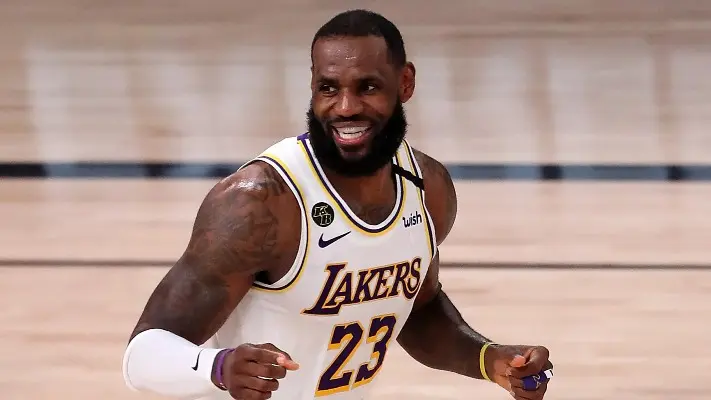
LeBron James began his NBA career with a four-year contract worth approximately $18.8 million. More than two decades later, estimates of his fortune have reached $1.4 billion. The transformation did not come from basketball salaries alone. It reflects a financial strategy that evolved from lucrative endorsements into investments in media, restaurants, and professional sports.
The story of LeBron James’s net worth is ultimately about what he did with his earning power. His NBA career supplied substantial income and worldwide recognition, but long-term commercial partnerships and ownership interests created opportunities to build wealth beyond his playing years.
His fortune is not measured with the precision of an NBA salary cap figure. Estimates vary considerably because the value of private companies, investment holdings, and other assets is not fully available to the public. Still, the milestones in James’ financial history reveal how an athlete who entered the league as a teenager developed one of the most substantial business portfolios in professional sports.
From a $18.8 Million Rookie Contract to a Global Brand
The Cleveland Cavaliers selected James first overall in the 2003 NBA Draft. He arrived with enormous expectations, but his financial future was far from guaranteed. His rookie contract provided a strong starting point, while his performance quickly established him as a commercial property with potential far beyond the basketball court.
His first major Nike agreement, signed in 2003, was reportedly worth more than $90 million over seven years. The deal came before he had played an NBA regular-season game, reflecting the confidence the company placed in his potential to become a global star.
The partnership became a defining feature of his financial development. As James collected individual honors, reached the NBA Finals, and built an international following, his signature footwear line gave the relationship a commercial life beyond traditional advertising appearances.
His early career established two sources of income: NBA salary and endorsement revenue. The first was tied to his employment as a player; the second grew with his visibility and marketability. Over time, he would pursue a third route, one with the potential to generate wealth through ownership rather than payments alone.
2003–2010: Building the Financial Foundation
James’ first seven seasons in Cleveland turned the promise of his rookie years into a proven professional career. His salary increased through contract extensions, while his commercial appeal expanded with his success on the court.
By the end of his first Cleveland stint, he had earned roughly $80 million in NBA salary. That was a substantial sum for a player who had entered the league at 18, but it represented only one part of his financial picture.
The Nike partnership was becoming more valuable as his profile grew. Other endorsement opportunities followed, allowing James to earn income from his public identity as well as his performance. Those agreements gave him a financial base that did not depend entirely on the contract offered by his team.
The significance of this period lies in the combination of income and opportunity. James had a long career ahead of him, a growing commercial platform, and the resources to begin investing. His wealth was still primarily associated with his playing career, but the conditions for a broader financial strategy were in place.
2010–2015: The Shift From Endorsements to Equity
James’ move to the Miami Heat in 2010 marked a major basketball transition. He won two championships during his four seasons in Miami before returning to Cleveland in 2014. His salary rose as he moved from a highly promising young player to an established superstar with championship credentials.
The more consequential change was his growing interest in business ownership.
Blaze Pizza became an example of the approach. James invested in the restaurant chain rather than limiting his involvement to a conventional endorsement arrangement. The investment exposed him to the company’s growth and potential future value, rather than simply compensating him for promoting a product.
That distinction is important to understanding LeBron James business investments. An endorsement provides income under agreed terms. Equity ownership creates a financial interest in the underlying company, meaning the investor may benefit if the business grows in value. The reverse is also true: an investment can lose value, and a private stake may be difficult to sell.
James’ financial strategy was moving beyond the familiar model of an athlete collecting sponsorship checks. He was using the income and visibility generated by basketball to acquire interests in businesses that could continue operating long after his playing career ended.
2015–2020: The Nike Deal and a Growing Commercial Portfolio
Nike announced a lifetime agreement with James in 2015, extending one of the most important partnerships of his career. The complete financial terms were not publicly disclosed, although reports have described the agreement as potentially worth more than $1 billion over its lifetime.
That reported figure should not be confused with a confirmed payment already received. A lifetime endorsement agreement can involve payments over many years, and its full value depends on contractual terms that are not publicly available.
The partnership nevertheless illustrates the scale of James’ commercial appeal. His signature shoes and apparel line connected his playing career with a consumer business that could generate income across seasons, markets, and generations of fans.
Other endorsement relationships broadened that portfolio. James became associated with major brands across technology, retail, beverages, and entertainment. The precise value of every agreement is not public, but endorsements became a major component of his overall earning power.
Meanwhile, his ambitions expanded into media. Working with longtime business partner Maverick Carter, James developed production and marketing ventures that eventually came together under The SpringHill Company. The business pursued film, television, and other forms of entertainment, creating a commercial operation that did not depend on James appearing in every project.
The financial significance was clear: he was no longer relying solely on other companies to pay for access to his name. He was also building businesses with their products, customers, and potential investment value.
2021: SpringHill Demonstrates the Value of Ownership
The SpringHill Company reached a major financial milestone in 2021 when outside investors acquired a significant minority stake in a transaction that valued the business at approximately $725 million.
That valuation offered a concrete indication of the scale of the media company James had helped build. It did not mean that he personally received $725 million, nor did it establish the precise current value of his ownership interest.
A company’s valuation and an individual shareholder’s wealth are different calculations. The shareholder’s stake depends on the ownership percentage, the transaction’s terms, and any subsequent changes in the business’s value.
James also held an investment interest in Fenway Sports Group. His earlier investment in Liverpool FC was exchanged for an interest in the broader sports ownership group, connecting him to a portfolio that includes the Boston Red Sox and other sports properties.
These investments illustrate the evolution of his financial approach. Basketball remained his primary occupation, but his portfolio increasingly included interests in companies whose value depended on business performance rather than his points, minutes, or seasons played.
2022: The Billionaire Milestone
In 2022, James became the first active NBA player widely recognized as a billionaire through a published wealth estimate. The milestone reflected the combined value of his basketball earnings, endorsement income, business interests, and other assets.
It was not the result of one extraordinary salary or a single investment sale. Rather, it represented the accumulated effect of decisions made over nearly two decades.
The Nike partnership provided a long-term commercial foundation. Investments such as Blaze Pizza offered exposure to business growth. SpringHill brought a substantial media enterprise into his portfolio, while Fenway Sports Group added an interest in professional sports ownership.
The milestone also demonstrated why LeBron James’s career earnings and net worth should not be treated as interchangeable figures. Career earnings measure income received over time. Net worth estimates the value of assets still held, minus liabilities, at a particular point.
A person can earn hundreds of millions of dollars without retaining that amount as wealth. Conversely, investments can appreciate and increase net worth beyond the original amount invested. James’ billionaire milestone reflected the value attributed to his broader financial portfolio, not simply the sum of his NBA paychecks.
NBA Salary: How His Career Earnings Accumulated
James’ playing salary remains the most transparent component of his financial history. His contracts grew as his career progressed, and he continued earning at an elite level well into his twenties and thirties.
His NBA salary through the 2025–26 season totaled approximately $581.4 million. The following breakdown shows how that income accumulated across his teams.
| NBA Team | Career Salary Through 2025–26 |
|---|---|
| Cleveland Cavaliers | $169.9 million |
| Miami Heat | $64.0 million |
| Los Angeles Lakers | $347.5 million |
| Total | $581.4 million |
These figures represent reported NBA salary, not take-home pay or current wealth. They exclude endorsement income, investment returns, and other business revenue.
The LeBron James contract history also reflects the growth of the NBA itself. As league revenues and salary opportunities expanded, established stars could command much larger agreements. James’ continued performance helped him remain eligible for top-tier compensation across multiple stages of his career.
His salary is therefore an important foundation, but it cannot independently explain a fortune estimated in the billions. The larger story lies in what he earned off the court and the assets he built with those earnings.
Real Estate and Other Assets
Real estate forms another part of James’ financial portfolio. Over the years, he has purchased homes in Ohio, Miami and Los Angeles, with reported transactions showing the scale of his property investments.
He bought property near Akron, Ohio, early in his career and developed a substantial estate. In Miami, he purchased a home for approximately $9 million in 2010 and sold it for a reported $13.4 million in 2015. In Los Angeles, he bought a Brentwood property for roughly $21 million in 2015 and sold it in 2021 for about $19.6 million. He also purchased a Beverly Hills estate for approximately $36.75 million in 2020.
These transactions illustrate the scale of his holdings, but purchase prices alone do not establish the present value of his property portfolio. Homes may be sold, renovated, redeveloped, or financed with debt, all of which affect the calculation.
A sound assessment of LeBron James real estate must distinguish between properties still owned and those already sold. It must also account for current market value and any liabilities attached to the assets.
The same principle applies to his business investments. A private company’s headline valuation is not equivalent to the cash its shareholders could receive if they sold their interests. The value of James’ portfolio depends on the underlying assets and obligations, not just the largest figures associated with individual transactions.
Why LeBron James Net Worth Estimates Differ
Published estimates of James’ wealth vary substantially, with figures ranging from $850 million to $1.4 billion in 2026. The difference is too large to ignore, but it does not automatically establish that either figure is a verified accounting total.
Several factors help explain the uncertainty.
Private-company valuations: The value of SpringHill and other private investments depends on business performance, ownership terms, and the prices investors might pay. A valuation from an earlier transaction may not reflect the current value.
Gross income versus wealth: NBA salary and endorsement earnings accumulate over time, but taxes, commissions, expenses, and spending reduce the amount retained. Investment gains can increase wealth, while losses can reduce it.
Real estate and liabilities: Property values change, and outstanding debt affects the equity an owner holds. A purchase price cannot simply be added to other assets and treated as current wealth.
Undisclosed agreements: The full terms of James’ lifetime Nike deal and several private investments are not public. Their precise contribution to his present net worth cannot be calculated independently from the information available.
The most defensible conclusion is that James has accumulated extraordinary wealth through a combination of salary, endorsements, and ownership interests. The exact figure remains an estimate because the public does not have access to a complete statement of his assets and liabilities.
Frequently Asked Questions
How much has LeBron James earned from NBA contracts?
His reported NBA salary through the 2025–26 season totals approximately $581.4 million before taxes and other expenses. That figure does not include endorsements, business investments or other off-court earnings.
How important is Nike to LeBron James’ fortune?
Nike has been one of his most important long-term commercial partners since 2003. The lifetime agreement announced in 2015 extended that relationship, although the full financial terms remain undisclosed.
Does LeBron James own all of The SpringHill Company?
No. Outside investors acquired a significant minority stake in SpringHill in 2021 at a company valuation of approximately $725 million. That valuation does not represent the value of James’ personal ownership interest.
Is LeBron James a billionaire?
A widely cited estimate placed James above the billion-dollar threshold in 2022, while more recent estimates vary. His business interests and endorsements have contributed substantially to his wealth, but no one has publicly established the precise value of his private assets and liabilities.
LeBron James built his fortune through a combination of elite basketball earnings, a long-term commercial relationship with Nike, and investments that extended his financial interests beyond the NBA. His career shows how an athlete can turn visibility and income into ownership, creating opportunities for wealth to grow long after a playing contract ends. The exact estimate may change, but the underlying financial transformation is the defining part of his story.