


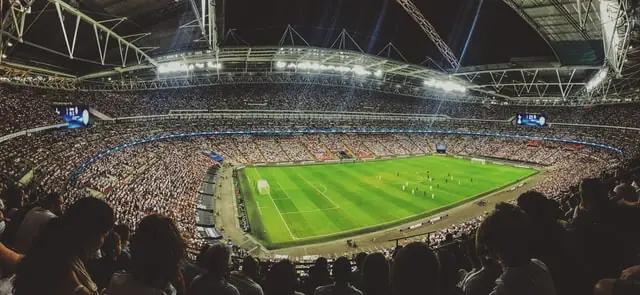
How long is a soccer game? A standard professional match lasts 90 minutes, split into two 45-minute halves with a 15-minute break at halftime. But the clock rarely stops, so the referee adds stoppage time at the end of each half. As a result, most pro games actually run closer to 95 or 100 minutes of action.
The full answer depends on the level of play. For example, high school matches are shorter, youth games scale with age, and college rules changed recently. Below, you’ll find the exact timing for every format, plus how extra time, stoppage time, and penalty shootouts work.
How Long Is a Soccer Game? The Quick Answer
Here’s a fast breakdown before we dig into the details. Each level uses its own clock, halftime length, and tiebreaker rules.
| Level | Format | Playing Time | Halftime |
|---|---|---|---|
| Professional | Two 45-minute halves | 90 minutes plus stoppage | 15 minutes |
| College (NCAA) | Two 45-minute halves | 90 minutes | 15 minutes |
| High School | Two 40-minute halves | 80 minutes | 10 to 15 minutes |
| Youth | Shorter halves or quarters | 24 to 90 minutes | 5 to 10 minutes |
Keep in mind that these numbers cover playing time only. Therefore, you should always add a buffer for stoppages, warm-ups, and possible extra time.
How Long Is a Professional Soccer Game?
A professional soccer game lasts 90 minutes of regulation play. The match splits into two 45-minute halves, and the teams switch ends after the break. Leagues such as the Premier League, La Liga, and MLS all follow this same format.
The referee keeps the official clock running through most stoppages, though. Because of these rules, every half ends with added minutes called stoppage time. Recent seasons have seen longer additions, so a single half can gain five minutes or more.
In league play, a tied game simply ends as a draw. In knockout tournaments, though, a level score sends the match to extra time and possibly penalties. We cover both formats next.
What Is Stoppage Time in Soccer?
Stoppage time, also called added time or injury time, makes up for minutes lost during each half. The fourth official signals the amount on a board as the half nears its end. Importantly, this time is added on top of the 45 minutes, not subtracted from it.
Referees track several types of delays. The most common reasons include:
- Substitutions and the pauses they create
- Treatment and removal of injured players
- Goal celebrations
- VAR reviews at competitions that use them
- Deliberate time-wasting by a leading team
- Disciplinary stoppages, such as yellow or red cards
So if a half loses six minutes to these events, the referee can add that same amount of time back. Play then continues until that added time expires.
Extra Time and Penalty Shootouts Explained
Knockout matches need a winner, so a tie at full-time triggers extra time. Extra time consists of two 15-minute halves, which adds 30 minutes to the match. Unlike the old golden goal rule, both periods are now played in full.
Should the score still be level after extra time, the game goes to a penalty shootout. Each team takes five penalty kicks first, and the side with more goals wins. When the teams remain tied after five kicks each, the shootout moves to sudden death.
A penalty kick is taken from the penalty spot, which sits 12 yards (11 meters) from the goal line. The goalkeeper must stay on the goal line until the kicker strikes the ball. Once struck, the ball is in play, and the kicker can’t touch it again until another player does.
How Long Is a College Soccer Game?
A college soccer game in the United States lasts 90 minutes, the same as the pro format. NCAA matches use two 45-minute halves with a halftime break of around 15 minutes.
The overtime rules changed in 2022, which matters. Since then, regular-season NCAA games that finish tied simply end in a tie. As a result, you no longer see sudden-death overtime during the regular season.
Postseason play works differently, though. If a conference or NCAA Tournament game is tied after 90 minutes, the teams will play two 10-minute overtime periods. When the score remains level after overtime, a penalty shootout decides who advances.
How Long Is a High School Soccer Game?
A high school soccer game runs 80 minutes in total. The match splits into two 40-minute halves, with a halftime break of 10 to 15 minutes. This shorter format follows national federation guidelines used across most states.
High school soccer also uses a running clock, so the time keeps moving during minor delays. Officials can still pause it for serious injuries or severe weather. Because of warm-ups and pre-game routines, you should plan to spend closer to two hours at the field.
Tiebreakers vary by state and round. Many playoff games use two short overtime periods, and penalty kicks settle anything still level. Regular-season games, on the other hand, may simply end in a draw.
How Long Is a Youth Soccer Game?
Youth soccer length scales with the age of the players. Younger groups play shorter periods, and some of the youngest divisions use quarters instead of halves. The table below shows typical durations under common United States youth guidelines.
| Age Group | Format | Total Playing Time |
|---|---|---|
| U6 | Four short quarters | 24 to 32 minutes |
| U7 to U8 | Four 10 to 12-minute quarters | 40 to 48 minutes |
| U9 to U10 | Two 25-minute halves | 50 minutes |
| U11 to U12 | Two 30-minute halves | 60 minutes |
| U13 to U14 | Two 35-minute halves | 70 minutes |
| U15 to U16 | Two 40-minute halves | 80 minutes |
| U17 to U19 | Two 45-minute halves | 90 minutes |
These figures can shift by league, club, and country. Therefore, always check your child’s specific schedule before game day. Coaches also shorten periods in extreme heat or cold to protect player safety.
Why Soccer Uses Halves, Not Quarters
People often ask how many quarters are in soccer. The answer is none at the standard level, because soccer uses two halves rather than four quarters. This structure has defined the sport for well over a century.
Only the youngest youth divisions break the game into quarters. For example, many U6 and U8 programs play four short periods to give small children frequent rests. As players grow, those quarters merge into the familiar two-half format.
How Long Does a Soccer Game Take in Real Time?
Playing time and total time aren’t the same thing. A 90-minute pro match usually fills about two hours of real time once you include halftime, stoppage time, and breaks. Knockout games with extra time and penalties can stretch past two and a half hours.
So when you plan your day, build in a buffer. Adding 20 to 30 minutes to the listed playing time is a safe habit for fans and parents alike.
Frequently Asked Questions
How long is a soccer game in total?
A professional soccer game lasts 90 minutes of playing time, plus stoppage time at the end of each half. In real time, the full experience usually runs about two hours once you include the 15-minute halftime and added minutes.
How long is a high school soccer game?
A high school soccer game lasts 80 minutes, divided into two 40-minute halves. Halftime adds another 10 to 15 minutes, and warm-ups can extend your total time at the field to roughly two hours.
How long is a college soccer game?
An NCAA college soccer game lasts 90 minutes across two 45-minute halves. Since 2022, tied regular-season games end in a draw, while tied postseason games go to two 10-minute overtime periods and then penalties.
How many quarters are in a soccer game?
Standard soccer has no quarters. The game uses two halves instead, each lasting 45 minutes at the professional level. Only the youngest youth divisions split play into shorter quarters.
How long is extra time in soccer?
Extra time lasts 30 minutes, played as two 15-minute halves. It applies only in knockout matches that are tied after regulation. If the score is still level afterward, a penalty shootout decides the winner.
Can a soccer game end in a tie?
Yes, a soccer game can end in a tie. League and regular-season matches often finish as draws when the score is level after 90 minutes. Knockout games, though, must produce a winner through extra time or penalties.
How far is a penalty kick in soccer?
A penalty kick is taken from 12 yards (11 meters) away from the goal line. The goalkeeper must stay on the line until the ball is kicked. Until another player touches the ball, the kicker is not allowed to make contact with it again.
Conclusion
So how long is a soccer game? At the professional and college level, the answer is 90 minutes of play, plus stoppage time. High school games run 80 minutes, and youth games range from about 24 minutes to a full 90 depending on age.
The clock rarely tells the whole story, though. Stoppage time, extra time, and penalty shootouts can all stretch a match well beyond its listed length. When in doubt, add a buffer of 20 to 30 minutes, and you’ll rarely miss a kickoff or a finish.