
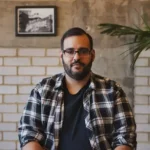
Joe Woods had been through the Raiders building before and Klint Kubiak made certain he stayed.
The 55-year-old defensive backs coach is one of only four coaches Kubiak retained from the 2025 staff when he took over as Las Vegas head coach, and his role as defensive pass game coordinator puts him at the center of first-year defensive coordinator Rob Leonard’s rebuild of the Raiders secondary. Woods isn’t just a familiar face. He’s the technical anchor for a defense that Leonard wants playing fast, disguising coverages, and dictating terms to opposing offenses before the snap even happens.
Joe Woods and the Raiders: A Connection That Runs Deep
Woods first coached in the Raiders organization in 2014 as defensive backs coach for the then-Oakland Raiders, returning to Las Vegas last season before Kubiak locked him in for 2026. Between those two stints, he ran defenses as coordinator for the Denver Broncos (2017–18), Cleveland Browns (2020–22), and New Orleans Saints (2023–24).
That résumé matters to Leonard. A first-year defensive coordinator inherits a scheme, a roster, and a staff, and the quality of that staff determines how quickly installation becomes execution.
Kubiak and Woods formerly worked together with the Broncos and Saints, a connection that made retaining the defensive backs coach straightforward when the new head coach evaluated his options. NFL staffs are built on overlapping relationships. This one came with a proven foundation. For broader context on every team’s roster construction heading into 2026, the All NFL Teams: Complete Alphabetical List of 32 Teams (2026 Season) puts Las Vegas’s organizational picture in perspective against the rest of the league.
What Rob Leonard Is Building and Why Joe Woods Fits
Leonard, 39, stepped into the coordinator role after serving as Las Vegas’s defensive line coach. He’s direct about what he wants from his defense.
“I’m a little crazy. I would like them to play fast, even at the cost of a mental error,” Leonard told reporters Wednesday at OTAs. “I don’t like to see hesitation on the field, so even if you’re unsure, decide and go and let us coach.”
That attacking philosophy requires a secondary that can process information quickly and move without telegraphing intent—exactly the coverage identity Woods has built throughout his coaching career. Woods designs secondaries to show one coverage before the snap and execute something different after it. Pre-snap deception is the engine. Versatile personnel are the fuel.
“When you have guys who have versatility, it allows you to do so many more things defensively,” Woods said during OTAs this week. “Different packages, how you can move guys around on the field—we’re excited about it and we’re kind of tinkering a few things here and there to just see where it goes.”
The Raiders’ 2026 personnel fits that framework. Jeremy Chinn, 6-foot-3 and 220 pounds, operates as both a traditional safety and a big nickel, the kind of chess piece that creates matchup problems before any play is called. Las Vegas also added rookies Treydan Stukes and Dalton Johnson in the 2026 NFL Draft, both traditional safeties capable of sliding into the slot, alongside veteran slot cornerback Taron Johnson, who can rotate to safety when needed.
Chinn described the early-install feel during OTA work this week.
“When we have guys who can play in different spots and rotate different ways, it doesn’t necessarily get the offense a heads-up of what we’re doing,” Chinn said. “We can spin anybody down and spin anybody back.”
One reason that coverage disguise works: quarterback pressure. Understanding What a Blitz Is In Football Decoding the Art of Defensive Aggression is essential context for how Woods layers pass-rush threats with coverage rotations to keep offenses off-balance at the line of scrimmage.
The Install Process: Coaches as the First Litmus Test
Leonard isn’t hiding the challenge in front of him. First-year coordinators don’t just call plays; they translate a philosophy into 11 players moving in concert. He explained his install process to reporters at OTAs this week.
“You rely on the concepts that have started to build here—things you like, things you trust, things you know very well,” Leonard said. “Then you understand why you would call that; you understand the weaknesses of how that would be attacked, and you have the confidence to install it to all 11 guys.”
He added a line that cuts to what separates a scheme that works on a whiteboard from one that functions on the field.
“The coaches are the first litmus test for that,” Leonard said. If they can get it, we can coach it. It’s one thing to understand it in the meeting, but can we actually coach the concept and get it executed?
Woods, safeties coach Matt Robinson, senior defensive assistant Al Holcomb, defensive line coach Travis Smith, and linebackers coach Ronell Williams form the staff around Leonard. Kubiak has been clear about where authority sits on that side of the ball.
“We’re working together. We’re working together on these installs, but Rob’s in charge,” Kubiak said at OTAs. “He’s got a lot of talented assistants with Joe Woods, and there are some veteran coaches on there that are doing a great job, and we’re going to put Coach Robbie in positions to call periods here at OTAs and in training camp so that he’s ready to go come the season.”
The Raiders’ 2026 offseason has carried significant momentum. Raiders Select Heisman Winner Fernando Mendoza No. 1 in the 2026 NFL Draft, a franchise-altering move that sets the stakes for how urgently this organization needs its new defensive staff to deliver.
What the Raiders’ Defensive Backs Think of Joe Woods
The player feedback on Woods is worth more than any coaching résumé line. Cornerback Eric Stokes spoke plainly when asked whether the team would retain Woods for 2026.
“Keeping Joe here is unbelievable because everybody loves Joe in the DB room,” Stokes said at OTAs this week. “It’s difficult to not love Joe. Joe is a whole entertainment show. Joe is funny, and I love Joe, man.”
That credibility in the defensive back room isn’t incidental. Leonard is asking his players to learn a system that demands pre-snap communication, post-snap adjustment, and trust built in film rooms and practice fields, not just OTA walkthroughs.
Nick Wagoner captured the secondary’s energy during this week’s sessions, with players and coaches working through coverage rotations on the field:
The AFC West won’t give Leonard’s defense any margin. The Rams are the first team with a reigning MVP quarterback and a reigning Defensive Player of the Year, a roster benchmark that puts every conference defense on alert heading into 2026.
ESPN’s Jeff Fowler reported on how first-year defensive coordinators across the league are handling their spring installations, with Leonard among those navigating new play-calling responsibility:
What Success Looks Like for Rob Leonard in Year One
Leonard’s defense won’t be judged on scheme complexity. It’ll be judged on whether the Raiders’ secondary can execute that complexity under live-game pressure, with a first-year play caller making decisions at game speed.
Woods gives Leonard something most first-year coordinators don’t have: a defensive backs coach who already knows the players, already knows the building, and already shares a coaching history with the head coach. That continuity compresses the learning curve.
The 2026 season will be nationally visible. The NFL Splits Four Monday Night Doubleheaders Between YouTube and Netflix, meaning Las Vegas’s defensive performances could land on the biggest broadcast stages of the regular season.
The Raiders head into mandatory minicamp next week, then training camp in late July. Those sessions are where scheme installation becomes competitive repetition and where Leonard will call live coverage periods with the full defense. Joe Woods has been here before. For Rob Leonard, that’s exactly the point.
