


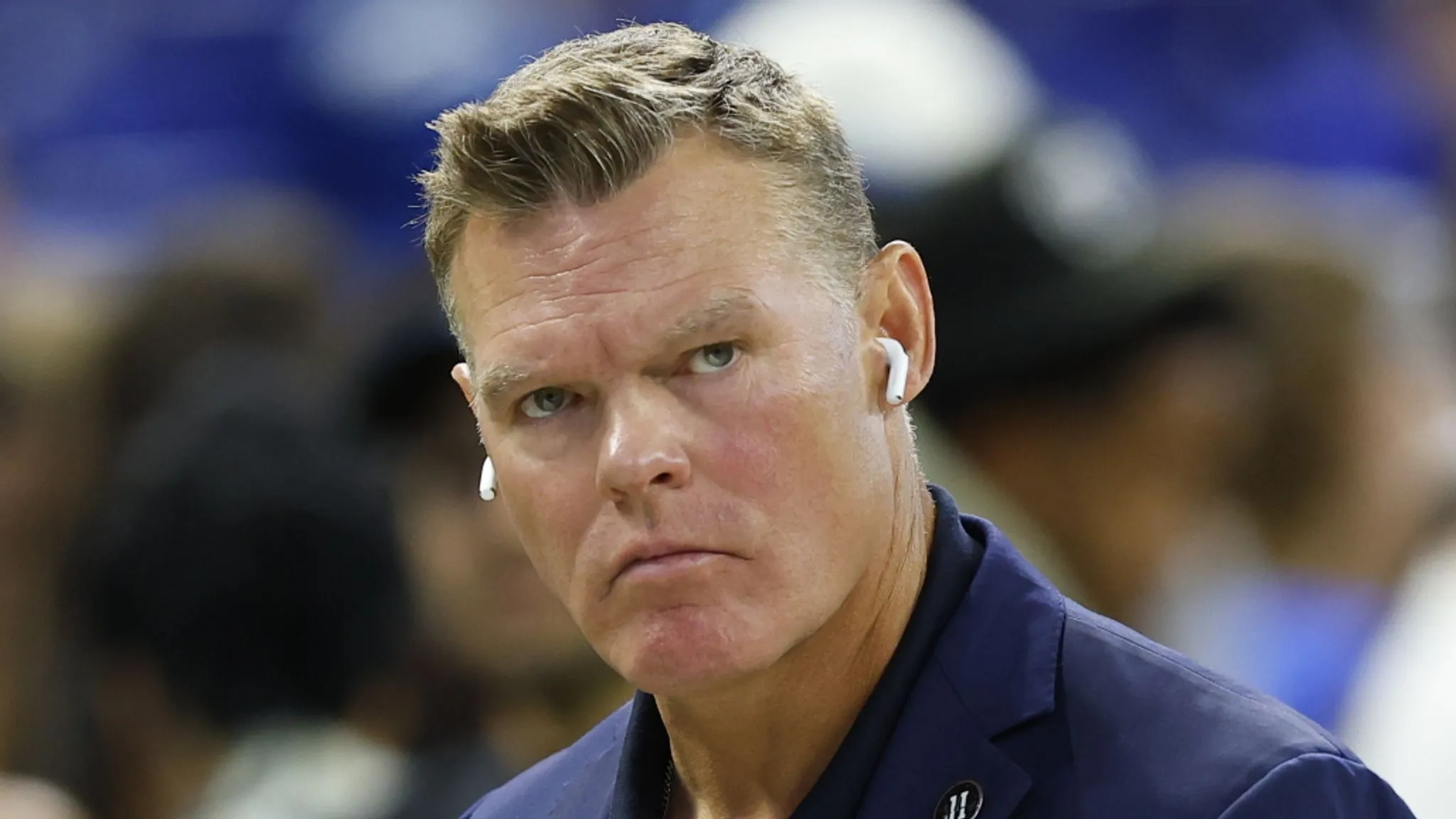
The Indianapolis Colts have fired general manager Chris Ballard following a 26-20 home loss to the Tennessee Titans, ending his tenure after more than nine seasons in charge of the team’s football operations. Owner and CEO Carlie Irsay-Gordon announced the decision Monday, October 19, as Indianapolis fell to 2-4 through six games of the 2026 NFL season.
The timing puts the franchise’s roster-building strategy under renewed scrutiny. Indianapolis surrendered a 13-point halftime lead against a previously winless Tennessee team, intensifying the pressure on a front office that has struggled to return the Colts to the playoffs.
Ballard’s departure also creates an important question for the organization: can a new general manager establish a sustainable direction at quarterback while improving the roster with limited first-round draft capital? Those decisions will help determine whether Indianapolis can recover this season or needs a more extensive reset.
Carlie Irsay-Gordon Calls for a Leadership Change
Irsay-Gordon said the decision was intended to begin important organizational work immediately rather than wait until the end of the season. Her statement emphasized the franchise’s championship expectations and confirmed that Indianapolis would conduct a thorough search for its next general manager.
“Our standard is to compete for championships, and I believe a change in leadership is necessary to meet that standard,” Irsay-Gordon said in her statement.
She also made clear that Ballard’s dismissal does not change the team’s goals for the remainder of the campaign. Indianapolis still expects its players to compete, improve, and win games while ownership identifies the next leader of its football operations.
Ballard took over as general manager in January 2017. During his tenure, the Colts posted a 72-82-1 regular-season record and reached the playoffs twice, according to NFL.com. Indianapolis has not returned to the postseason since the 2020 season.
The results explain why the decision carries significance beyond Sunday’s defeat. The Colts have had periods of promise, but the organization has not converted that progress into sustained postseason success.
Quarterback Instability Remains the Central Challenge
The retirement of Andrew Luck in August 2019 changed the direction of Indianapolis’ roster planning. Luck had been the franchise’s starting quarterback, and his unexpected departure left Ballard and the organization searching for a dependable long-term replacement.
Indianapolis tried several approaches to address the position, including veteran acquisitions and developmental prospects. The team reached the playoffs in 2020 but has not returned since, leaving quarterback stability among the most important priorities for the next general manager.
Daniel Jones now sits near the center of that evaluation. After a promising 2025 campaign, Jones received a two-year contract extension reportedly worth $88 million before the 2026 season. His subsequent struggles have raised questions about whether the current arrangement can provide the consistency Indianapolis needs.
Through six games, Jones had completed 59.6% of his passes, with four touchdown passes and six interceptions, according to the reporting published Monday by Yahoo Sports. Two of those interceptions came in the loss to Tennessee.
| Quarterback Statistic | 2026 Through Week 6 |
|---|---|
| Completion Percentage | 59.6% |
| Touchdown Passes | 4 |
| Interceptions | 6 |
| Games Played | 6 |
These numbers provide context for the questions facing the next front-office leader. The incoming general manager will need to determine whether Jones can rebound, whether the offense requires significant changes, and how Indianapolis should approach the position in the next offseason.
The decision will affect more than the quarterback depth chart. It will influence draft priorities, financial commitments, and the resources available to strengthen other areas of the roster.
Sauce Gardner Trade Leaves Less First-Round Flexibility
Ballard’s roster decisions also created a significant challenge for the next general manager. In November 2025, Indianapolis traded its 2026 and 2027 first-round draft picks, along with wide receiver Adonai Mitchell, to the New York Jets for cornerback Sauce Gardner. The Colts confirmed the terms of the transaction in their official draft coverage.
The move represented an aggressive investment in the secondary. Gardner arrived with an established reputation as an elite cornerback, but the price of acquiring him means Indianapolis will not hold its original first-round selection in either of those drafts.
The consequences are especially relevant now that the team is changing leadership. The next general manager will have fewer premium draft assets available for major roster upgrades and must evaluate how best to allocate the picks and other resources that remain.
| Player or Asset | Reported Commitment | Implication for Indianapolis |
|---|---|---|
| Daniel Jones | Two-year extension reportedly worth $88 million | Requires a fresh evaluation of the quarterback position |
| Sauce Gardner | Acquired for the 2026 and 2027 first-round picks and Adonai Mitchell | Major investment in the secondary |
| 2026 First-Round Pick | Traded to the New York Jets | No original first-round selection |
| 2027 First-Round Pick | Traded to the New York Jets | Reduced premium draft flexibility |
The Gardner trade should not be judged on one statistical measure alone. The next executive will need to assess his overall defensive impact, health, and long-term value against the cost of the deal.
The larger issue is resource allocation. Indianapolis must identify ways to improve without relying on first-round selections in the next two drafts, making player development, scouting, and the management of future picks especially important.
Shane Steichen’s Future Becomes a Key Question
Head coach Shane Steichen remains in his position following Ballard’s dismissal. However, the arrival of a new general manager could lead to a broader review of the coaching staff and the direction of the football operation.
That possibility is not the same as a confirmed coaching change. Irsay-Gordon announced a search for a general manager, but the announcement did not establish the team’s next steps regarding Steichen.
The timing creates a practical challenge for Indianapolis. Steichen must continue preparing the team while ownership searches for an executive who may eventually help shape the franchise’s long-term personnel and coaching strategy.
The next general manager will also need to evaluate whether the current roster can support a meaningful turnaround. That assessment will involve offensive consistency, defensive performance, player development, and the team’s ability to finish games after building a lead.
Indianapolis cannot reverse its recent history through a leadership change alone. The organization must make sound decisions on the quarterback position, maximize the talent already under contract, and build a more consistent approach to roster construction.
Ballard’s firing represents a major shift for the Colts, but the difficult work now begins. The next general manager must establish a clear plan for the quarterback position and the roster while determining whether the current coaching structure can deliver the results ownership expects.