


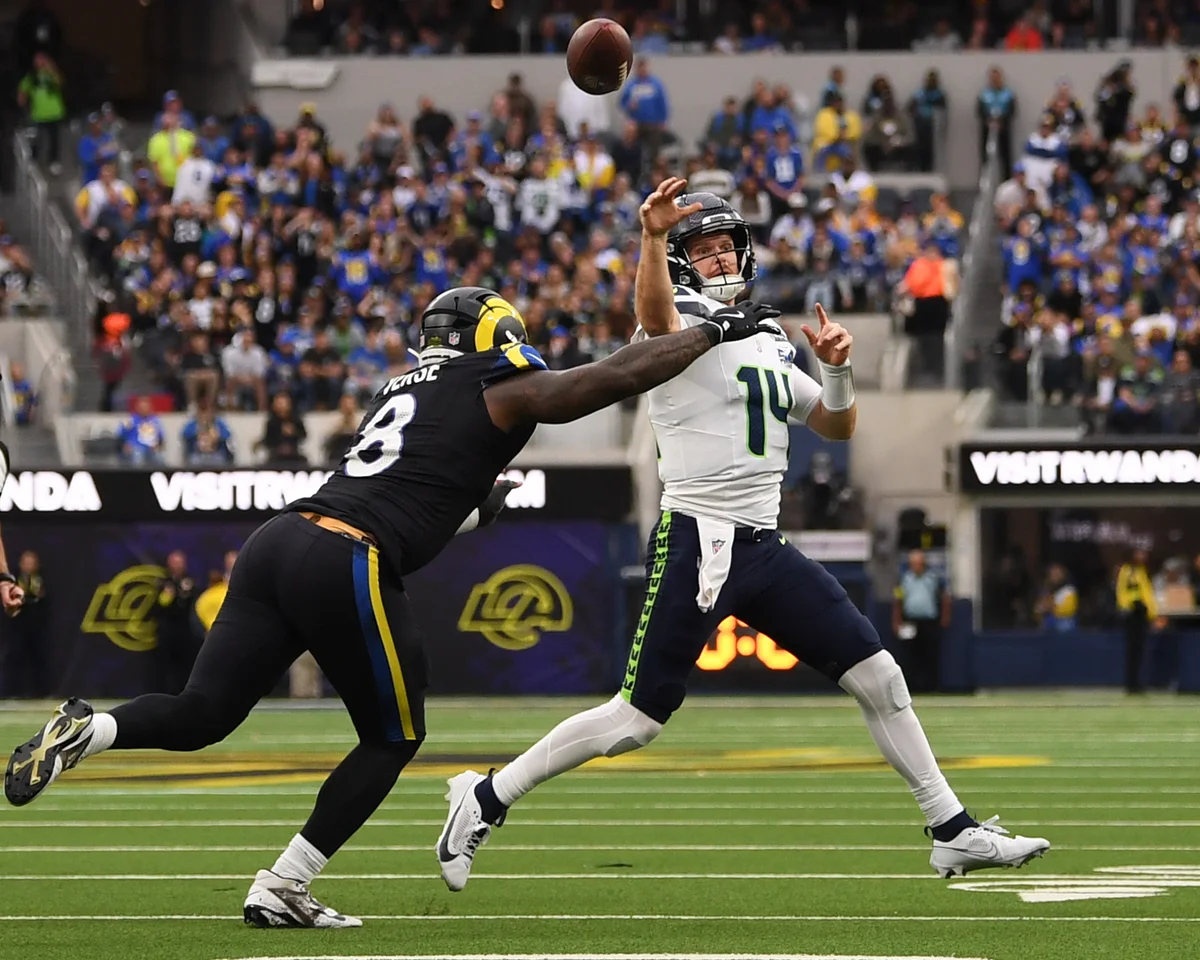
The roar sounds the same, but the game fundamentally changes between NCAA and NFL fields. These subtle rule distinctions shape tempo, strategy, and scoring in American football, and are the core of College Football vs. NFL Rules. In recent seasons, the average NFL game has lasted about 3 hours, 12 minutes, while college football games have stretched closer to 3 hours, 27 minutes. The compressed pace in the NFL results in fewer points per team; in 2024, NFL teams averaged 22.9 points per game, while most top college teams exceeded that number.
Because there are fewer plays and less scoring overall, NFL offenses must be more disciplined and precise, while college football leans into higher‑score, higher‑drama outcomes.
Field Dimensions and Equipment
The basic field dimensions are the same at both levels:
- Field length: 120 yards (including 10‑yard end zones).
- Field width: 53.3 yards (160 feet).
The real difference in College Football vs NFL Rules lies in hash mark spacing and ball size/equipment.
Hash Marks and Field Shape
- College (NCAA): Hash marks are 40 feet apart. This pushes the ball toward one sideline on many plays, creating a wide “short side” and opening different route concepts.
- NFL: Hash marks are 18 feet, 6 inches apart (same width as the goalposts). This keeps the ball closer to the center of the field and forces more compact, quarterback‑friendly reads.
Football Size and Stripes
- NFL football: Slightly longer and heavier, with a circumference of about 21–21.25 inches and a weight of 14–15 ounces. No stripes.
- College football: Slightly shorter and lighter, with circumferences around 20.75–21.125 inches. The white stripes help quarterbacks and fans track the ball’s spin, especially under stadium lights.
Roster Size
- NFL: 53‑man active roster; 46–48 typically dress on game day, plus a practice squad.
- NCAA: Typically 85+ scholarship players, with rosters often exceeding 100 total players (including walk‑ons), though usually only about 70 travel for away games.
Clock Management and Game Length
Clock rules are a major driver of pace and drama. Both leagues use four 15‑minute quarters, but how the clock behaves changes the feel of the game.
NFL:
- The clock does not stop after a first down (outside of incompletions, timeouts, penalties, or players going out of bounds).
- Halftime is 12 minutes long.
- A two-minute warning automatically stops the clock at the two-minute mark for each half.
College (NCAA):
- The clock stops after first downs only inside the final two minutes of each half (post‑2023 change).
- Halftime is 20 minutes.
- Starting in 2024, the NCAA added a two-minute timeout at the end of the second and fourth quarters to mirror the NFL’s two-minute warning.
College games tend to run longer and allow more late‑half comebacks due to the differences in timing and clock management rules between college football and the NFL, while NFL games remain tight and tempo‑driven.
Catch Rule and Down-by-Contact
These two rules highlight how conservative the NFL is compared with the more freewheeling NCAA.
One-Foot vs. Two-Feet Catch
- College: A receiver needs one foot in bounds with secure possession for a legal catch.
- NFL: The league demands two feet in bounds (or two points of contact) and usually a “football move,” making the catch rule much stricter.
Being Ruled Down
- NFL: A player is not down until they are tackled or forced down by a defender. Quarterbacks can slide or “take a knee” to stay alive.
- NCAA: A ball carrier is ruled down the instant any part of the body (other than hands or feet) touches the ground—knee, elbow, or hip—regardless of contact.
This difference makes college ball carriers more vulnerable to short‑field losses and NFL QBs more careful about contact near the ground.
Penalties, Targeting, and Overtime
Defensive Holding and Pass Interference
Defensive holding:
- NFL: 5-yard penalty with an automatic first down.
- NCAA: 10-yard penalty with an automatic first down.
Pass interference:
- NFL: A spot foul, meaning the ball is moved to where the foul occurred.
- NCAA: Capped at 15 yards, unless the foul happens in the end zone.
These College Football vs NFL Rules differences create different risk‑reward equations for cornerbacks and safeties in each league.
Overtime: College vs NFL
College Football (NCAA):
- Games cannot end in a tie.
- Overtime is “sudden victory” with no game clock:
- Teams alternate possessions starting from the opponent’s 25-yard line.
- After the second overtime, teams must attempt a 2-point conversion after any touchdown.
- By the third overtime, teams run only alternating 2‑point plays until one side wins.
NFL:
- In the regular season, a single 10‑minute overtime period can end in a tie if neither team scores.
- In the postseason, both teams are guaranteed a possession with true sudden-death rules if the score remains tied.
College overtime is designed for high‑drama, equal‑opportunity finishes, while NFL overtime prioritizes limiting extra wear‑and‑tear on players.
Targeting vs Personal Foul
NCAA targeting:
- When a player is flagged for targeting a defenseless opponent, the play is automatically reviewed.
- If upheld, the player is ejected and the team is penalized 15 yards.
NFL:
- Similar head‑to‑head or helmet‑to‑body hits are called as unnecessary roughness or personal fouls.
- These usually result in a 15‑yard penalty and a post‑game fine or suspension, with ejections reserved for extremely flagrant acts.
This stricter targeting rule in college has a major impact on how linebackers and defensive backs play near the line of scrimmage.
Special Teams and Extra-Point Kicks
Kicking rules and kickoff formats also differ significantly between the levels.
Extra point (XP):
- NCAA: Ball snapped from the 3‑yard line; a 20‑yard field‑goal attempt.
- NFL: Ball snapped from the 15‑yard line; a 33‑yard attempt once you factor in the snap and end‑zone depth.
Kickoffs:
- NCAA: Traditional “free‑run” style; coverage players can sprint at the kickoff.
- NFL: Since 2024, the dynamic kickoff rule requires the coverage team to stay in place until the ball is touched or hits the landing zone to improve safety and preserve long returns.
Recent College Football vs NFL Rules changes also mean that college football must attempt a 2-point conversion after touchdowns in the second overtime and rely solely on 2-point plays from the third overtime onward, while the NFL still allows field-goal-only strategies in overtime.
College Football vs NFL Rules: Quick Comparison Table
| Feature | College (NCAA) | NFL |
|---|---|---|
| Field width | 53.3 yards (160 ft) | 53.3 yards (160 ft) |
| Hash marks | 40 feet apart | 18 ft 6 in apart |
| Required feet in bounds | 1 foot | 2 feet |
| Down by contact rule | Player down if knee/elbow/hip touches ground | Player not down until touched or forced down |
| Defensive holding | 10 yards + 1st down | 5 yards + 1st down |
| Pass interference | Max 15 yards + 1st down | Spot foul + 1st down |
| Overtime outcome | No ties | Regular season games can tie |
| Extra point length | 20 yards | 33 yards |
| Targeting ejection | Automatic upon upheld review | No targeting rule; 15 yard foul + possible fine/suspension |
| Kickoff style | Free run coverage | Dynamic kickoff (players stay until ball touched) |
FAQ’s
What are the main differences between college football vs. NFL rules?
The most significant differences lie in clock rules, catch and targeting rules, overtime format, extra‑point length, and penalty enforcement. College football is more chaotic, with more possessions, longer games, and stricter targeting. The NFL is more controlled, with fewer scoring opportunities and harsher penalties for mistakes.
How big is an NFL football vs. a college football?
The NFL football is slightly larger and heavier, with a circumference of about 21–21.25 inches and weight of 14–15 ounces. College footballs are a bit shorter and lighter, with circumferences around 20.75–21.125 inches. The white stripes on college balls help with visibility and spiral tracking.
Are college goalposts wider than the NFL?
No. Both leagues use 18‑foot, 6‑inch‑wide goalposts. High school goalposts are wider.
Can you wear 69 in college football?
Yes. Under NCAA rules, offensive linemen must wear numbers 50–79, so number 69 is usually worn by guards or tackles.
Is there a “two‑minute warning” in college football vs. NFL rules?
No, but starting in 2024, the NCAA added a two-minute timeout at the end of the second and fourth quarters that functions similarly to the NFL’s two-minute warning.
Can a college game end in a tie?
No. College football uses a Kansas-style overtime system that guarantees a winner, while NFL regular-season games can still end in a tie after one 10‑minute overtime.
How many players are on an NFL vs. college roster?
NFL: 53‑man active roster.
NCAA: Roughly 85 scholarship players, often over 100 total, though only about 70 travel for away games.
Bottom Line: College Football vs. NFL Rules 2025
Both college football and the NFL share the same core structure, but the College Football vs. NFL Rules rulebook pushes them in opposite directions:
- College football leans into chaos, big swings, and high-scoring overtime with more possessions, longer games, and stricter targeting rules.
- The NFL strips things down, prizes control and efficiency, and punishes mistakes with tighter catch rules, stricter penalties, and more limited overtime.
For fans who follow both Saturdays and Sundays, understanding College Football vs NFL Rules adds a new layer of strategy and appreciation to the game.
