


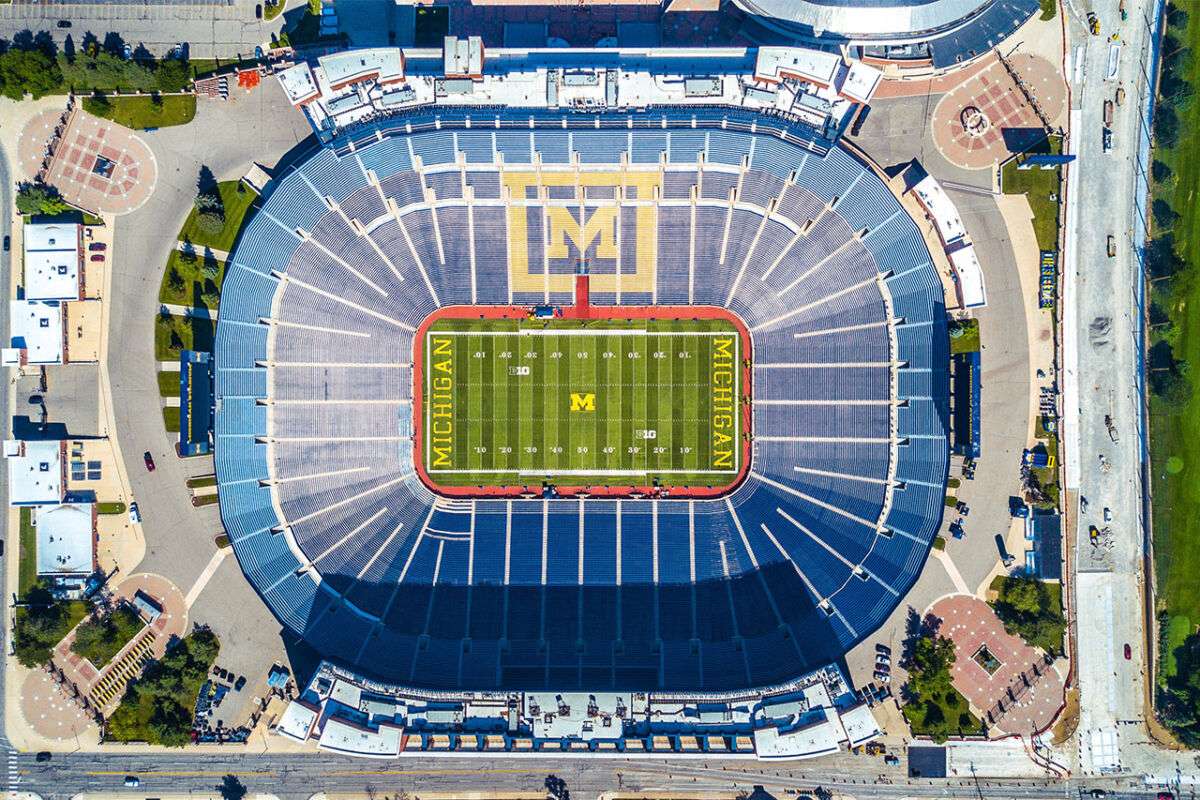
In the high-stakes universe of professional football, where every inch of turf represents millions in investment, the battle for stadium supremacy extends far beyond the playing field. Any serious NFL stadium rankings must look past mere capacity to assess the complete spectrum of what makes the best NFL stadium while also acknowledging the flaws that define the worst NFL stadiums.
The massive venues scattered across America represent more than just concrete and steel—they are the modern coliseums where legends are forged and the fan experience reaches unprecedented heights. This comprehensive analysis dives deep into all 30 NFL stadiums, ranking these football cathedrals by their complete offering to the discerning football enthusiast.
The evolution of NFL stadium design has sparked a competition among teams, challenging the limits of architecture and enhancing fan comfort. From the historic, hallowed grounds of classic venues to the cutting-edge facilities redefining the landscape of American football, we examine every aspect that separates the extraordinary from the merely adequate.
This journey through the league’s best NFL stadium environments and its most maligned venues provides a definitive guide to the state of the NFL stadium rankings today, revealing why some arenas become legendary while others are relegated to the list of worst NFL stadiums.
Complete Best Football Stadiums Rankings: All 30 Venues Detailed
| Rank | Stadium Name | Location | Capacity | Roof Type | Last Major Event/Note |
|---|---|---|---|---|---|
| 1 | MetLife Stadium | East Rutherford, NJ | 82,500 | Open-air | Home to Giants & Jets |
| 2 | Lambeau Field | Green Bay, WI | 81,441 | Open-air | NFL’s oldest continuously operating stadium |
| 3 | AT&T Stadium | Arlington, TX | 80,000 | Retractable | “Jerry’s World” with massive video board |
| 4 | Arrowhead Stadium | Kansas City, MO | 76,416 | Open-air | Former world record for loudest outdoor stadium |
| 5 | Empower Field at Mile High | Denver, CO | 76,125 | Open-air | High-altitude advantage with mountain views |
| 6 | Bank of America Stadium | Charlotte, NC | 75,037 | Open-air | $800 million in renovations planned |
| 7 | Caesars Superdome | New Orleans, LA | 73,208 | Dome | Hosted 8 Super Bowls |
| 8 | NRG Stadium | Houston, TX | 72,220 | Retractable | First NFL stadium with retractable roof |
| 9 | Highmark Stadium | Buffalo, NY | 71,608 | Open-air | New stadium scheduled for 2026 |
| 10 | M&T Bank Stadium | Baltimore, MD | 71,008 | Open-air | $120 million renovations in 2019 |
MetLife Stadium
East Rutherford, New Jersey | Capacity: 82,500
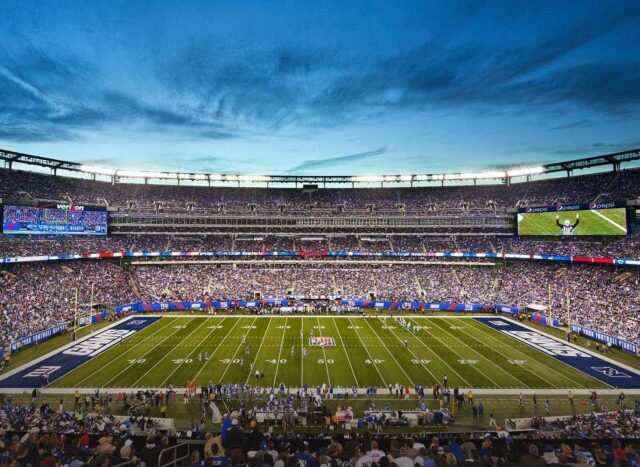
MetLife Stadium stands as the largest NFL venue in terms of pure capacity, serving as the shared home for both New York franchises. This massive football facility dominates the Meadowlands landscape with its distinctive exterior lighting system that can change colors to represent either home team. The stadium’s innovative design features four connecting bridges between upper and lower concourses, though critics note its generic bowl design lacks the character of more distinctive NFL venues. Despite its impressive scale, the stadium’s location presents significant accessibility challenges for fans relying on public transportation.
Lambeau Field
Green Bay, Wisconsin | Capacity: 81,441
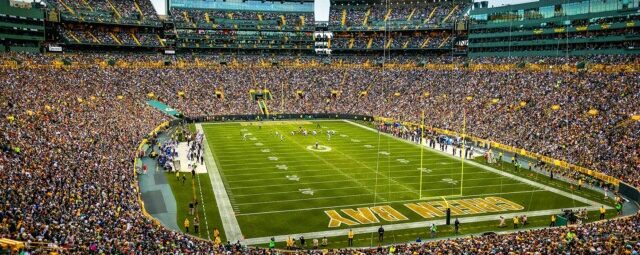
Lambeau Field is a prime example of a historic NFL venue that seamlessly combines tradition and modernity. It originally opened its doors on September 29, 1957, and as the oldest NFL stadium in continuous use by the same franchise, its history is palpable. The legendary Tundra maintains its iconic status while undergoing numerous renovations that enhanced fan comfort without sacrificing its storied character.
Lambeau’s unmatched game-day atmosphere and legendary tailgating culture contribute significantly to the question, Why is Lambeau Field so special? The answer lies in its unique fan interaction, specifically the Lambeau Leap. This iconic touchdown celebration involves a player jumping into the stands to be embraced by jubilant fans, symbolizing the strong community-owner bond of the Packers and transforming a touchdown into a shared moment between player and supporter.
AT&T Stadium
Arlington, Texas | Capacity: 80,000
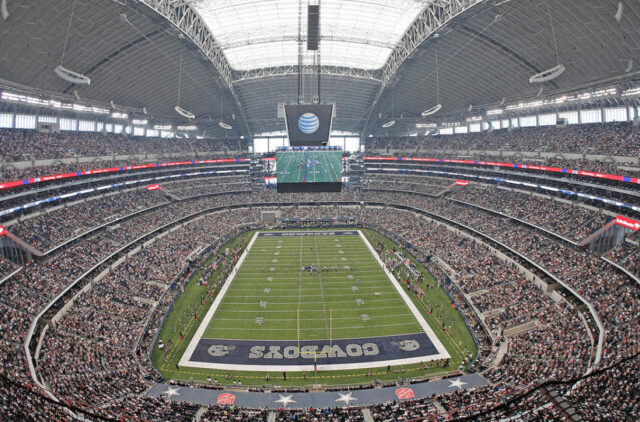
Jerry Jones’ architectural marvel redefined what an NFL stadium could be when it opened in 2009. The stadium’s retractable roof system and massive center-hung video board immediately set new standards for in-game technology and viewing experience. AT&T Stadium’s innovative design includes massive glass doors at each end zone that create an indoor-outdoor connection unprecedented in modern stadiums. The venue’s luxury amenities and art collection elevate it beyond a sports facility to a true entertainment destination, though some critics question its atmospheric quality during routine games.
Arrowhead Stadium
Kansas City, Missouri | Capacity: 76,416
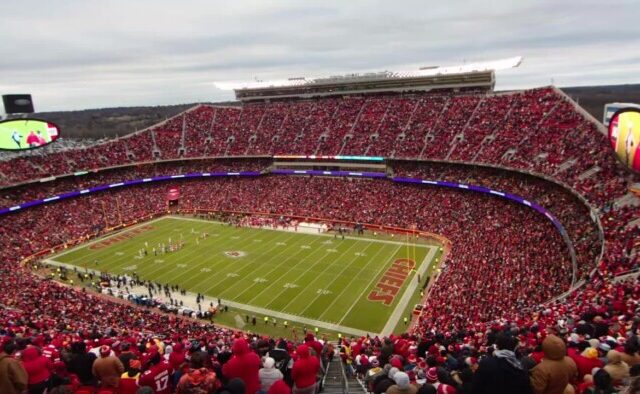
Arrowhead Stadium embodies the essence of a pure football environment with its deafening crowd noise and passionate fan base. The stadium’s bowl design, specifically engineered to amplify sound, creates one of the most intimidating venues for visiting teams in professional sports. Recent renovations have enhanced fan amenities while preserving the stadium’s distinctive character and legendary tailgating scene. Arrowhead’s location within the Truman Sports Complex provides ample parking but creates transportation challenges that the organization continues to address through infrastructure improvements.
Empower Field at Mile High
Denver, Colorado | Capacity: 76,125
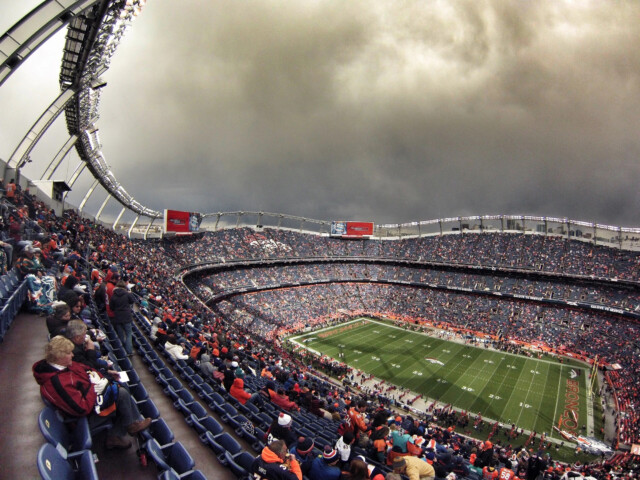
Empower Field at Mile High leverages its unique geographical advantage with its high-altitude location, creating a legitimate home-field advantage for the Broncos. The stadium’s distinctive design incorporates architectural elements reminiscent of the previous Mile High Stadium while providing modern fan comforts and sightline quality. The venue’s open-air concept allows for stunning views of the Rocky Mountains while creating challenging weather conditions for opponents unaccustomed to Denver’s climate. Recent upgrades have improved concession variety and digital connectivity throughout the facility.
Bank of America Stadium
Charlotte, North Carolina | Capacity: 75,037
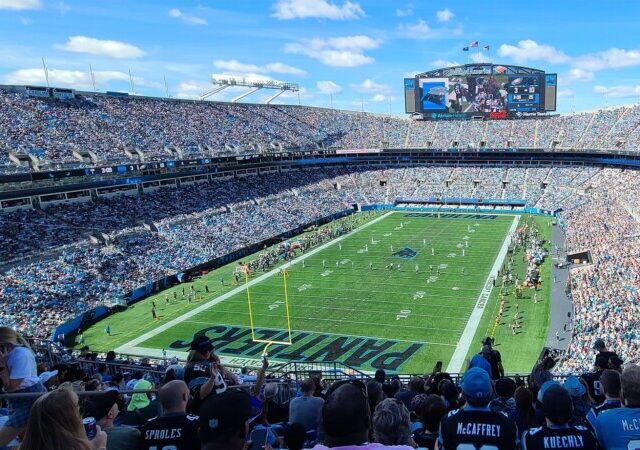
Bank of America Stadium represents a mid-tier NFL facility currently undergoing significant transformation through planned renovations. The stadium’s downtown Charlotte location provides excellent accessibility and pre-game entertainment options for fans. The venue’s bowl design ensures excellent sightlines from nearly every seat, though the overall amenities require updating to compete with newer NFL stadiums. The planned $800 million renovation project aims to enhance the fan experience through improved concessions, technology upgrades, and premium seating options while maintaining the stadium’s intimate atmosphere.
Caesars Superdome
New Orleans, Louisiana | Capacity: 73,208
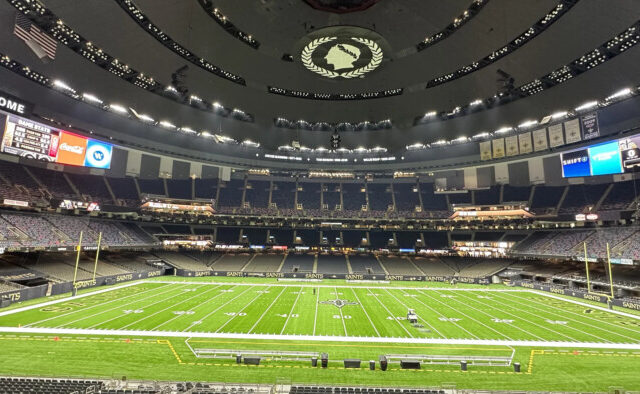
The Caesars Superdome stands as a testament to resilient stadium architecture, having survived catastrophic events to emerge as one of the NFL’s premier indoor venues. The stadium’s recent comprehensive renovations have modernized every aspect of the facility while preserving its historic significance. The Superdome’s central location in downtown New Orleans creates an unparalleled game-day environment that blends seamlessly with the city’s vibrant culture. The venue’s improved technology infrastructure and enhanced amenities ensure it remains competitive with newer stadiums despite its age.
NRG Stadium
Houston, Texas | Capacity: 72,220
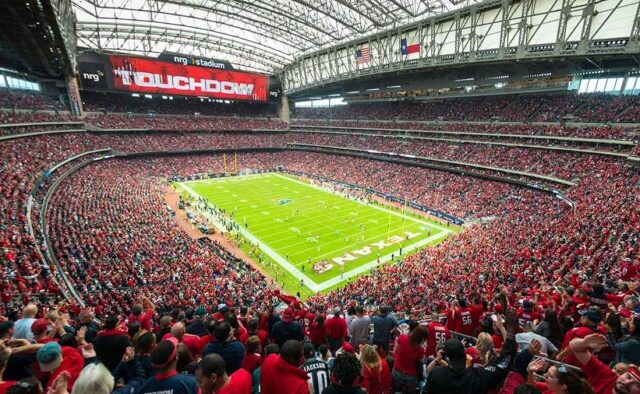
NRG Stadium pioneered the retractable roof stadium concept in the NFL when it opened in 2002, setting the template for future venues. The stadium’s innovative design features the first retractable roof in the league and incorporates natural grass on a tray system that moves outdoors for sunlight. The venue’s configuration flexibility allows it to host diverse events beyond football, though some critics note the sightline limitations in certain seating areas. Recent technology upgrades have improved the digital fan experience while maintaining the stadium’s status as a premier Houston landmark.
Highmark Stadium
Buffalo, New York | Capacity: 71,608
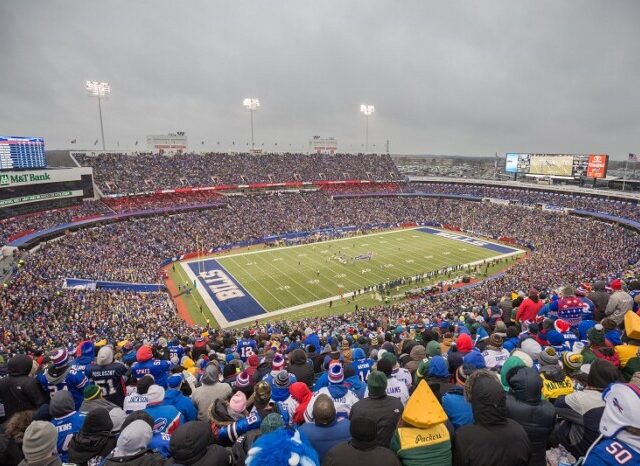
Highmark Stadium represents a transitional NFL venue awaiting replacement while maintaining one of the league’s most passionate fan environments. The stadium’s open-air design and harsh weather conditions have created the legendary “Bills Mafia” culture that defines the game-day experience. Despite its aging infrastructure and limited amenities compared to modern standards, the venue generates an electric atmosphere that consistently ranks among the NFL’s best. The planned new stadium project aims to preserve this unique culture while providing state-of-the-art facilities for Bills fans.
M&T Bank Stadium
Baltimore, Maryland | Capacity: 71,008
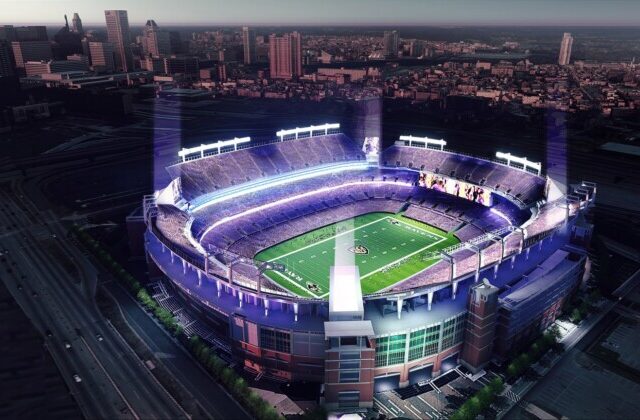
M&T Bank Stadium exemplifies successful urban stadium integration, with its downtown Baltimore location creating excellent pre- and post-game entertainment options. The stadium’s classic design incorporates Baltimore architectural elements while providing modern sightlines and fan amenities. Recent $120 million renovations have enhanced the fan experience through improved concessions, technology upgrades, and hospitality areas. The venue’s accessibility via multiple transportation options and proximity to other attractions makes it a model for downtown stadium development.
Lincoln Financial Field
Philadelphia, Pennsylvania | Capacity: 69,796
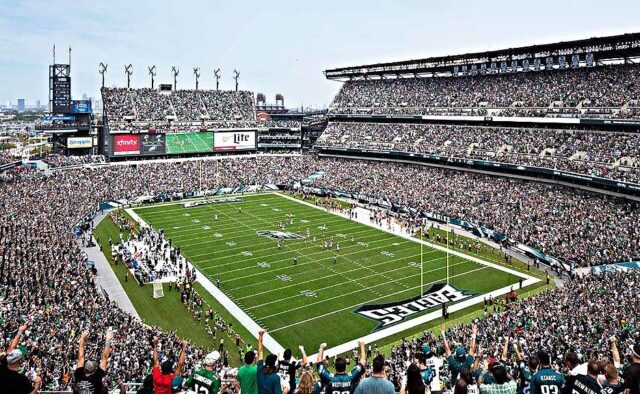
Lincoln Financial Field embodies the passionate Philadelphia sports culture through its intense atmosphere and fan engagement. The stadium’s open-air design incorporates modern amenities while maintaining the gritty character that defines Eagles football. Recent technology upgrades and sustainability initiatives have improved the overall fan experience while reducing the venue’s environmental impact. The stadium’s location within the South Philadelphia sports complex creates excellent game-day synergy with adjacent venues, though transportation and parking challenges persist.
Paul Brown Stadium
Cincinnati, Ohio | Capacity: 65,515
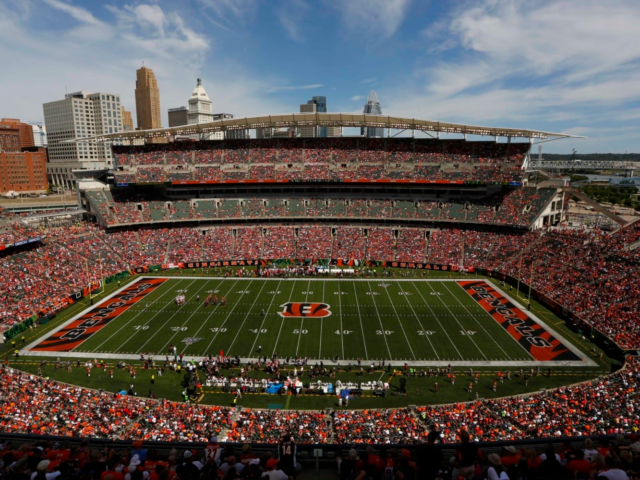
Paul Brown Stadium represents an early 2000s approach to riverfront stadium design with its open concept and downtown Cincinnati integration. The stadium’s distinctive architecture features numerous connectivity points to the cityscape while providing excellent Ohio River views. The venue’s intimate seating configuration ensures strong sightlines throughout, though the facility requires significant updates to compete with newer NFL stadiums. The organization’s continued investment in stadium improvements aims to enhance fan amenities while preserving the venue’s unique character.
Nissa
Nashville, Tennessee | Capacity: 69,143
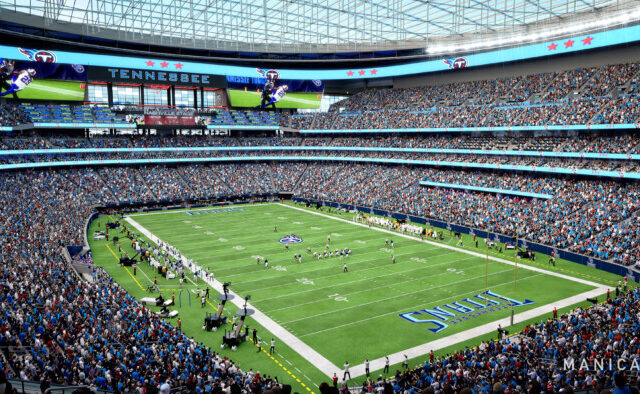
Nissan Stadium leverages its prime riverfront location in downtown Nashville to create one of the NFL’s best pre-game environments. The stadium’s open-air design incorporates Music City elements while providing solid sightlines and reasonable amenities. The venue’s aging infrastructure presents challenges that the proposed new stadium project aims to address through modern design and enhanced fan experiences. The current stadium’s location advantages and growing Titans fan base maintain a strong atmosphere despite facility limitations.
Raymond James Stadium
Tampa, Florida | Capacity: 69,218
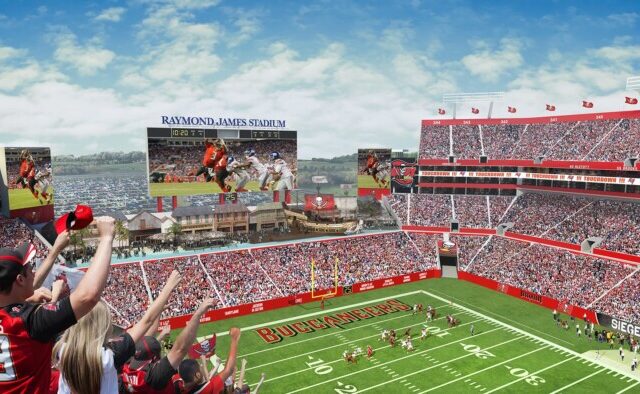
Raymond James Stadium, with its iconic pirate ship in the north end zone, embodies Florida’s entertainment aesthetic. The stadium’s open-air design accommodates the Tampa climate while providing excellent sightlines and recent amenity upgrades. The venue’s extensive renovation program has modernized concessions, premium seating, and technology infrastructure to maintain competitiveness with newer facilities. The stadium’s accessible location and ample parking create a user-friendly experience enhanced by the distinctive pirate theme.
Levi’s Stadium
Santa Clara, California | Capacity: 68,500
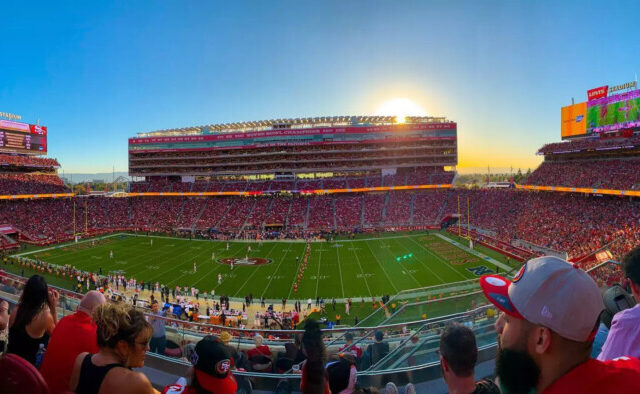
Levi’s Stadium represents the technology-forward approach to modern stadium design with its Silicon Valley ethos and sustainable features. The stadium’s innovative amenities include extensive Wi-Fi capabilities, mobile ordering systems, and diverse premium seating options. The venue’s environmental consciousness manifests through its green roof, solar panels, and water conservation systems. Despite these advancements, the stadium faces criticism for its location challenges and occasional sightline issues related to its multi-purpose design.
Lucas Oil Stadium
Indianapolis, Indiana | Capacity: 67,000
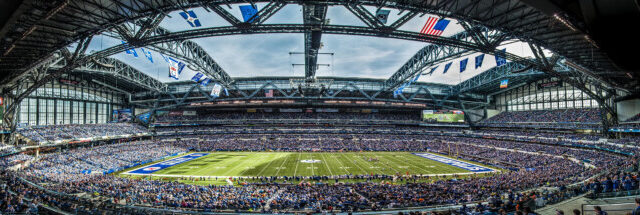
Lucas Oil Stadium successfully blends traditional football aesthetics with modern retractable roof technology in downtown Indianapolis. The stadium’s brick facade pays homage to local architecture, while the interior provides excellent sightlines and fan amenities. The venue’s versatile design accommodates numerous event types beyond football, making it a cornerstone of Indianapolis’ convention strategy. The stadium’s central location and walkable downtown access create an excellent overall experience for Colts fans and visitors.
Lumen Field
Seattle, Washington | Capacity: 68,740
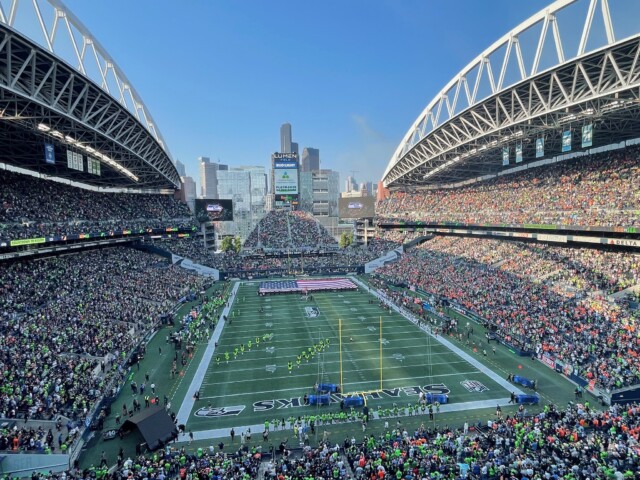
Lumen Field exemplifies how stadium design can actively contribute to home-field advantage through its acoustics and fan proximity. The stadium’s architecture, specifically engineered to amplify crowd noise, creates the legendary “12th Man” effect that consistently challenges opponents. The venue’s recent renovations have enhanced sustainability features while improving fan amenities and technology infrastructure. The stadium’s downtown Seattle location provides excellent accessibility and pre-game options while offering stunning views of the city skyline and Puget Sound.
Hard Rock Stadium
Miami Gardens, Florida | Capacity: 65,326
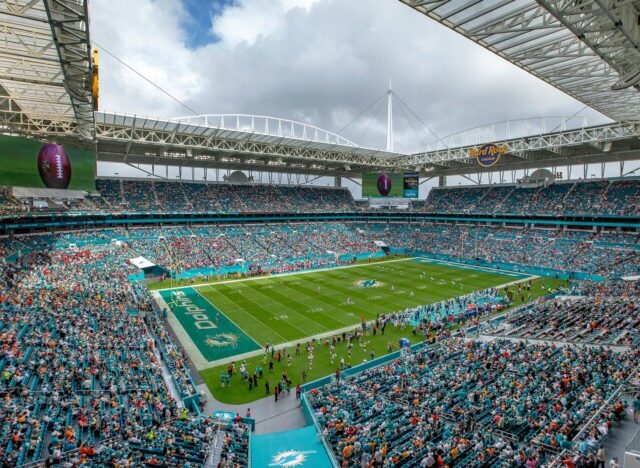
Hard Rock Stadium represents a successful renovation story where significant private investment transformed an aging facility into a modern NFL venue. The stadium’s comprehensive overhaul included canopy installation for shade, complete seating replacement, and premium area enhancements. The venue’s flexible design accommodates diverse events from Formula 1 racing to international soccer while providing excellent football sightlines. The stadium’s location challenges persist, but ongoing infrastructure improvements continue to enhance the overall fan experience.
State Farm Stadium
Glendale, Arizona | Capacity: 63,400
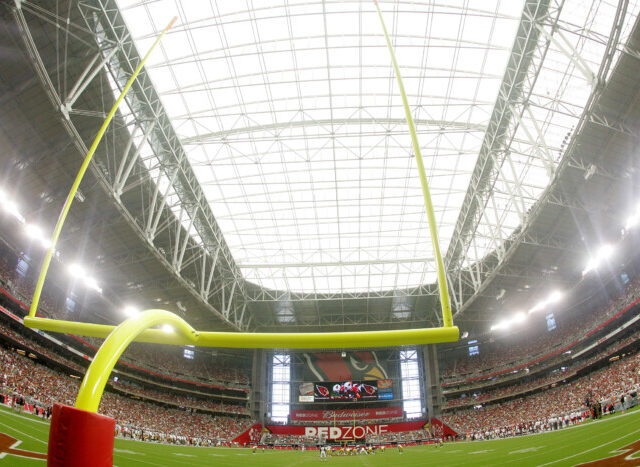
State Farm Stadium pioneered the natural grass movable tray system in a retractable roof stadium, creating optimal playing conditions in the Arizona climate. The stadium’s innovative design includes the first retractable roof in the NFL that also slides open, creating unique open-air possibilities. The venue’s bowl configuration ensures excellent sightlines, while the recent technology upgrades maintain competitiveness with newer facilities. The stadium’s location within the West Valley entertainment district provides ample parking and pre-game options despite the distance from downtown Phoenix.
Ford Field
Detroit, Michigan | Capacity: 65,000
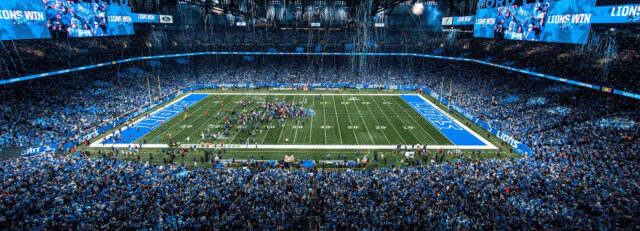
Ford Field exemplifies adaptive reuse architecture through its incorporation of a historic warehouse into the stadium design, creating unique interior spaces. The stadium’s industrial aesthetic features exposed brick and steel elements while providing modern amenities and excellent sightlines. The venue’s downtown Detroit location connects directly to other attractions and creates excellent accessibility for fans. Recent technology upgrades and concession improvements have enhanced the overall fan experience while preserving the stadium’s distinctive character.
Heinz Field
Pittsburgh, Pennsylvania | Capacity: 68,400
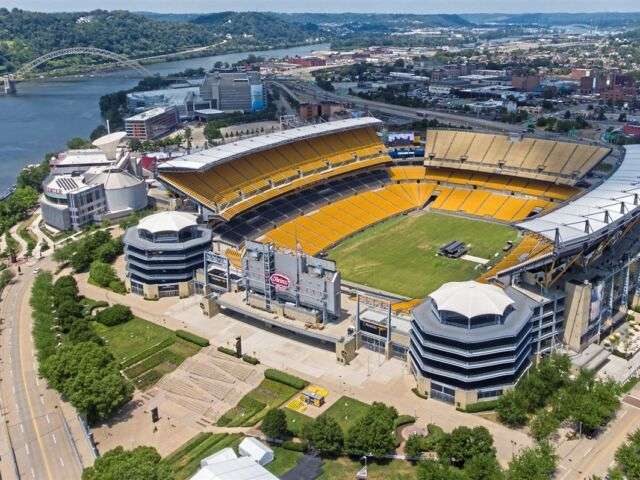
Heinz Field embodies the industrial heritage of Pittsburgh through its steel-oriented design elements and riverfront location. The stadium’s open-air concept incorporates numerous tributes to Steelers history while providing solid sightlines and fan amenities. The venue’s recent improvements have enhanced technology infrastructure and concession variety while maintaining the passionate game-day atmosphere. The stadium’s North Shore location creates excellent pre-game opportunities and connectivity to downtown Pittsburgh.
FirstEnergy Stadium
Cleveland, Ohio | Capacity: 67,431
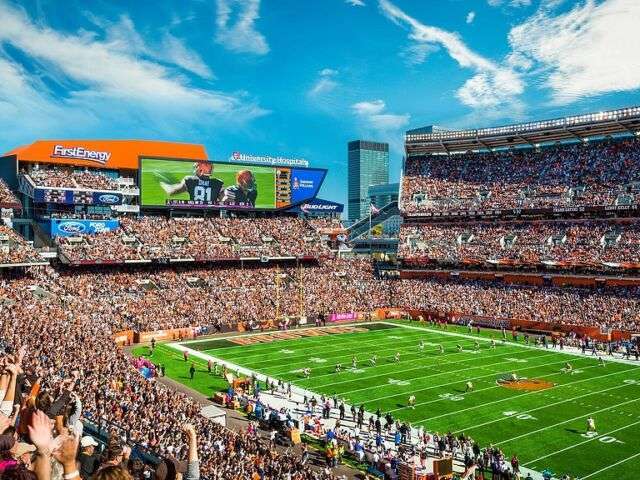
FirstEnergy Stadium represents a purpose-built football facility on the Cleveland lakefront, though its design limitations have become apparent over time. The stadium’s open-air configuration creates challenging weather conditions that define the Browns’ home-field advantage. The venue’s recent renovations have improved fan amenities and technology, though the facility requires significant updates to compete with modern NFL standards. The stadium’s downtown adjacency provides excellent accessibility, while the passionate Browns fan base maintains a strong atmosphere.
Soldier Field
Chicago, Illinois | Capacity: 61,500
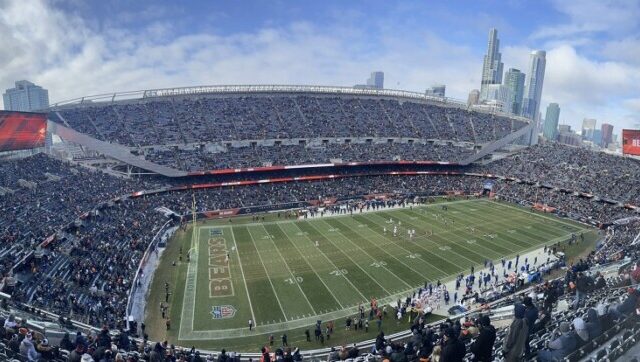
As the oldest NFL stadium still in use, Soldier Field is steeped in history. Its name is a profound one: Why do they call it Soldier Field? The stadium was originally named as a memorial to U.S. soldiers who died in combat, particularly those in World War I, reflecting its deep civic and historic significance.
Soldier Field presents the most architecturally controversial renovation in modern NFL history, with its historic colonnades awkwardly integrated with a modern interior bowl. The stadium’s limited capacity and outdated amenities create challenges for the Bears organization, prompting active pursuit of a new stadium project.
Despite these limitations, the venue’s lakefront location provides stunning Chicago skyline views and excellent public transportation access. The stadium’s historic significance as the oldest NFL stadium contrasts sharply with its functional deficiencies for modern football operations.
TIAA Bank Field
Jacksonville, Florida | Capacity: 67,838
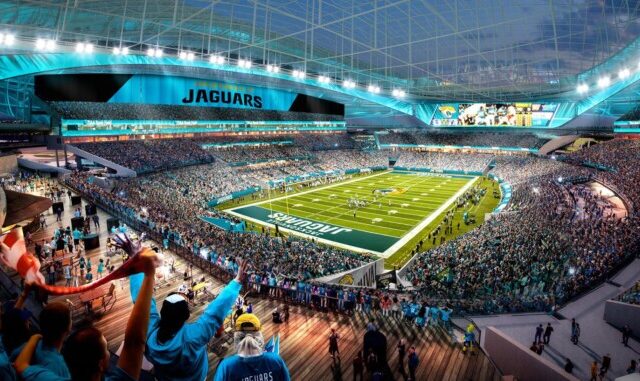
TIAA Bank Field leverages its riverfront location with unique features like the swimming pools in the north end zone that define its Florida identity. The stadium’s recent renovations have improved fan amenities and technology while maintaining the venue’s distinctive character. The facility’s large capacity relative to Jacksonville’s market size creates attendance challenges that the organization addresses through diverse event programming. The stadium’s climate considerations drive ongoing discussions about potential roof additions or other weather-protection systems.
Mercedes-Benz Stadium
Atlanta, Georgia | Capacity: 71,000
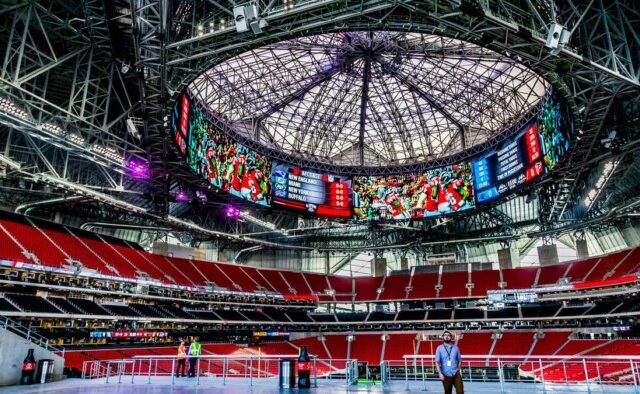
Mercedes-Benz Stadium revolutionized stadium architecture with its iconic retractable roof design inspired by a falcon’s wing. The stadium’s innovative features include the 360-degree halo video board and revolutionary concession pricing that set new industry standards. The venue’s sustainable design elements and technology integration create one of the most advanced fan experiences in professional sports. The stadium’s downtown Atlanta location and connection to public transportation provide excellent accessibility while serving as a cornerstone of community development.
SoFi Stadium
Inglewood, California | Capacity: 70,240
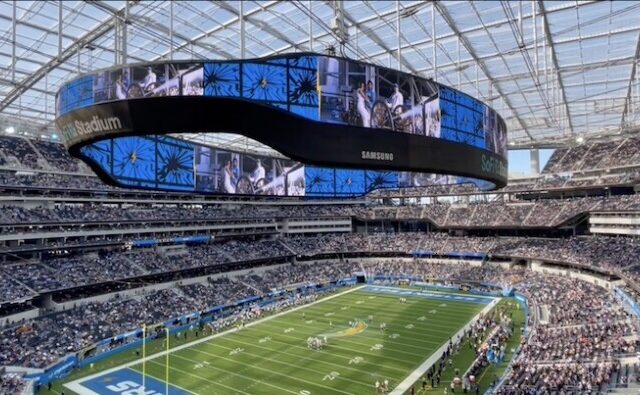
SoFi Stadium represents the current pinnacle of stadium design and technology integration, setting new standards for what an NFL venue can be. The stadium’s revolutionary architecture features a translucent roof canopy and incredible video board system that creates immersive fan experiences. The venue’s indoor-outdoor concept accommodates Southern California’s climate while providing weather protection and excellent sightlines. The stadium’s massive development project has transformed the Inglewood area while creating the NFL’s most technologically advanced and luxurious facility.
Gillette Stadium
Foxborough, Massachusetts | Capacity: 65,878
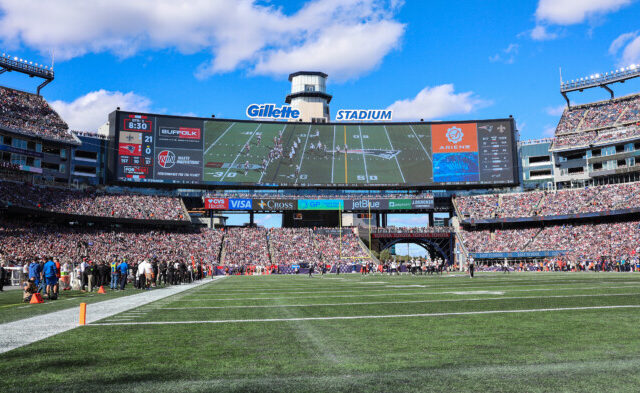
Gillette Stadium exemplifies the destination stadium model with its Patriot Place development creating a comprehensive entertainment district around the football venue. The stadium’s continuous improvement philosophy has resulted in numerous upgrades since opening, including technology enhancements and fan experience improvements. The venue’s open-air design incorporates New England architectural elements while providing excellent sightlines and recently improved concessions. The stadium’s location challenges persist despite transportation improvements, but the overall destination experience compensates for accessibility limitations.
Allegiant Stadium
Paradise, Nevada | Capacity: 65,000
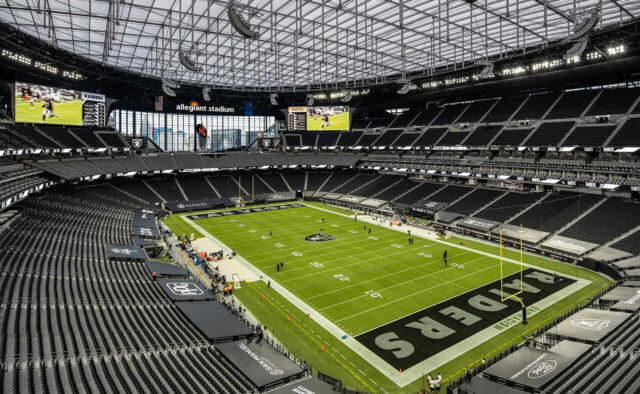
Allegiant Stadium immediately establishes its Las Vegas identity through its black glass exterior and distinctive design resembling a spaceship landed in the desert. The stadium’s advanced technology includes massive video boards and excellent Wi-Fi connectivity throughout the facility. The venue’s retractable field tray system allows for a natural grass playing surface while accommodating diverse events in the climate-controlled interior. The stadium’s proximity to the Las Vegas Strip creates unparalleled pre- and post-game entertainment options for Raiders fans and visitors.
U.S. Bank Stadium
Minneapolis, Minnesota | Capacity: 66,860
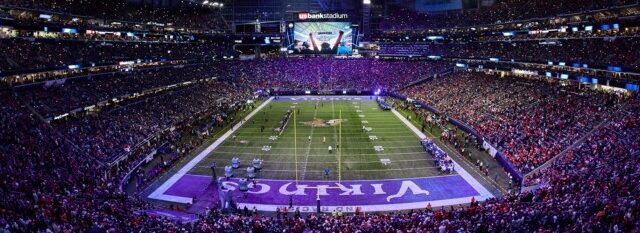
U.S. Bank Stadium’s dramatic angular design and translucent roof create a striking architectural statement on the Minneapolis skyline while providing climate protection. The stadium’s innovative engineering allows for abundant natural light while maintaining energy efficiency in Minnesota’s challenging climate. The venue’s multi-purpose design accommodates diverse events from Super Bowls to Final Fours while providing excellent football sightlines. The stadium’s downtown integration and public transportation connectivity create excellent accessibility for Vikings fans.
FedExField
Landover, Maryland | Capacity: 67,617
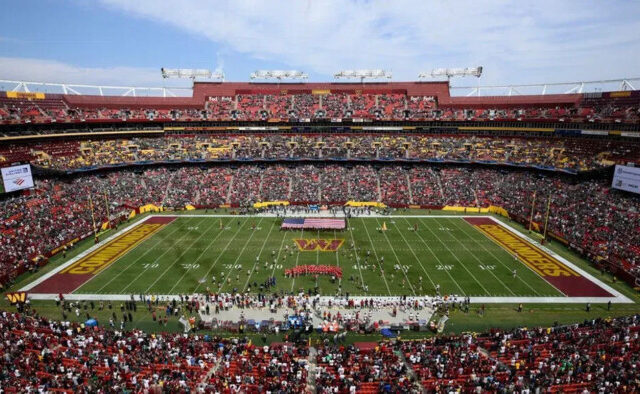
FedExField represents a cautionary tale in stadium development, with its remote location and design limitations prompting the Commanders’ active pursuit of a new venue. The stadium’s aging infrastructure and maintenance challenges have created ongoing issues for the organization and fan experience. Numerous modifications have compromised the venue’s original design aspirations, reducing capacity but failing to address fundamental flaws. Despite its relatively large capacity, the organization’s commitment to a new stadium project acknowledges the current facility’s inability to meet modern NFL standards.
Beyond Capacity: The Complete Stadium Evaluation Framework
Architectural Innovation and Fan Experience
The modern NFL stadium must balance multiple competing priorities beyond raw seating capacity. Architectural distinction has become increasingly important as franchises seek to create iconic landmarks that enhance their brand identity. Venues like SoFi Stadium and Mercedes-Benz Stadium demonstrate how innovative design can generate global recognition while improving functional aspects of the fan experience.
The technological integration in newer stadiums has created significant competitive advantages through enhanced Wi-Fi capabilities, massive video boards, and mobile connectivity that allows for cashless transactions and in-seat ordering. These advancements directly impact fan satisfaction and create new revenue streams while improving operational efficiency during events.
Location and Accessibility Considerations
Stadium location strategy has evolved significantly, with early 2000s venues often opting for suburban campuses with ample parking, while recent projects favor downtown integration with public transportation access. The urban stadium model provides numerous benefits, including pre- and post-game entertainment options, though it often involves higher costs and more complex construction logistics.
Transportation infrastructure remains a critical factor in stadium effectiveness, with venues like MetLife Stadium facing ongoing criticism despite their capacity advantages. The trend toward multi-modal access, including public transportation, ride-sharing, and pedestrian options, reflects the changing preferences of fans and communities.
Economic Impact and Community Integration
The stadium financing landscape continues evolving, with communities increasingly demanding greater public benefits from these massive investments. The economic impact of NFL stadiums extends beyond game days to include year-round event hosting, though economists debate the net benefits to municipalities.
Community integration has become a crucial consideration, with successful venues like Ford Field and Lucas Oil Stadium demonstrating how stadiums can activate underutilized urban areas while providing public spaces and gathering areas beyond football Sundays.
The Future of NFL Stadiums: Emerging Trends and Developments
Technological Evolution
The next generation of NFL stadiums will likely focus on immersive technology, including augmented reality experiences, personalized content delivery, and advanced biometric entry systems. The data collection capabilities of modern venues will enable hyper-personalized experiences while creating new revenue opportunities through targeted advertising and premium service offerings.
Sustainability and Environmental Considerations
Green stadium design has transitioned from novelty to expectation, with organizations increasingly prioritizing LEED certification and sustainable operations. The environmental impact of these massive structures drives innovation in energy efficiency, water conservation, and material selection throughout the construction and operational phases.
Hybrid and Flexible Design Approaches
Future stadium projects will likely emphasize configuration flexibility that allows venues to adapt to different event types and attendance levels. The post-pandemic reevaluation of massive gatherings has accelerated interest in designs that can provide intimate atmospheres even in large facilities through creative seating configurations and movable elements.
Conclusion: More Than Just Numbers
The biggest NFL stadiums represent extraordinary achievements in engineering, architecture, and community development, but capacity alone no longer defines stadium quality. The most successful modern venues balance scale with intimacy, technology with tradition, and spectacle with practicality. As the NFL continues its stadium construction boom, the lessons from existing facilities inform increasingly sophisticated approaches to creating spaces that serve athletes, fans, and communities.
The ongoing evolution of stadium design reflects broader changes in sports entertainment, where the in-person experience must compete with increasingly sophisticated home viewing options. The future success of NFL stadiums will depend on their ability to provide unique, compelling experiences that justify the investment of time and money required to attend live events. While the arms race for bigger and better facilities continues, the most enduring venues will be those that create emotional connections and lasting memories for the fans who fill their seats season after season.
Frequently Asked Questions
What Are The 5 Biggest NFL Stadiums?
As of the 2025-2026 season, the five largest stadiums by permanent seating capacity are:
MetLife Stadium (New York Giants/Jets) – 82,500
Lambeau Field (Green Bay Packers) – 81,441
AT&T Stadium (Dallas Cowboys) – 80,000 (Expandable to 105,000)
Arrowhead Stadium (Kansas City Chiefs) – 76,416
Empower Field at Mile High (Denver Broncos) – 76,125Which NFL Team Has The Largest Stadium?
The New York Giants and New York Jets share the largest stadium, MetLife Stadium, which boasts a capacity of 82,500. However, the Dallas Cowboys’ AT&T Stadium holds the record for the highest potential capacity, as it can be configured to hold over 100,000 people for mega-events like the Super Bowl.
What NFL Team Has The Smallest Stadium?
The Chicago Bears currently play in the smallest stadium in the NFL. Soldier Field has a capacity of only 61,500, which is one of the primary reasons the franchise is seeking to build a new, larger facility in the Chicago suburbs.
What Is The Largest NFL Stadium By Size?
While MetLife has the most seats, SoFi Stadium in Inglewood, CA, is the largest in terms of physical footprint and square footage. It covers nearly 3.1 million square feet and is part of a 298-acre Hollywood Park development, making it the most massive structural undertaking in league history.
What Are The Top 10 Best Stadiums In The NFL?
Rankings vary by fan experience, but the consensus top 10 (balancing modern luxury and historic atmosphere) typically includes:
SoFi Stadium (CA)
AT&T Stadium (TX)
Lambeau Field (WI)
U.S. Bank Stadium (MN)
Mercedes-Benz Stadium (GA)
Allegiant Stadium (NV)
Lumen Field (WA)
Arrowhead Stadium (MO)
Lucas Oil Stadium (IN)
Acrisure Stadium (PA)What’s The Coolest Stadium In The NFL?
SoFi Stadium is widely considered the “coolest” due to its futuristic “dual-stage” design, the Infinity Screen by Samsung (a double-sided 4K video board), and its open-air canopy that allows ocean breezes to flow through the arena while still providing roof coverage. For traditionalists, Lambeau Field remains the “coolest” for its deep-frozen history and “Frozen Tundra” mystique.
