


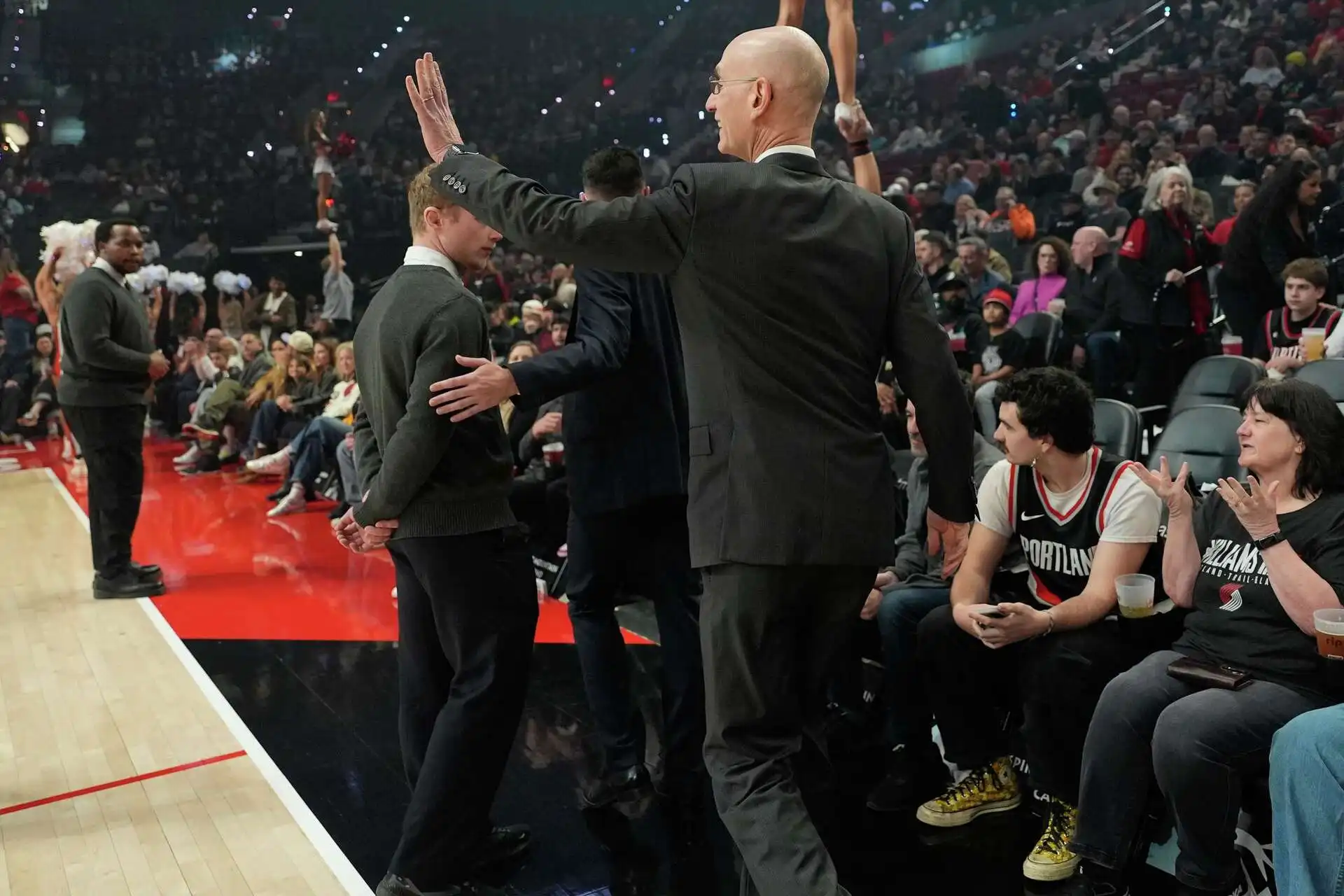
The landscape of professional basketball in the Pacific Northwest is undergoing a seismic shift. Recently, NBA Commissioner Adam Silver touched down in the Rose City. This visit signals a high-stakes endorsement for the Portland Trail Blazers and their aging home, the Moda Center. Furthermore, it follows a landmark legislative victory that ensures the franchise remains anchored in Oregon.
State-Level Backing and Public-Private Partnerships
First, the Oregon Legislature officially cleared a path for a massive stadium infrastructure investment. Lawmakers passed a measure that establishes joint ownership of the Moda Center between the state and the city. Consequently, this measure provides a mechanism to secure $365 million in public funding for the 30-year-old facility.
Estimates currently place the ambitious arena modernization project’s total cost at $600 million. By updating one of the “oldest buildings in the league,” officials aim to revitalize the local economy. In addition, they hope to restore Portland’s status as a premier destination for sports entertainment events.
Securing the Trail Blazers’ Legacy in Portland
For years, speculation regarding franchise relocation risk has loomed over the city. However, the legislative effort coincides with a major change in leadership. The Paul Allen estate is transitioning power to a new ownership group led by Tom Dundon.
From our field observation, the synergy between the new ownership and state officials has effectively allayed fears of the team moving. As a result, this stability is crucial as the NBA Board of Governors prepares to finalize the sale. This move ensures the Blazers stay put in a state-of-the-art sports facility.
A Multi-Use Vision: Beyond the NBA
Furthermore, Adam Silver’s visit extended beyond the men’s game. He emphasized that a renovated Moda Center is a “lifeblood” for the community. Specifically, it will serve as the home court for the Portland Fire expansion team in the WNBA.
The vision also extends to a versatile urban entertainment hub. This venue must be capable of hosting NCAA Tournament games and the NBA All-Star Game. By addressing these arena technology upgrades, Portland hopes to reclaim events it has lost to cities like San Francisco.
Bipartisan Support for Economic Growth
Finally, the push for the Moda Center renovation has seen a rare level of bipartisan political cooperation. This includes agreement between the governor’s office and local city leadership. Silver noted that the facility’s role in the metropolitan economy extends far beyond basketball.
Because of this, the building impacts trade shows, graduations, and tourism. As the building undergoes this transformation, the focus remains on sustainable stadium operations. Ultimately, the goal is to enhance the fan experience to match elite NBA standards.
