


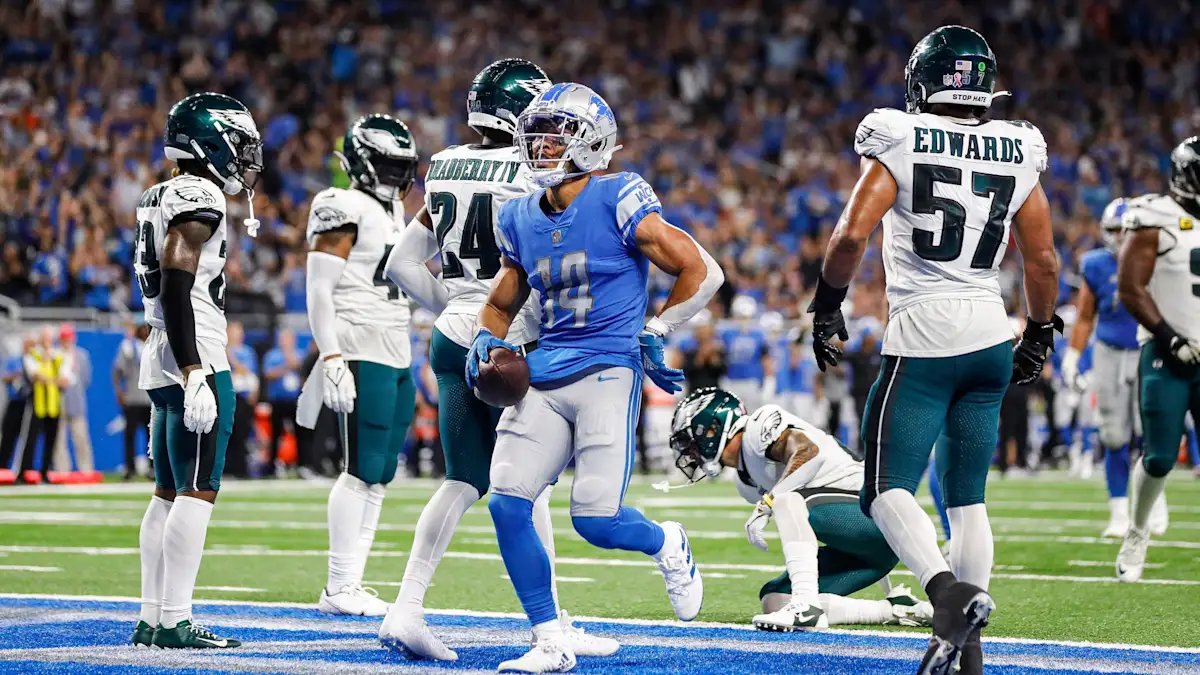
The complexity surrounding the roster of a football team often confuses even dedicated fans, since the required number varies fundamentally. This discrepancy arises because the term can refer either to the athletes actually on the field or to the full roster depth.
From analyzing a high-stakes Sunday NFL matchup to cheering for your local high school football squad, grasping this distinction is vital to appreciating the game’s tactical strategy. This comprehensive guide precisely clarifies how many players are in a football team, detailing the mandatory field count and the full team composition at every level of American football.
The Core Rule: Determining How Many Players Are on the Field
The foundational answer to the question, “How many players are in a football team?” regarding active play is strictly eleven. Therefore, the physical contest involves exactly 22 players—eleven per side—competing intensely on the field at any moment. This standard is the absolute core of American football’s strategic execution and competitive balance.
Standard NFL Team Field Configuration—11 Players
Every team must field precisely 11 players on the field during every snap. The NFL and youth programs rigorously uphold this rule, which defines the size of an American football team during play. The configuration requires coaches to divide their personnel efficiently to cover both offensive and defensive responsibilities, ensuring that each player has a specific role that contributes to the overall strategy of the game.
Why 11 Players Became the Standard: A Historical Evolution
The number 11 is not arbitrary; it represents a strategic evolution of the game. Initially, early forms of football were played with up to 15 players, similar to rugby. However, rule changes championed by figures like Walter Camp reduced the players per side in football to 11. This reduction opened the field for new tactics like the forward pass and increased specialization, fundamentally shaping the modern game. Ultimately, 11 players offered the ideal strategic balance.
Enforcement and Penalties for Player Count
Coaches and players must maintain constant awareness of the exact number of players on the football team. Consequently, strict penalties are imposed for any deviation. A common infraction is having too many men on the field, which results in a five-yard penalty. Conversely, playing short causes an illegal formation penalty. These rules ensure the competitive fairness of the 11-on-11 format.
Players Per Side in Professional League Play
The 11 players on the field are dynamically sourced from three highly specialized units: the offense, defense, and special teams. Only one unit can be active for a single snap. Unlimited substitution rules allow the complete replacement of all 11 players between plays. This substitution flexibility is the key strategic difference from many other team sports, making specialization paramount. These constant, high-speed personnel shifts achieve the optimal football team configuration, allowing coaches to adapt to the opposing team’s strategy and maximize their own team’s strengths during the game.
The Full Roster: Determining Total American Football Team Size
While the field count is 11, the comprehensive answer to “How many players are in a football team?” requires examining the total organizational depth. This total number, known as the NFL Roster Size, is substantially larger than the number of active participants.
How Many Football Players Are on an NFL Team Roster?
The NFL mandates a 53-man active roster limit during the regular season. This 53-man roster defines the official NFL Roster Size. However, only 48 players are designated as active on game day (or 47 if the team dresses fewer than eight offensive linemen). Therefore, at least five players must be declared inactive for every game. Every team strategically manages this 53-man roster composition throughout the season.
The Role of the Practice Squad Players
A vital developmental and reserve group supplements the 53-man roster. The Practice Squad Players limit is 16 members (or 17 with an International Pathway Program player exemption). These players are not on the active roster but train fully with the team. Practice squad players can be elevated to the game day roster on short notice, providing crucial depth for injury replacement. The ability to elevate these players is a critical tool for managing the physical toll of the sport, as it allows teams to quickly adapt to injuries and maintain competitive performance during games.
The Emergency Quarterback Rule
There is a specific provision in place to prevent quarterback injuries from leading to game losses. The emergency quarterback rule allows a third quarterback to be dressed outside of the 48-man limit. This third quarterback may only enter the game if both the primary and backup quarterbacks are injured, ensuring the competitive integrity of the overall player count for the football team is maintained.
NFL Team Structure Beyond the Field
Roster management requires complex financial planning to keep the 53-man roster under the salary cap. The full organizational structure, including coaches, trainers, and front-office executives, supports the competitive core that ultimately answers, “How many players are in a football team?”
College Football Roster Size and Amateur Player Requirements
The rules determining how many players are in a football team at the college level are governed by the NCAA and operate under different constraints than the NFL, which include limits on roster size, eligibility requirements, and scholarship allocations for student-athletes.
Number of Players on College Football Teams
The NCAA is actively changing the rules for scholarship players. Starting in 2025, Division I FBS programs are transitioning from the 85 scholarship players limit toward a hard cap of a 105-player roster. This definitive College Football Roster Size change simplifies roster management for coaches, as it eliminates the complexity of the previous system and allows for better strategic planning and player development within the expanded roster limits.
College Football Team Sizes Across Different Divisions
The total College Football Roster Size typically exceeds 100 players due to the large number of non-scholarship players, known as walk-ons. Conversely, high school football programs average a smaller roster size, usually between 40 and 60 players, meaning those athletes must be highly versatile.
American Football Team Positions and Player Roles
A detailed look at the roles of the 11 players on the field clarifies the strategic answer to “How many players are in a football team?” from a tactical perspective.
Players on a Football Team by Position Groups
The quarterback orchestrates the offense, while the five-man offensive lineman group protects it. Conversely, the defense is anchored by the defensive lineman and the versatile linebacker unit, which serves as the defense’s central command center. The special teams unit manages all kicking and punting plays. Each of the 11 positions is crucial to the overall football team configuration.
Special Situations and Variations in Player Count
The question of how many players are in a football team has situational exceptions, even during regulation play, highlighting the importance of the Game Day Roster.
When Teams Play with Fewer Than 11 Players
Can a football team play with fewer than 11 players? Yes. This phenomenon occurs due to player ejections for specific penalties or temporary injuries. However, all leagues mandate a minimum number of players to avoid forfeiture— typically seven players. Playing short puts a team at a massive competitive disadvantage, and coaches must manage substitutions carefully.
Alternative Football Formats and Their Team Sizes
Alternative football formats modify the player count for specific purposes. Flag football and 7-on-7 football utilize modified football team formats with fewer players per side in football (e.g., seven players) to emphasize skill development and safety.
Conclusion: Key Facts on Football Team Player Count
The answer to “How many players are on a football team?” depends on the situation: there are eleven players on the field and fifty-three on the roster. Mastering these counts is key to appreciating the sport’s deep organizational and competitive structure, as it highlights the strategic roles each player fulfills and the importance of team dynamics in both gameplay and overall team performance.
Key Points
- 11 players on the field is the universal playing rule.
- The official NFL Roster Size is the 53-man roster.
- College Football Roster Size is shifting toward a 105-player cap.
- The Game Day Roster is limited to 48 players.
FAQ’s
How many players dress for game day?
NFL teams dress 48 players for the game, while five players are declared inactive from the 53-man roster.
How many players are on a football team?
An NFL team maintains a 53-man active roster during the regular season.
How many players are in a team?
There are exactly 11 players on the field per team during a down.
How many active players are on a football team?
Teams designate 48 players as game day active players weekly.
