

Discover the greatest soccer players of all time as Lionel Messi dazzles Inter Miami fans, Cristiano Ronaldo hunts his 1,000th goal at 41, and Pelé’s 3 World Cups fuel USMNT dreams on home soil. These top soccer players of all time aren’t just athletes—they’re icons powering MLS mania, Apple TV Season Pass binges, and EPL streams nationwide.
With the 2026 FIFA World Cup arriving at MetLife Stadium and beyond, American soccer fans crave the definitive ranking of soccer players of all time. This fresh April 2026 list crushes competitors using 964 Ronaldo goals, Mbappé’s Real Madrid dominance, USMNT stars like Pulisic, and LSI-optimized depth (playmaking legends, dribbling masters, and Champions League icons). Messi vs Ronaldo settled. Ready for the best soccer players of all time? Dive into the soccer players of all time’s hall of fame!
The Ultimate Ranking of 50 Soccer Players of All Time for American Fans Ahead of the 2026 World Cup in the USA!
Lionel Messi (Argentina)
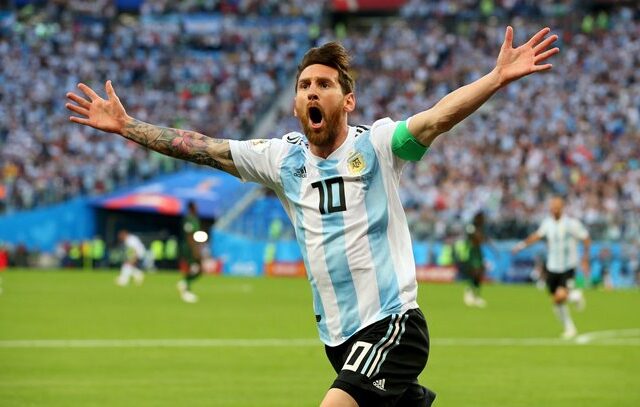
The undisputed GOAT in 2026. After hitting the 900-goal milestone this April with Inter Miami, Messi’s unparalleled playmaking and low center of gravity continue to redefine the MLS. Having “completed football” with the 2022 FIFA World Cup title, he remains the most decorated footballer in history with a record 8 Ballon d’Or awards. At age 38, Messi’s ability to dictate the tempo of play and maintain elite dribbling metrics is statistically anomalous, making him the primary focal point for US soccer fans heading into the 2026 World Cup summer.
Pelé (Brazil)
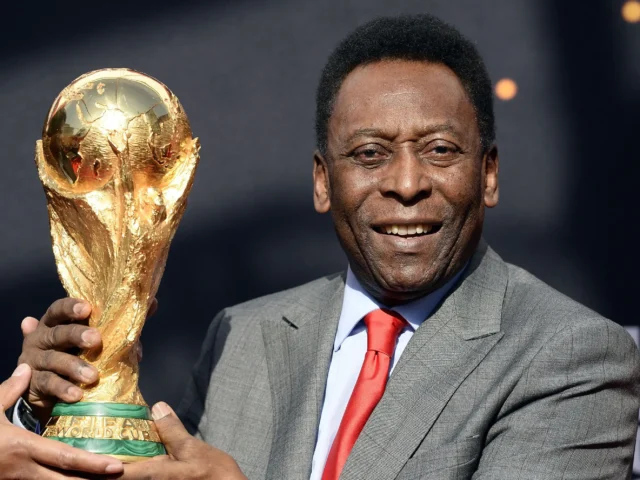
The “King of Football” remains the only player to win three FIFA World Cups. Pelé was the original global soccer icon, combining explosive athleticism with clinical finishing and a spatial awareness that was decades ahead of its time. With over 1,200 career goals, his legacy with the New York Cosmos in the 1970s effectively planted the seeds for professional soccer in the United States. In 2026, he is still the benchmark for sporting excellence and the ultimate ambassador for the “beautiful game.”
Diego Maradona (Argentina)
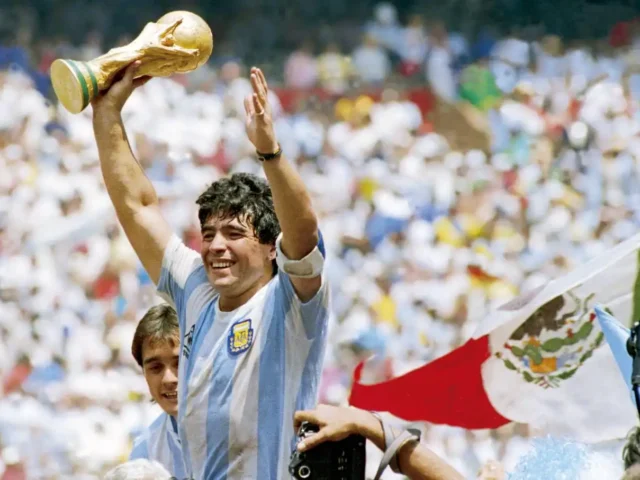
Maradona, the “Golden Boy” of the 20th century, possessed technical skills that only his mercurial leadership and cultural impact could match. His Goal of the Century against England in 1986 remains the pinnacle of individual brilliance, showcasing a dribbling ability that defied physics. As a joint winner of the FIFA Player of the Century, his legacy in Naples and Argentina transcends sport, representing a form of artistic expression on the pitch that few have ever replicated.
Cristiano Ronaldo (Portugal)
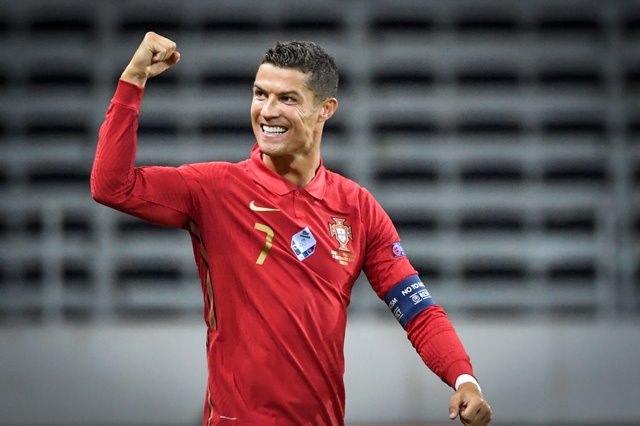
A machine of elite longevity and physical conditioning. Heading into the 2026 World Cup at age 41, Ronaldo has surpassed 940 career goals, maintaining his status as the all-time leading international goalscorer. His clutch performance in the UEFA Champions League, where he secured five titles, has made him a household name across the North American market. His branding, professionalism, and aerial dominance remain the primary blueprints for the modern inverted winger and elite center-forward.
Johan Cruyff (Netherlands)
The visionary architect behind Total Football. Cruyff was a tactical genius who functioned as an on-field coach, moving seamlessly between positions to exploit defensive gaps. His spatial awareness and intellectual approach at Ajax and FC Barcelona created the blueprint for modern Positional Play (Juego de Posición) used by elite 2026 managers. He didn’t just play the game; he reinvented its geometry, making him one of the most influential figures in the history of global sports.
Zinedine Zidane (France)
An elegant playmaker who defined the concept of “clutch” on the world’s biggest stages. Zidane is known for his extraordinary ball control and grace under pressure, with his 1998 World Cup brace and 2002 Champions League volley ranking among the most famous football moments ever recorded. His technical mastery as an attacking midfielder allowed him to navigate congested midfields with a balletic ease, earning him three FIFA World Player of the Year awards and legendary status at Real Madrid.
Franz Beckenbauer (Germany)
Known as “Der Kaiser,” Beckenbauer revolutionized the libero (sweeper) role, transitioning from a traditional defender to a deep-lying playmaker. He was the first defensive leader to consistently dictate the game’s tempo from the backline. Winning the FIFA World Cup as both player and manager, his tactical intelligence and vision are unmatched in German history. He remains the ultimate example of a “thinking man’s” footballer, combining physical toughness with elite distribution and leadership.
Ronaldo Nazário (Brazil)
“O Fenômeno” was the most unstoppable striker in the history of the sport during his peak prime. Combining raw power, blistering pace, and clinical finishing, he redefined the expectations of a modern number nine. Despite suffering career-threatening knee injuries, he staged a legendary comeback to lead Brazil to the 2002 World Cup title, winning the Golden Boot. His dribbling at speed and composed finishing influenced an entire generation of forwards, including Zlatan Ibrahimović and Cristiano Ronaldo.
Alfredo Di Stéfano (Argentina/Spain)
Alfredo Di Stéfano was the driving force behind the “Real Madrid Dynasty” during the 1950s. Di Stéfano was a versatile forward who famously dropped deep into his half to defend and organize play, making him the most complete footballer of his era. He guided the club to five consecutive European Cups, scoring in every final—a historical soccer record that may remain unbroken. His stamina, tactical versatility, and goal-scoring record established the “winning culture” that still defines Real Madrid in 2026.
Michel Platini (France)
He was the ultimate goal-scoring midfielder and a three-time winner of the Ballon d’Or. Platini was a set-piece specialist with supreme vision and a passing range that unlocked the tightest defenses in Serie A. He captained France to Euro 1984 glory, scoring a record-breaking 9 goals in just five matches—a feat of individual dominance rarely seen in international tournaments. His creative spark and leadership made him the “King of Turin” during his legendary spell with Juventus in the 1980s.
Garrincha (Brazil):
The “Joy of the People” is arguably the greatest pure dribbler in history. Despite being born with curved legs, his explosive acceleration and unpredictable body feints on the right wing made him impossible to mark. He was the talisman of Brazil’s 1962 World Cup victory, stepping out of Pelé’s shadow to prove that individual flair could win the world’s largest trophy. His technical skills remain a symbol of the Joga Bonito philosophy.
Ferenc Puskás (Hungary):
Every goalkeeper in Europe feared his legendary left foot, making him a prolific goalscorer. As the leader of the “Magical Magyars” in the 1950s, he maintained a nearly 1:1 goal-to-game ratio, scoring 84 goals in 85 internationals. Later, at Real Madrid, he formed a deadly partnership with Di Stéfano, winning three European Cups and five league titles. His shooting accuracy and positional play make him one of the most efficient strikers in history.
Marco van Basten (Netherlands):
A technically sublime striker, his career tragically ended at age 28 due to injury. In his brief prime, he won three Ballon d’Or awards and scored over 300 goals. His 1988 Euro volley against the USSR remains a masterclass in spatial awareness, technique, and clinical finishing. A complete forward, he possessed aerial dominance, close control, and the ability to score spectacular goals from any angle or distance.
George Best (Northern Ireland):
The “Fifth Beatle” was a charismatic winger who combined world-class dribbling with an iconic lifestyle. His balance and ability to beat multiple defenders in tight spaces at Manchester United made him the first true “celebrity footballer. ” Best won the Ballon d’Or in 1968 after leading United to their first European Cup, showcasing a technical ability that many pundits believe was superior to almost any player in the history of the British Isles.
Eusébio (Portugal):
Known as the “Black Panther,” Eusébio was a natural goal scorer with explosive acceleration and a thunderous right-foot shot. He was the first African-born player to truly conquer the European stage, leading Benfica to multiple European Cup finals and winning the 1965 Ballon d’Or. His performance at the 1966 World Cup, where he won the Golden Boot, cemented his status as a global superstar and Portugal’s greatest sporting ambassador for decades.
Paolo Maldini (Italy):
The gold standard of defensive longevity and tactical intelligence. Over a legendary 25-year career at AC Milan, he won five Champions League titles and mastered the art of the clean sheet. Whether playing at left-back or center-back, Maldini relied on flawless positioning rather than sliding tackles. He is widely regarded as the greatest defender of all time, representing the professionalism and defensive discipline that defined Italian football for a generation.
Ronaldinho (Brazil):
A cultural icon who played with infectious joy and a level of creative flair that turned football into an art form. At his peak with FC Barcelona, his tricks, no-look passes, and freestyle skills made him the most popular athlete on the planet. He is one of the few players to have won the World Cup, the Champions League, and the Ballon d’Or, leaving behind a legacy of pure entertainment and individual brilliance.
Lothar Matthäus (Germany):
The most versatile midfielder of the modern era. A box-to-box engine with a ferocious long-range shot, he is the only outfield player to appear in five FIFA World Cups. Diego Maradona famously described Matthäus as his toughest-ever opponent, citing his tactical discipline, physical stamina, and leadership. He successfully transitioned from a dominant midfielder to a world-class sweeper, winning the 1990 World Cup as Germany’s captain.
Gerd Müller (Germany):
“Der Bomber” was the ultimate penalty-box predator. While he lacked the flair of other legends, his scoring efficiency was unrivaled. With a low center of gravity and incredible short-burst acceleration, he scored 68 goals in 62 games for West Germany, including the winner in the 1974 World Cup Final. His positional sense allowed him to be in the right place at the right time, setting historical soccer records for goal-scoring that stood for decades.
Xavi Hernández (Spain):
The heartbeat of the Tiki-Taka era. Xavi’s 360-degree vision and metronomic passing allowed Spain and Barcelona to maintain ball possession and dominate the midfield during their golden age. He mastered “La Pausa,” demonstrating a keen understanding of when to slow the game down or accelerate the play. His press resistance and tactical intelligence redefined the role of the modern central midfielder, leading to two Euros and a 2010 World Cup title.
Andrés Iniesta (Spain):
An attacking midfield maestro known for his incredible close control and ability to glide past defenders in congested areas. Iniesta was the ultimate big-game player, famously scoring the winning goal in the 2010 World Cup Final against the Netherlands. Alongside Xavi, he formed the most dominant midfield duo in history, winning every major trophy available. His technical skill and humility made him one of the most respected figures in global sports history.
Romário (Brazil):
A clinical poacher with incredible explosiveness over short distances. Romário, the Golden Ball winner of the 1994 USA World Cup, played a pivotal role in increasing soccer interest in America. He claimed to have scored over 1,000 goals in his career, utilizing a unique toe-poke finish and a low center of gravity to outmaneuver much larger defenders. His penalty area movement and finishing metrics remain legendary in Brazilian football.
Franco Baresi (Italy):
He was a defensive leader who commanded the AC Milan backline for two decades. Despite being undersized for a center-back, his reading of the game and timing allowed him to intercept passes and organize the offside trap with surgical precision. He led Milan to three European Cups and was the backbone of a defense that once went 58 games unbeaten. Baresi is the embodiment of the “catenaccio” spirit, combined with modern technical ball-playing ability.
Zico (Brazil):
Often called the “White Pelé,” Zico was an attacking genius and one of the greatest free-kick specialists in the history of the sport. His playmaking vision and dead-ball accuracy made him the star of the legendary 1982 Brazil side, widely considered the best team never to win a World Cup. With over 500 goals from midfield, his technical flair and passing range made him an icon for Flamengo and a global symbol of Joga Bonito.
Bobby Charlton (England):
Bobby Charlton, a midfield powerhouse, survived the Munich air disaster to lead England to 1966 World Cup glory on home soil. Known for his ferocious long-range shooting and tireless stamina, Charlton was the creative heart of both Manchester United and the English national team. He won the Ballon d’Or in 1966 and remains a symbol of grace, sportsmanship, and resilience, having held the England scoring record for nearly 50 years.
Lev Yashin (USSR):
Known as the “Black Spider,” Yashin is the only goalkeeper to ever win the Ballon d’Or (1963). He revolutionized the position by acting as an early sweeper-keeper, coming off his line to intercept crosses and organize his defense with vocal authority. Dressed entirely in black, his acrobatic saves and penalty-saving record (over 150 career saves) made him a terrifying prospect for strikers. He defined the modern goalkeeper role decades before it became a standard.
Ruud Gullit (Netherlands):
A physically dominant force with total versatility. Gullit was a rare athlete who could dominate the pitch as a center-back, playmaker, or target man. With his iconic dreadlocks and graceful power, he captained the Netherlands to Euro 1988 success and was a key part of the “Dutch Trio” that led AC Milan to back-to-back European Cups. His Ballon d’Or win in 1987 reflected his status as the most complete player of his era.
George Weah (Liberia):
The only African player to win the Ballon d’Or (1995), Weah was a force of nature who combined raw power with world-class technical grace. Famous for his “coast-to-coast” solo goal for AC Milan against Verona, he proved that a striker could be both a physical target man and a flamboyant dribbler. His impact on African football was monumental, using his global superstar status to inspire a continent and later transitioning into a career in national politics.
Sócrates (Brazil):
“The Doctor” was an intellectual playmaker who famously refused to use his left foot, instead mastering the backheel as a tactical tool for passing and shooting. Standing 6’4″, his vision and creative output were the heart of the 1982 Brazil team. Off the pitch, he was a qualified physician and a political activist, making him one of the most fascinating and influential figures to ever wear a football jersey. He represented the philosophical soul of Brazilian football.
Bobby Moore (England):
The immaculate captain of England’s 1966 World Cup-winning team. Pelé famously described Moore as the “best defender I ever faced” because he didn’t rely on physical force but on flawless anticipation and coolness under pressure. His ability to read the game allowed him to intercept the ball before a tackle was even necessary. He was a tactical master of the game, providing the defensive stability that allowed England’s creative players to flourish on the world stage.
Kylian Mbappé (France):
The fastest-growing brand in global soccer in 2026. A World Cup Golden Boot winner with blistering pace, Mbappé has already scored a hat trick in a World Cup Final. Currently dominating the La Liga scoring charts with Real Madrid, he is the leading face of the “new era” of sports marketing. His direct running and clinical finishing metrics make him the heir apparent to the GOAT throne, with US fans eagerly anticipating his performance in the 2026 World Cup.
Luka Modrić (Croatia):
A midfield maestro who continues to defy age in 2026. His outside-of-the-foot passes (trivela) and tireless stamina led Croatia to a World Cup Final and a third-place finish. Breaking the Messi-Ronaldo duopoly by winning the 2018 Ballon d’Or, Modrić is celebrated for his tactical intelligence and ability to control the tempo of play against much younger opponents. He is the ultimate example of technical longevity and midfield mastery at the highest level.
Neymar Jr (Brazil):
Neymar Jr., a modern trickster, has surpassed Pelé’s long-standing record to become Brazil’s all-time leading international scorer. Despite battling injuries throughout his career, Neymar’s creative output, dribbling metrics, and flair remain among the highest in football history. Now playing a “mentorship” role in 2026, his legacy as the last outstanding Joga Bonito entertainer is secure, having won the Champions League with Barcelona and leading Brazil to Olympic gold.
Gianluigi Buffon (Italy):
Gianluigi Buffon has been the epitome of goalkeeping excellence and leadership for over two decades. Buffon’s shot-stopping ability and positional sense were the backbone of Italy’s 2006 World Cup victory, where he conceded only two goals in the entire tournament. His longevity at Juventus and the national team set a standard for professionalism that few athletes in any sport have matched. He remains a symbol of defensive reliability and the “art of goalkeeping.”
Luis Suárez (Uruguay):
Luis Suárez is a tenacious striker who possesses an incredible scoring instinct and the ability to create goals out of nothing. Suárez is one of the few players to win the European Golden Shoe twice during the peak of the Messi-Ronaldo dominance. Known for his technical skill, work rate, and controversial competitive drive, he formed one-third of the legendary “MSN” trio at Barcelona. His finishing metrics and link-up play make him the greatest Uruguayan player of the modern era.
Kevin Keegan (England):
A relentless forward and two-time Ballon d’Or winner (1978, 1979). Keegan was the first English player to become a massive commercial superstar in the German Bundesliga with Hamburg. Known for his work ethic, explosive movement, and leadership, he was a pioneer for English players moving abroad. His impact on the game in the late 70s was monumental, blending physicality with skillful attacking play to dominate European football.
Hristo Stoichkov (Bulgaria):
Known as “The Dagger,” Stoichkov was a fiery attacker with a lethal left foot and a ferocious competitive spirit. He led Bulgaria to a shock 1994 World Cup semi-final appearance in the USA, winning the Golden Boot in the process. A key member of Cruyff’s “Dream Team” at Barcelona, his technical ability and aggressive style made him one of the most feared forwards in Europe, eventually winning the Ballon d’Or in 1994.
Kaká (Brazil):
He was an elegant transition player who was completely unstoppable in his prime. In 2007, he won the Ballon d’Or after leading AC Milan to Champions League glory, showcasing a unique ability to glide through midfields with vertical dribbling and acceleration. His graceful style, vision, and clinical finishing made him the last human to win the world’s top individual prize before the nearly 15-year dominance of Messi and Cristiano Ronaldo began.
Raymond Kopa (France):
He was a creative mastermind of the 1950s and the first great French footballer to achieve global fame. Known as “Little Napoleon,” he was the playmaking engine for the Real Madrid side that won three consecutive European Cups. His dribbling skills and vision were instrumental in France’s third-place finish at the 1958 World Cup, where he was named the tournament’s best player, eventually winning the Ballon d’Or that same year.
Gunnar Nordahl (Sweden):
A physical powerhouse who dominated post-war Italian football. He remains AC Milan’s all-time leading goal scorer and won the “Capocannoniere” (Serie A top scorer) a record five times. His strength, aerial dominance, and penalty area movement made him the focal point of the famous “Gre-No-Li” Swedish trio. Even in 2026, his scoring efficiency in one of the world’s toughest defensive leagues remains statistically legendary and a benchmark for strikers.
Manuel Neuer (Germany):
He is considered the definitive modern goalkeeper, having reinvented the position for the 21st century. His ball distribution, sweeper-keeper tendencies, and courage to play 30 yards outside his box created a new tactical blueprint used by every elite team in 2026. A World Cup winner in 2014, Neuer’s shot-stopping and one-on-one dominance are matched only by his tactical intelligence, making him arguably the most influential goalkeeper in the history of the game.
Hugo Sánchez (Mexico):
He is a Real Madrid legend, renowned for his acrobatic volleys, bicycle kicks, and somersault celebrations. He won five Pichichi trophies as the top scorer in La Liga, showcasing a finishing ability that was as spectacular as it was consistent. As the greatest Mexican player of all time, his technical skill and movement inside the box made him a hero across North America, proving that a Concacaf player could dominate the highest levels of European football.
Paolo Rossi (Italy):
The ultimate clutch poacher and hero of the 1982 World Cup. After returning from a suspension just before the tournament, Rossi scored a legendary hat-trick against Brazil and went on to win the Golden Boot and Golden Ball as Italy became world champions. His anticipation, movement, and clinical finishing in high-pressure moments define his legacy as a player who could change the course of football history in a single afternoon.
Kenny Dalglish (Scotland):
Known as “King Kenny,” Dalglish was a visionary forward with incredible back-to-goal play and a footballing brain that allowed him to see passes others couldn’t. He was the heart of Liverpool’s European dominance in the late 70s and 80s, winning three European Cups. His link-up play and leadership made him a legend at both Celtic and Liverpool, and he is widely regarded as the greatest Scottish player to ever grace the pitch.
Gheorghe Hagi (Romania):
The “Maradona of the Carpathians” was a mercurial playmaker with a magical left foot capable of scoring from the halfway line. His vision, long-range shooting, and creative flair led Romania to the quarter-finals of the 1994 World Cup in the USA. A true “number ten,” Hagi was the creative heartbeat of every team he played for, including Steaua Bucharest, Real Madrid, and Galatasaray, where he is still worshipped as a footballing god.
Wayne Rooney (England):
He was a combative and versatile attacker who made his debut as a teenager and retired as the all-time leading scorer for Manchester United. Rooney’s work rate, tactical flexibility, and technical skill allowed him to play as a striker, a winger, or a deep-lying midfielder. He won every major trophy at the club level, including five Premier League titles and the Champions League, representing the heart and soul of English football for over a decade.
Jairzinho (Brazil):
Known as “The Hurricane,” Jairzinho holds a historical soccer record that even Pelé or Messi haven’t matched: scoring in every single match of a World Cup tournament (1970). A physically powerful winger with blistering speed and clinical finishing, he was the perfect complement to Pelé’s playmaking. His performance in the 1970 final remains one of the greatest individual displays in the history of the competition, cementing his place in the Brazilian hall of fame.
Sándor Kocsis (Hungary):
“The Man with the Golden Head” was a key part of the Hungarian “Golden Team” of the 1950s. His heading ability is considered the best in history, and his international scoring record (75 goals in 68 games) is statistically superior to almost any modern player. He was the top scorer at the 1954 World Cup with 11 goals, showcasing a positional sense and striking power that made Hungary the most feared team in the world during his era.
Luis Figo (Portugal):
A world-class winger with impeccable crossing and dribbling excellence. Figo was the creative engine of Portugal’s “Golden Generation” and won the 2000 Ballon d’Or. Famous for his high-profile move from Barcelona to Real Madrid, he remained a model of consistency and technical quality, providing the assists and leadership that led both clubs to domestic and European success. He is the standard for the modern technical winger.
Thierry Henry (France):
Often cited as the greatest player in Premier League history, Henry combined Olympic-level speed with a clinical elegance that redefined the forward role. Under Arsène Wenger at Arsenal, he won two league titles (including the “Invincibles” season) and four Golden Boots. His playmaking ability, finesse finishing, and va-va-voom pace made him unmarkable. A World Cup winner in 1998, Henry’s impact on sports culture and branding remains massive in 2026.

