

The NFL’s referee labor crisis just reached the ownership level. Several NFL owners have now joined Collective Bargaining Agreement negotiations with the NFL Referees Association. The previous round of talks collapsed after the NFLRA argued the league’s negotiating team lacked real decision-making authority. When owners step in directly, it changes the dynamic entirely.
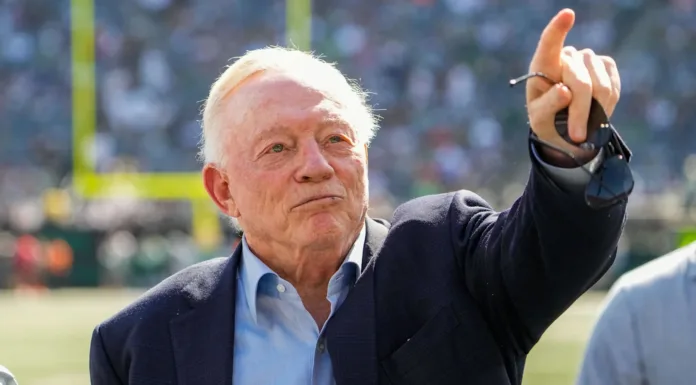
Dallas Cowboys owner Jerry Jones is among the prominent voices now at the table. He has a long history of involvement in the league’s biggest labor battles. This situation is no different.
Why Talks Collapsed—and Why Owners Had to Act
The road here was rough. A scheduled two-day bargaining session ended after just three hours. Both sides confirmed the abrupt exit. That collapse rattled the league heading into the final stretch before the May 31 CBA expiration.
NFLRA executive director Scott Green stated the union arrived ready to work. He added that the league’s delegation lacked authorization to negotiate beyond its original proposal. Their representatives left after less than half a day.
Sources told ESPN’s Adam Schefter the league held committee meetings in Palm Beach, Florida. Owners received updates on the stalled talks. One source noted that “frustration is mounting” among ownership. That frustration, however, pushed owners to engage directly rather than wait.
The Compensation Gap Remains Massive
Money sits at the center of this dispute. The NFLRA seeks a 10.3 percent overall compensation increase. The league currently offers 6.7 percent. That gap is not small. It represents hundreds of millions of dollars across a multi-year agreement.
The NFLRA also demands over $2.5 million in marketing fees and improved healthcare benefits. The league has resisted both demands. NFL executives proposed annual raises alongside structural changes. Those changes include lengthening probation periods and awarding postseason assignments based more on performance than seniority.
The NFLRA rejected those oversight changes as well. So the two sides disagree on pay, structure, and accountability—making a quick resolution very unlikely.
Jones and Fellow Owners Bring Real Authority
The NFLRA’s earlier complaint was straightforward. League negotiators lacked the power to make real decisions. With owners now at the table, both sides hope to bridge the wide gap between compensation growth and benefits.
Jones holds considerable influence in any NFL labor negotiation. Before the 2011 player lockout, the NFL told teams to stay silent on CBA matters. Jones violated that directive. The league fined him at least $100,000. His long-standing willingness to push boundaries has established him as one of ownership’s most vocal and influential figures.
From our field observation, Jones’s presence indicates that ownership has finished delegating. High-stakes labor fights require decision-makers at the table, not surrogates. His involvement alone shifts the negotiating atmosphere considerably.
Replacement Officials Are No Longer Just a Threat
The NFL has moved well beyond posturing. The league plans to open formal training clinics around May 1. Replacement officials would then move into all-day drills and simulated games through the summer.
The NFL already vets between 150 and 180 replacement officials from NCAA Division I, II, and III programs. That reach into small-college football shows how seriously the league takes its contingency plan.
Now, a critical operational deadline makes the threat even more real. Per NFL Network insider Tom Pelissero, the league has formally notified all 32 clubs they must submit their OTA and mandatory minicamp schedules to the NFL by April 22. The league will then assign replacement officials to those practices starting June 1—the day after the labor deal expires on May 31. That is not a hypothetical timeline. That is a scheduled deployment.
All clubs are required to submit their OTA and mandatory minicamp schedules to the NFL by April 22 so that the league can assign replacement officials to those practices starting June 1, the day after the labor deal is scheduled to expire. https://t.co/V0fVwa1MCJ
— Tom Pelissero (@TomPelissero) April 8, 2026
NFL owners also approved special rule changes for the 2026 NFL season. Those changes allow centralized replay correction of clear errors if replacement officials work the games. Furthermore, the NFL would shift existing staff to its New York City command center. Staff would monitor each game, flag potential mistakes, and guide replacement crews in real time.
The NFL has raised its compensation offer to roughly 6.45 percent annual growth over a six-year agreement. However, replacement official training mirrors the preparation used during the 2012 lockout—which lasted 110 days and covered the first three weeks of the regular season.
The NFLPA Sides With the Referees
This dispute has now pulled in the NFL Players Association. After meeting with NFLRA executive director Scott Green, NFLPA representatives made their position clear. The players’ union does not support replacement officials. Officials manage the game in real time, enforce the rules, and prevent situations from escalating—responsibilities that less experienced crews cannot handle remotely.
That NFLPA-NFLRA alliance adds more pressure on the league. A split between ownership and active players — over officials, of all things — creates headaches nobody wants before Week 1 of the 2026 NFL season.
The NFL Also Issued a Gag Order on Teams
Beyond the negotiating room, the league has worked to control the public narrative. The NFL issued a memo to all 32 teams prohibiting public comment on the CBA negotiations with the NFLRA. Every coach, general manager, and executive now has an easy way to respond to reporters’ inquiries—”Sorry, I can’t comment.” However, that gag order does not stop off-the-record conversations. Strong opinions about replacement officials are already circulating across the league.
The league’s memo stressed that the NFL has the highest regard for game officials but that officiating must improve. It also argued the NFL’s proposal would enhance accountability while offering generous compensation packages. The NFLRA, predictably, called that framing misleading.
The 2012 “Fail Mary” Still Haunts Both Sides
Everyone at the negotiating table remembers 2012. The current standoff represents the most significant tension between the NFL and its officials since the 2012 lockout. That era produced the infamous “Fail Mary” play between the Green Bay Packers and Seattle Seahawks.
However, the stakes now exceed anything the league faced back then. The NFL’s commercial bloodstream is now infused with legalized sports gambling. Bad officiating in this environment does more than frustrate fans. It puts the integrity of millions of dollars in legal wagers at direct risk.
The NFL faces a precarious situation. Technology has improved, but it cannot replace human officials. The game is simply too big for relative amateurs to adjudicate. Both sides understand the stakes. Yet neither appears ready to compromise fast enough.
What Comes Next Before May 31
Owners at the table—including Jerry Jones—now have the leverage to accelerate or kill a deal. Negotiations between the NFL and the NFLRA continue this week, even as replacement official training preparations move forward simultaneously.
The April 22 schedule submission deadline for OTAs arrives first. Then, on May 1, training clinics begin. Thereafter, June 1 marks the first day replacement officials could appear at team facilities. Each date tightens the window for a negotiated settlement.
The league runs two tracks at once. It pursues a deal with one hand. It builds a replacement workforce with the other. For 2026 NFL season fans and ticket holders, that parallel approach creates real uncertainty. The NFLRA receives a clear message: ownership will not be the first to back down. And with Jerry Jones now sitting across the table, that message carries extra weight.
