

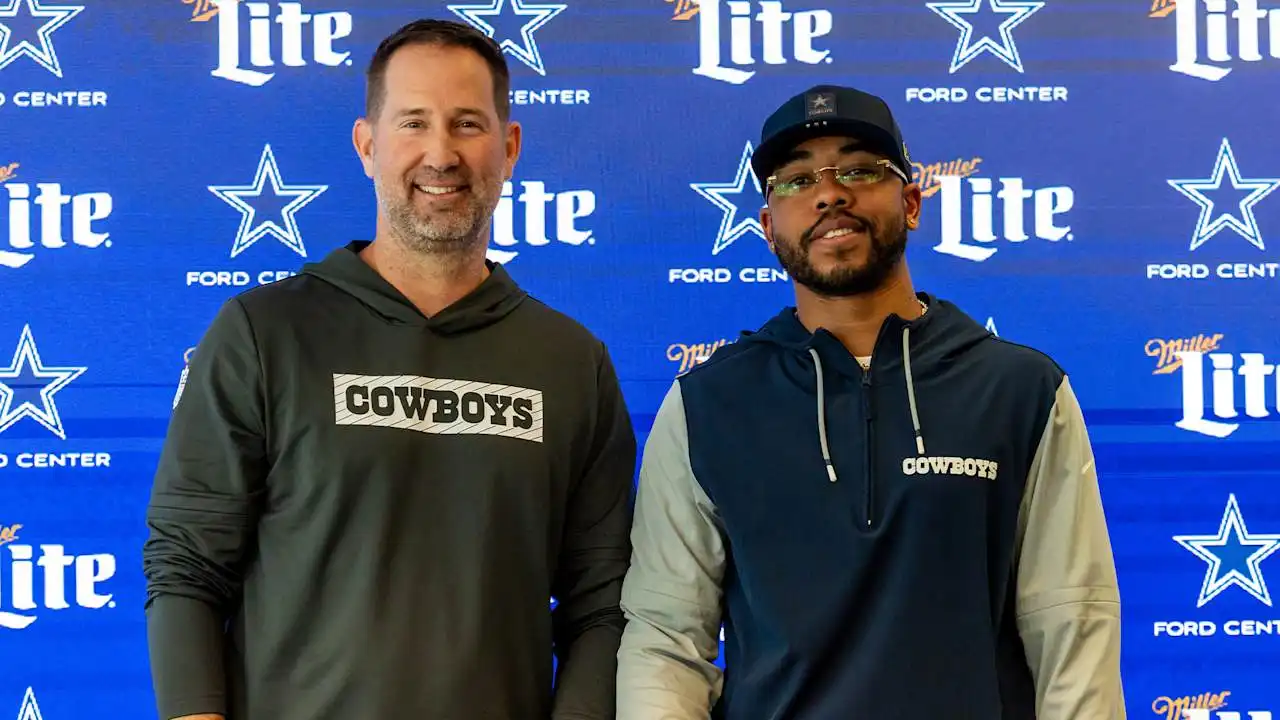
The Dallas Cowboys have appointed Christian Parker as their new defensive coordinator. This decision aims to revive a defense that finished last in points allowed last season. Meanwhile, excitement builds around his fresh approach.
The Cowboys sifted through over 40 interviews, narrowing to nine for the defensive coordinator spot. Ultimately, head coach Brian Schottenheimer zeroed in on Parker as the top choice. For example, Schottenheimer shared how Parker’s calm demeanor stood out repeatedly.
Moreover, Schottenheimer had tracked Parker for years across Denver, Green Bay, and Philadelphia. Their brief past encounter evolved into in-depth talks on strategy. As a result, Philadelphia approved the move, seeing it as a step up for the 34-year-old coach.
Parker’s Proven Player Development Record
Parker steps up to his first NFL coordinator role after guiding Philadelphia’s secondary. Notably, he coached cornerback Cooper DeJean to All-Pro honors in two seasons. DeJean reacted on social media, lamenting the loss while praising Parker’s impact.
Additionally, Quinyon Mitchell joined DeJean as a second-year All-Pro under Parker’s tutelage. Consequently, the Eagles ranked among the NFL’s best in pass defense over two years. They even secured back-to-back NFC East titles—the first in 21 years—capped by a Super Bowl victory.
Cowboys’ Defensive Coordinator History Shift
Dallas welcomes its fourth defensive coordinator in four years. The previous regime under Matt Eberflus allowed a franchise-high 511 points with minimal turnovers. In particular, pass coverage crumbled league-wide.
Now, Parker introduces a flexible 3-4 base scheme with varied fronts. This includes 4-3 alignments, 4-2-5 nickel sets, and seamless man-to-zone transitions. Drawing from mentors like Vic Fangio, he prioritizes multiplicity to keep offenses guessing.
Defensive Scheme Core Principles
Parker’s philosophy centers on two keys: halting the run and pressuring quarterbacks. First, stopping early downs forces manageable third-and-longs. Then, fundamentals like block shedding and tackling take over.
Furthermore, he adapts to personnel strengths. Blitz running backs if they falter; emphasize man coverage with elite corners. Thus, scheme-versatile players maximize their talents across situations.
Evaluating Cowboys’ Defensive Roster Talent
Up front, Quinnen Williams anchors alongside Osa Odighizuwa and Kenny Clark. Parker views this trio as ideal for pocket domination and run stuffing. “The game starts up front,” he noted, fueling optimism.
In the secondary, DaRon Bland offers proven instincts, including an NFL-record five pick-sixes despite injury setbacks. Likewise, third-rounder Shavon Revel Jr. impresses with press-man prowess and speed, traits Parker eyed from Denver scouting.
Linebacker DeMarvion Overshown brings breakout potential if healthy. Meanwhile, the nickel corner emerges as crucial—a versatile athlete who plays multiple roles instinctively.
Parker assembles a robust staff with six newcomers. Derrick Ansley handles passing game coordination, while Marcus Dixon leads the defensive line. Robert Muschamp, Ryan Smith, Scott Symons, and Chidera Uzo-Diribe fill secondary, cornerback, inside linebacker, and outside linebacker roles, respectively.
Two first-round picks, one from the Micah Parsons trade, spotlight defense. Team sources emphasize needs at linebacker, edge rusher, and defensive back. Soon, the NFL Combine allows Parker to assess prospects firsthand.
Press Conference Key Takeaways
Observations from Frisco highlight Parker’s depth, referencing Sun Tzu, Seneca, and Marcus Aurelius alongside football insights. His journey—from Packers quality control to this stage—embodies rapid growth. With Dak Prescott’s offense thriving, Parker’s defense now holds the key to contention.