

There is a specific, electric tension that descends upon the United States every Sunday from September through February. It is a cultural rhythm, a secular religion practiced in cathedrals of concrete and steel. To the uninitiated, American football is a collision of brute force—a chaotic scramble of helmets and pads. But to those who speak the language of the gridiron, it is a game of distinct beauty. It is kinetic chess played by the most impressive athletes on the planet, where violence is tempered by strict geometry and games are won in the margins of a play clock.
Football is America’s game, having long surpassed baseball as the national pastime. It is a sport of contradictions: it is fiercely territorial yet played on a field with infinite strategic possibilities; it is defined by the physical outliers of society—the incredibly large and the impossibly fast—yet it is governed by a rulebook so dense it rivals legal code.
Whether you are a lifelong season-ticket holder looking to deepen your appreciation of league history or a newcomer trying to understand why millions scream at their televisions every Thanksgiving, this book is your comprehensive dossier. We’re exploring the NFL’s history, from the field’s soil to its legends.
Part I: The Geometry of War—The Field Explained
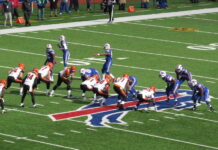
To understand the game, you must first understand the battlefield. In television broadcasts, the field is often flattened into a two-dimensional screen of yellow first-down lines and blue scrimmage markers. But in reality, the football field is a massive, meticulously engineered stage where space is the ultimate currency.
The 100-Yard Box
The playing dimensions of American football have remained largely unchanged since 1912. The field is a rectangle 360 feet long and 160 feet wide. In common parlance, we speak of the “100-yard field,” but this definition ignores the two most critical areas: the end zones.
Each end zone adds 10 yards, making the total length of the field 120 yards. Why does this matter? The geometry of the field begins to work against the offense in the “Red Zone,” which is the final 20 yards before the end zone. As the field shrinks, the defense has less grass to cover, making passing windows tighter and collisions more frequent.
The Scale of the Game
For those accustomed to other sports, the scale of a football field is difficult to grasp without context. It is not merely a patch of grass; it is a massive land plot. If you were to strip away the stadiums, the benches, and the fan zones and look strictly at the regulation playing surface (including end zones), you would be looking at approximately 1.32 acres of land.
This acreage is significant because it dictates the speed of the game. If the field were wider—akin to a FIFA regulation soccer pitch—the speed of NFL wide receivers would make defense impossible. The 53.3-yard width forces the game inside, creating the physical confrontation that defines the sport.
Further Reading: The mathematics of the turf can be surprising. For a breakdown of the exact measurements and land usage, read our guide on How many acres is a football field?
Hash Marks and Goal Posts
The nuances of the field go beyond the perimeter. The “hash marks”—those small dashes running down the center of the field—are the game’s centering mechanism. In the NFL, they are 18 feet, 6 inches apart, aligned with the goal posts.
This narrow alignment is unique to the professional game (college hash marks are much wider). It ensures that plays almost always start from the center of the field, preventing the offense from being pinned too close to a sideline. It is a subtle rule that encourages speed and passing, ensuring the action remains central and visible.
Part II: The Personnel—A Game of Specialists
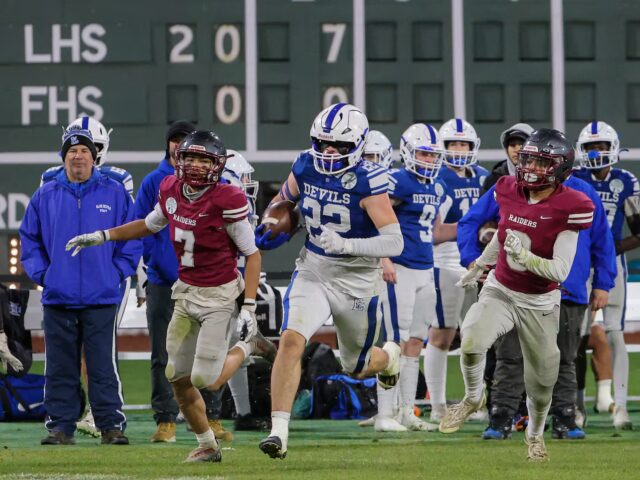
One of the greatest barriers to entry for new football fans is the sheer number of people involved. A basketball team has 15 players; a soccer squad has roughly 25. An NFL team is a small army.
The 53-Man Roster
An NFL sideline becomes crowded on game day. A team is allowed an active roster of 53 players, but even this number is misleading. During the week, practice squads expand that number even further, creating a developmental pipeline of talent.
However, despite the crowded sideline, the game is strictly 11 versus 11.
This was not always the case. In the early 20th century, football was an “Iron Man” sport. Players stayed on the field for offense, defense, and kicking duties. If you were substituted out, you often couldn’t return for the rest of the quarter. Today, the game is defined by hyper-specialization. It is rare to see a player take snaps on both offense and defense. Instead, the game is played by “platoons.”
- The Offense: Led by the Quarterback, this unit is designed for deception and execution. It includes the massive Offensive Line (the bodyguards), the Wide Receivers (the sprinters), and the Running Backs (the battering rams).
- The Defense: This unit reacts. From the 300-pound Defensive Tackles trying to clog lanes to the agile Cornerbacks running backward at 20 mph, their goal is disruption.
- Special Teams: often called the “Third Phase,” this unit handles kicks, punts, and returns. While they play the fewest snaps, they often decide close games.
This specialization means that an NFL coach manages three distinct teams within one. The logistics of dressing, training, and paying 53 elite athletes creates a complex front-office environment that is unique in professional sports.
Further Reading: Understanding the roster caps, practice squads, and position breakdowns is vital. We explain the numbers in detail at How many players on a football team?
Part III: The Clock—Controlling the Chaos
If you look at a box score, a football game consists of four 15-minute quarters. Simple math suggests the game should take an hour. However, the average NFL broadcast runs for 3 hours and 12 minutes.
This disparity creates a rhythm that is distinct to American football. American football is characterized by intermittent bursts of intense effort, interspersed with periods of strategic planning.
The Play Clock vs. The Game Clock
Football is unique because two clocks are running simultaneously.
- The Game Clock: counts down the 15 minutes of the quarter.
- The Play Clock: A 40-second timer that starts as soon as the previous play ends.
The offense has 40 seconds to huddle, call a play, walk to the line of scrimmage, read the defense, and snap the ball. This “game within a game” is where the mental battle is won. Quarterbacks must process massive amounts of information before the play clock hits zero.
Why It Takes Three Hours
The clock stops frequently—for incomplete passes, players running out of bounds, penalties, and changes of possession. This allows for the intense physical recovery players need between downs. Unlike soccer, where players pace themselves for 90 minutes, an NFL play lasts an average of 4 to 6 seconds. In those seconds, players exert 100% of their energy. Players cannot sustain that level of exertion for a continuous hour.
The viewing experience also excels during the downtime. The breaks allow for replays, analysis, and the tension building that defines the drama of the sport. The “Two-Minute Warning” (a mandatory timeout with two minutes left in each half) adds another layer of strategic clock management that often determines the winner.
Further Reading: Please explain the reason for the numerous commercials. How long is halftime? We break down the timing of the game at How long is a football game?
Part IV: Origins—From Ivy League Lawns to Car Dealerships

How did a game involving tackling and a prolate spheroid ball come to be? The history of American football is a story of divergence—breaking away from British traditions to forge something distinctly American.
The Great Split: Rugby vs. Football
In the late 19th century, universities across the Northeastern United States were playing various forms of “mob football,” chaos-filled games involving kicking a round ball. The pivotal moment occurred when Harvard University chose to adhere to the Rugby Union’s rules instead of the Football Association’s (soccer).
Over time, American innovators, Yale’s Walter Camp (the “Father of American Football”), tweaked the rugby rules. He introduced the line of scrimmage, the system of “downs” (distance and attempts), and the quarterback position.
But the name remained a point of confusion. The rest of the world calls the sport played with feet “football.” Americans adopted the slang term “soccer” (derived from Association Football) and kept “football” for their gridiron game, despite the foot rarely touching the ball. It wasn’t arrogance; it was linguistic evolution occurring in isolation.
Further Reading: The etymological battle over the word “Football” is fascinating. Learn why the US diverged from the world at Why is American football called football?
1920: The Humble Beginning
Today, the NFL is a multi-billion dollar juggernaut. But its birth was incredibly modest.
On September 17, 1920, a group of men met in the showroom of the Jordan and Hupmobile auto agency in Canton, Ohio. They sat on running boards and fenders, drinking beer and discussing the chaos of pro football, which was plagued by ringing (hiring mercenaries) and unpaid salaries.
They formed the American Professional Football Association (APFA), which would be renamed the National Football League (NFL) two years later. The entry fee was $100. Teams included the Decatur Staleys (who became the Chicago Bears) and the Dayton Triangles.
The early years were brutal. Franchises are constantly folded. The game was played in the dirt, with leather helmets that offered little protection. It wasn’t until the 1960s and the eventual merger with the rival American Football League (AFL) that the modern NFL—and the spectacle of the Super Bowl—truly began to take shape.
Further Reading: From the Hupmobile showroom to the Super Bowl, trace the timeline of the league at When was the NFL founded?
Part V: The Human Element—Records and Outliers
The NFL combines the need for youthful explosiveness with the requirement for veteran intelligence. This dynamic creates a fascinating record book, bookended by teenagers and grandfathers.
The Young Guns: Baptisms by Fire
The NFL has a strict entry rule: players must be three years removed from high school. This definition generally means rookies enter the league at age 21 or 22, after developing their bodies in top-tier college programs.
However, outliers exist. The record for the youngest player in the modern era belongs to Amobi Okoye, who was drafted by the Houston Texans at just 19 years old in 2007. Imagine the physical and mental toll of lining up against 30-year-old grown men while you are still legally unable to buy a beer.
Success at a young age is rare because the “mental speed” of the NFL is overwhelming. Playbooks are as thick as encyclopedias, and defensive disguises are complex. Young players like Tremaine Edmunds and Juju Smith-Schuster, who also entered the league incredibly young, had to rely on raw athletic instinct while their football IQ caught up.
Further Reading: Who survived the transition from teen to pro? See the list of prodigies at Who is the youngest NFL player?
The Iron Men: Defying Biology
On the other side of the curve are the legends who refuse to walk away. The average NFL career lasts roughly 3.3 years. The violence of the sport destroys knees, backs, and shoulders. To play into your 30s is an achievement; to play into your 40s is a miracle.
George Blanda, who played until he was 48 years old, continues to set the standard for longevity. However, Blanda played in an era where he served as both a Quarterback and a Kicker, allowing him to extend his career.
In the current era, Tom Brady holds a unique position. Winning a Super Bowl at age 43 and playing until 45, Brady revolutionized how athletes view aging. By implementing “pliability” training, adhering to strict anti-inflammatory diets, and focusing on mechanics, Brady demonstrated that quarterbacks could continue to excel well beyond their expected retirement age. Other legends, like kicker Morten Andersen and lineman Andrew Whitworth, also proved that experience often trumps raw athleticism.
Further Reading: From Blanda to Brady, explore the careers of the league’s most durable stars at Oldest NFL players in history
Part VI: The Cathedrals—Stadiums and Atmosphere
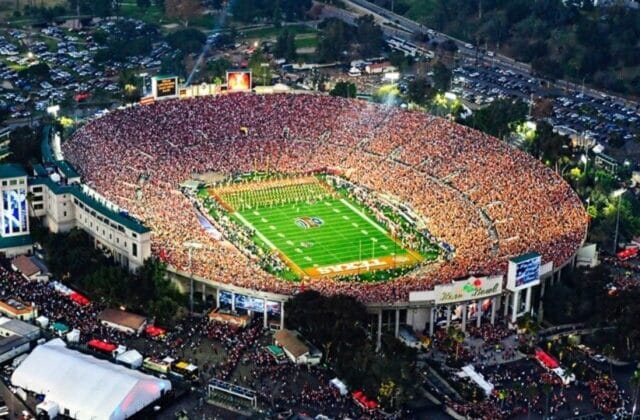
Football is an outdoor sport (mostly), inextricably linked to the elements. The NFL’s “Home Field Advantage” is the strongest in sports, mainly due to stadium design.
The Evolution of the Venue
In the 1970s, the NFL was defined by “Cookie Cutter” stadiums—circular, concrete, multi-purpose bowls that lacked character. Today, NFL stadiums are architectural marvels, each designed to reflect the local culture and maximize noise.
There are three categories of modern stadiums:
- The Historic Shrines: Lambeau Field in Green Bay, Wisconsin, is the crown jewel. It is a bleacher-seating bowl where fans endure sub-zero temperatures to watch the Packers. It feels less like a stadium and more like a pilgrimage site.
- The Noise Traps: Lumen Field (Seattle) and Arrowhead Stadium (Kansas City, Missouri) were built with acoustics in mind. The cantilevered roofs reflect sound back onto the field, creating decibel levels that rival jet engines. This noise prevents opposing quarterbacks from communicating with their offensive lines, causing false-start penalties.
- The Super-Structures: SoFi Stadium (Los Angeles) and AT&T Stadium (Dallas) represent the future. These are multi-billion dollar entertainment districts featuring translucent roofs, massive 60-yard video boards, and luxury amenities.
The environment dictates the game. A team built for speed (like the Miami Dolphins) might struggle when forced to play in the snow at Soldier Field in Chicago. This geographic diversity adds a layer of strategy to the playoffs, where higher-seeded teams earn the right to host games in their own elements.
Further Reading: Which stadium offers the best fan experience? We rank the top venues at Best football stadiums in the USA
Part VII: The Season Structure—The Road to Glory
To fully grasp the weight of the records and history mentioned above, one must understand the gauntlet that is the NFL season. Unlike the MLB (162 games) or the NBA (82 games), the NFL season is a sprint.
The Scarce Resource
There are only 17 regular-season games. This scarcity creates urgency. A two-game losing streak in baseball is a blip; in the NFL, it is a crisis.
- Preseason (August): A three-game tune-up where starters rarely play, and coaches evaluate the bottom of the roster to finalize the 53-man squad.
- Regular Season (September–January): The grueling 18-week schedule (17 games plus one “bye” week for rest). The goal is to win the division or secure a “Wild Card” spot.
- The Playoffs (January): A single-elimination tournament. There are no “best of seven” series here. If you have one bad day, your season is over. This “Any Given Sunday” reality is what makes the playoffs the most-watched television events in US history.
- The Super Bowl (February): The season finale, played at a neutral site. It is the unofficial American holiday, blending sport, entertainment, and advertising into a singular spectacle.
Conclusion: The Infinite Narrative
American football is a sport that rewards profound study. The game is more fun when you know the salary cap, route combinations, and rivalries.
It is a sport where a measurement of inches can determine the fate of a coach’s career. It is a sport where a 6th-round draft pick can become the greatest player of all time and where a team from a small town in Wisconsin can own the world.
As you navigate the cluster of articles provided in this guide—from the specific acreage of the field to the biographies of the oldest legends—you are building a framework to appreciate the game not just as entertainment, but as a complex, evolving discipline.
The whistle has blown. The ball is kicked off. Welcome to the gridiron.
Frequently Asked Questions (FAQ)
Why do the players huddle before every play?
The huddle is used to communicate the play call from the coach (via the quarterback’s headset) to the rest of the offense. However, “no-huddle” offenses are becoming common to speed up the game and tire out the defense.
What is a “Down”?
A down is a chance to advance the ball. The offense has four downs to move the ball 10 yards. If they succeed, they receive a fresh set of four downs (a “First Down”). If they fail after four tries, the other team receives the ball.
How many players are on the field at once?
There are 22 players on the field during a live play: 11 on offense and 11 on defense. If a team has 12 men on the field at the snap, it is a penalty.
Why is the NFL field measured in yards?
The game originated in the US where the imperial system is standard. The 100-yard field (plus end zones) has been the standard since 1912 and is deeply ingrained in the sport’s terminology (e.g., “The 50-yard line”).
Who is the oldest player to ever play?
George Blanda holds the record, playing until he was 48 years old. He spent 26 seasons in professional football, a record that still stands.
When does the NFL season start?
The regular season typically begins with the “Kickoff Game” on the first Thursday after Labor Day in September. It concludes in early January, followed by the playoffs.